Vesugen
Moderate ResearchTripeptide bioregulator
Vesugen is a tripeptide bioregulator that has been studied in vascular biology research for its effects on vascular tissue gene expression. Published research has investigated its role in vascular tissue regulation. RaysunPeptide supplies Vesugen for qualified research and laboratory applications.
Mechanism of Action
Vesugen works through epigenetic regulation by interacting with DNA promoter regions, particularly affecting Ki-67 gene expression which controls cell division. It plays a prominent role in regulating sirtuin 1 (SIRT1) protein levels - a key anti-aging protein activated during calorie restriction. Vesugen enhances mesenchymal stem cell proliferation, reduces senescence markers, improves cell differentiation, and may reverse the Senescence-Associated Secretory Phenotype (SASP) implicated in age-related cardiovascular disease.
Key Benefits
Molecular Data
Dosing Protocols
| Goal | Dose | Frequency | Route |
|---|---|---|---|
| Standard protocol | 10-20 mg | Daily for 10-20 days | Oral capsules |
| Maintenance | 10 mg | 2-3 cycles yearly | Oral capsules |
Research Indications
Vascular Health
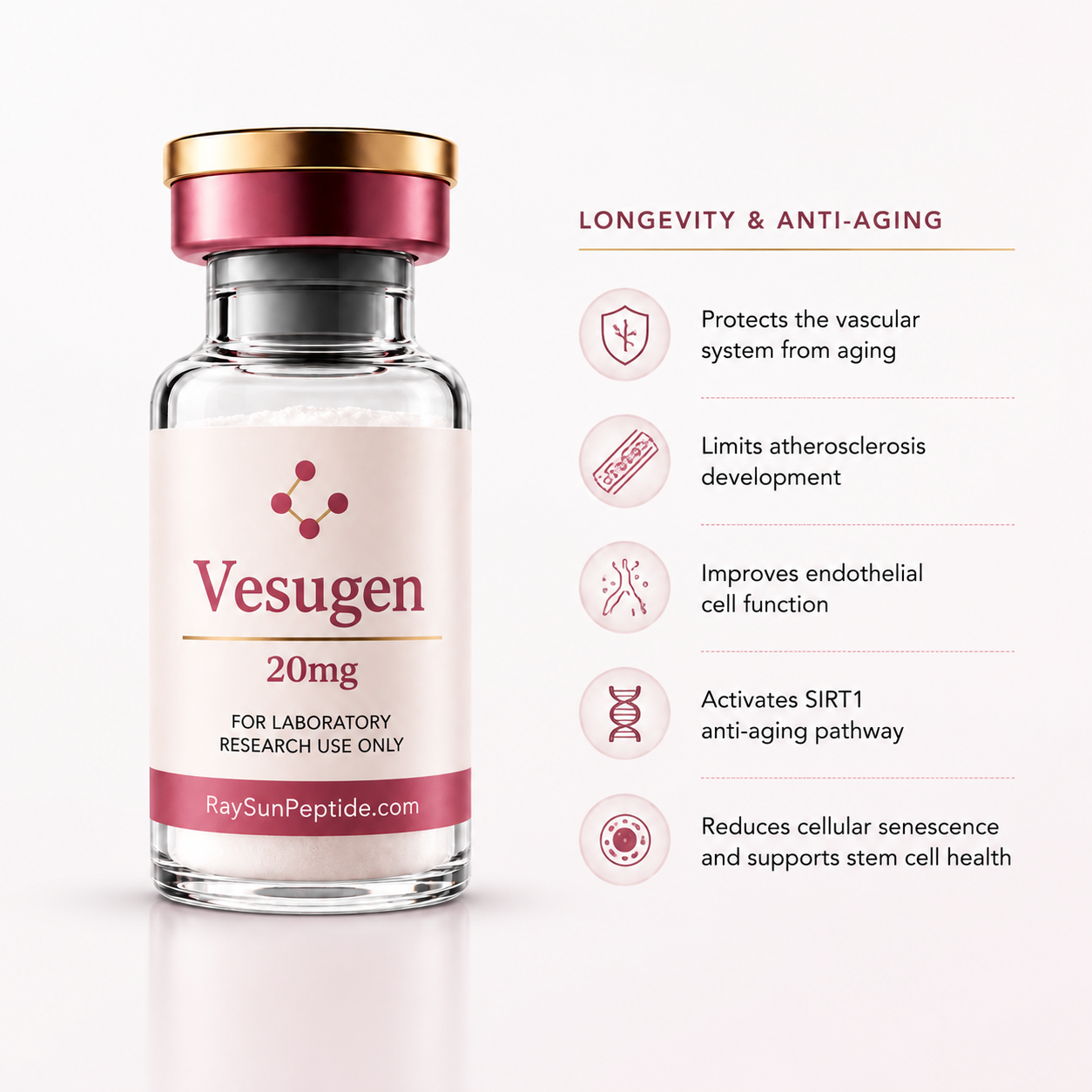
Protects blood vessels from age-related deterioration through gene expression regulation.
Limits development of atherosclerotic plaques in blood vessels.
Decreases endothelial dysfunction that contributes to cardiovascular disease.
Anti-Aging
Regulates sirtuin 1 levels, mimicking some benefits of calorie restriction.
Enhances mesenchymal stem cell proliferation and reduces senescence.
Reverses senescence-associated secretory phenotype in aging cells.
Peptide Interactions
Complementary cardiovascular bioregulators - Vesugen for vessels, Cardiogen for heart tissue.
Often combined in comprehensive anti-aging Khavinson protocols.
Different organ targets; can be used in comprehensive bioregulator protocols.
Part of Khavinson bioregulator family; targets different tissue.
What to Expect
Side Effects & Safety
Common (Generally Mild)
- •Generally well-tolerated
- •Minimal side effects reported
Stop Signs (Seek Medical Attention)
- ⚠Allergic reactions
- ⚠Unusual cardiovascular symptoms
Contraindications
- ✕Active cardiovascular emergencies (seek medical care)
- ✕Known hypersensitivity
- ✕Pregnancy or breastfeeding
Quality Checklist
Good Signs ✓
- White powder or capsules
- Clear solution if reconstituted
- Proper packaging and labeling
Warning Signs !
- Unknown source or purity
Bad Signs ✕
- Discoloration
- Unusual odor
- Damaged packaging
References
Comprehensive review of bioregulator peptides including Vesugen and their epigenetic mechanisms.
Short peptides regulate sirtuin 1 levels and protect vascular tissue from aging.
Vesugen enhances MSC proliferation and reduces senescence markers in stem cells.
FAQs
Does Vesugen activate SIRT1 like calorie restriction and can it be used with fasting?
Yes, Vesugen regulates SIRT1 (sirtuin 1) protein levels, mimicking some benefits of calorie restriction without requiring dietary restriction. Combining Vesugen with intermittent fasting or calorie restriction could theoretically provide synergistic SIRT1 activation and enhanced anti-aging effects, though this combination hasn't been formally studied.
How does Vesugen prevent atherosclerosis and is it effective for existing plaques?
Vesugen limits atherosclerosis development by reducing endothelial dysfunction and activating SIRT1 anti-aging pathways in vascular tissue. It's preventive rather than plaque-reversal focused. Early atherosclerosis prevention works better than treating advanced disease, so Vesugen is most valuable as a cardiovascular health maintenance peptide.
Can Vesugen be combined with other Khavinson bioregulators like Epitalon?
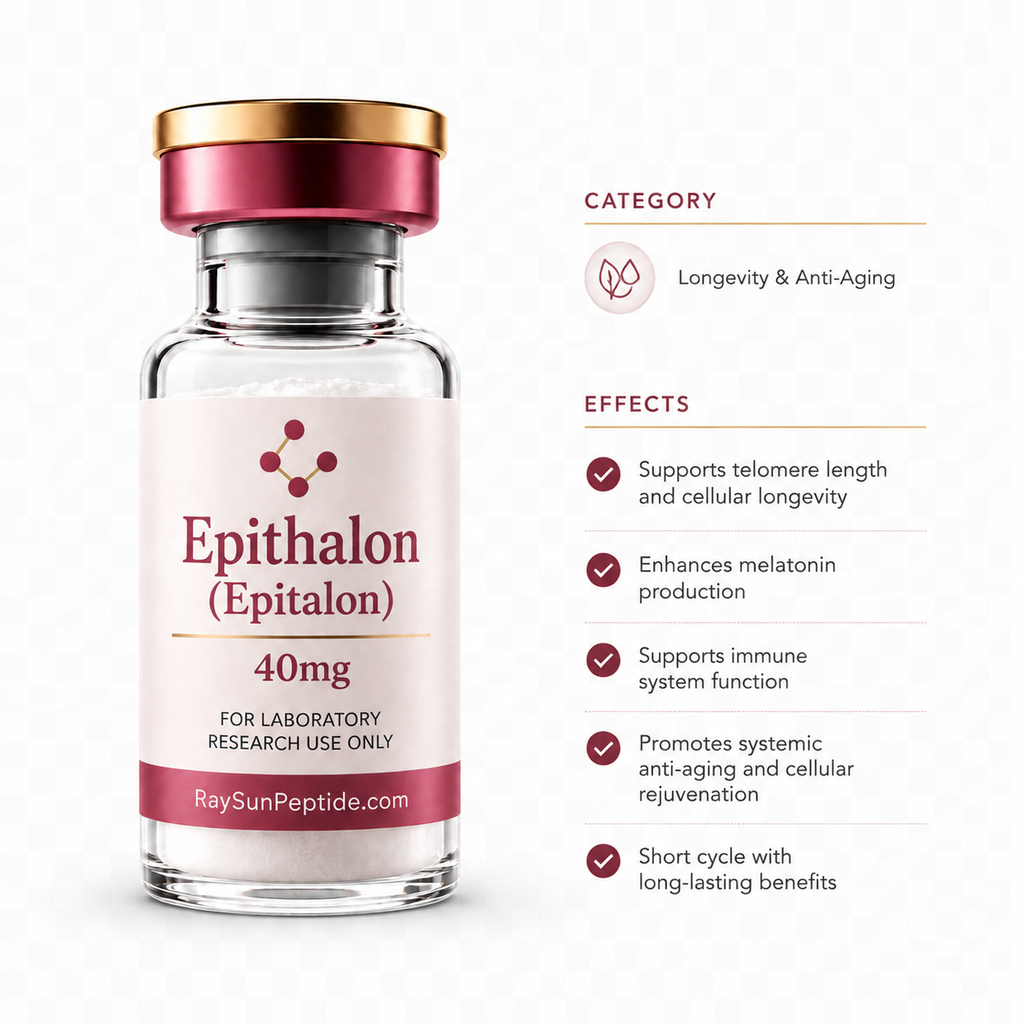
Yes, Vesugen and Epitalon are synergistic in comprehensive anti-aging protocols. Vesugen targets vascular aging while Epitalon addresses pineal/endocrine aging - using them together provides multi-system rejuvenation. They're often combined in Khavinson anti-aging programs with Thymalin or Vilon for enhanced effects.
Does Vesugen reduce senescent cell burden or just prevent new senescence?
Vesugen reduces senescence markers and reverses the Senescence-Associated Secretory Phenotype (SASP) in aging cells through stem cell activation and epigenetic regulation. This suggests it may reduce existing senescent cells, though the primary mechanism is prevention and restoration rather than elimination of aged cells.