MOTS-c
Well StudiedMitochondrial-derived peptide (MDP)
MOTS-c (Mitochondrial Open Reading Frame of the 12S rRNA-c) is a mitochondrial-derived peptide of 16 amino acids. It has been studied in metabolic research for its effects on AMPK signaling, glucose regulation, and fatty acid oxidation. Published research has investigated its role in mitochondrial-nuclear communication and metabolic homeostasis. RaysunPeptide supplies MOTS-c for qualified research and laboratory applications.
Mechanism of Action
Inhibits the folate cycle leading to AMPK activation. Under metabolic stress, translocates to nucleus to bind stress-response transcription factors, regulating genes involved in metabolism, insulin sensitivity, and cellular adaptation.
Key Benefits
Molecular Data
Dosing Protocols
| Goal | Dose | Frequency | Route |
|---|---|---|---|
| Metabolic health | 5-10mg | Once daily | SubQ |
| Anti-aging protocol | 15mg | 3x weekly | SubQ |
| Exercise performance | 10-15mg | Pre-workout | SubQ |
| Conservative start | 5mg | Once daily | SubQ |
Research Indications
Metabolic
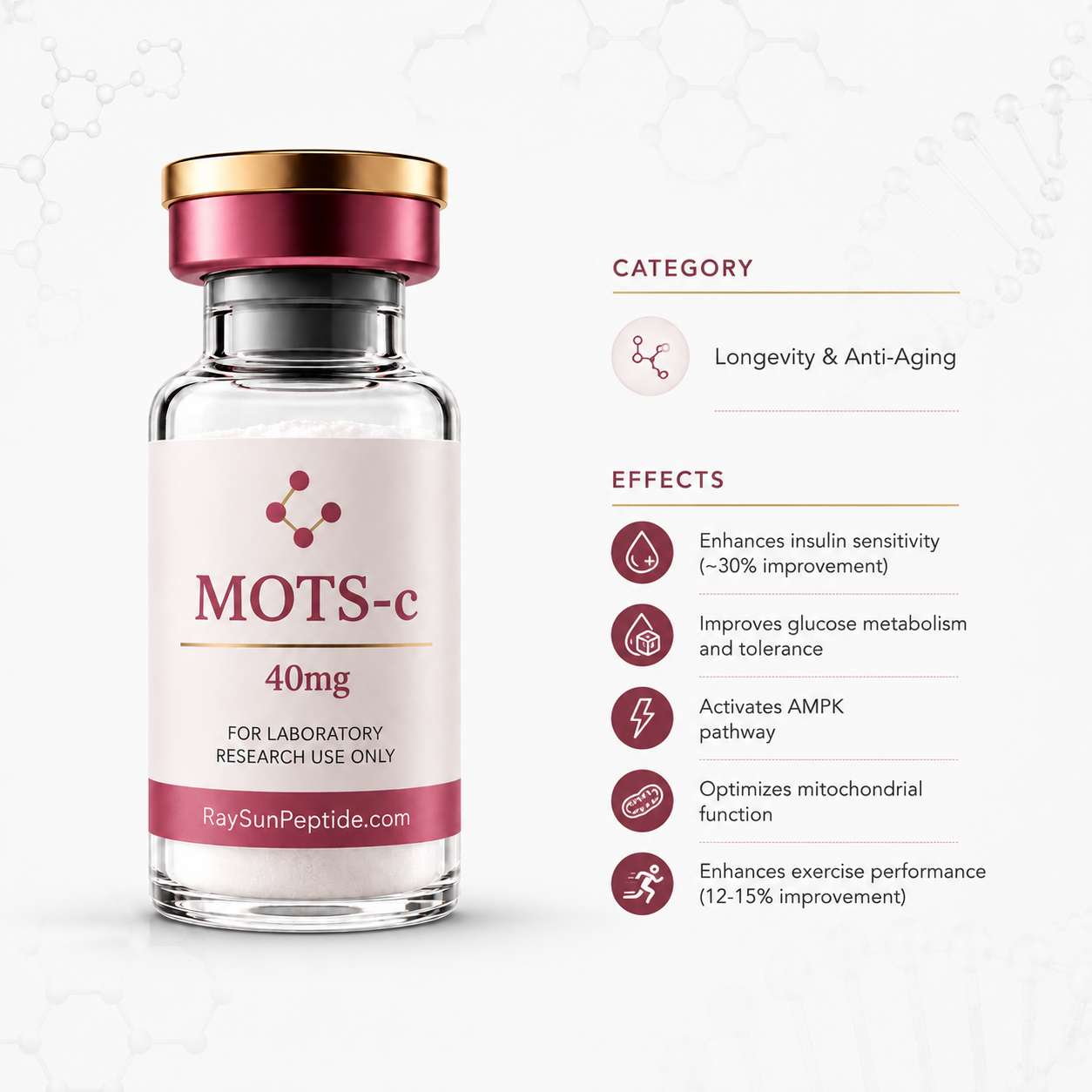
Improves insulin sensitivity by ~30% in animal studies through AMPK activation.
Restores metabolic function via insulin receptor sensitization.
Promotes fatty acid oxidation despite identical caloric intake.
Anti-Aging
Reverses age-dependent physical decline in animal models.
Enhances mitochondrial function via PGC-1α activation.
6.4% median lifespan extension observed in mice studies.
Exercise Performance
12-15% improvement in running performance from single dose in studies.
Exercise induced 11.9-fold increase in skeletal muscle MOTS-c.
Supports muscle recovery and adaptation to exercise.
Peptide Interactions
Both activate AMPK; monitor for additive hypoglycemic effects.
Complementary mitochondrial enhancement through different pathways.
Different mechanisms allow safe combination.
Both are AMPK activators; monitor for additive effects.
Complementary SIRT1/AMPK activation pathways.
May require dose adjustments to prevent hypoglycemia.
What to Expect
Side Effects & Safety
Common (Generally Mild)
- •Generally well-tolerated in animal studies with minimal side effects
- •Mild injection site reactions (redness, swelling)
Stop Signs (Seek Medical Attention)
- ⚠Severe allergic reactions or anaphylaxis
- ⚠Recurrent hypoglycemia (<50 mg/dL)
- ⚠Persistent severe injection site reactions
- ⚠Unexplained weight loss >10% of baseline
Contraindications
- ✕Pregnancy or breastfeeding
- ✕WADA prohibited substance (banned for athletic competition)
- ✕Limited long-term human safety data
Quality Checklist
Good Signs ✓
- White to off-white powder with uniform appearance indicating proper storage
- Clear, colorless solution without particles after reconstitution
- Sequence verification (MRWQEMGYIFYPRKLR) with CoA >95% purity by RP-HPLC
Warning Signs !
- Limited human clinical data - start conservatively
- WADA banned substance - not for competitive athletes
Bad Signs ✕
- Discolored powder or solution
- Cloudy solution after reconstitution
- No certificate of analysis available
References
Landmark discovery paper identifying MOTS-c as a 16-amino-acid peptide encoded by mitochondrial DNA. Prevented age-dependent and high-fat-diet-induced insulin resistance and obesity in mice via AMPK activation in skeletal muscle.
View on PubMed →MOTS-c rapidly translocates to the nucleus within 30 minutes under metabolic stress in an AMPK-dependent manner, where it interacts with stress-responsive transcription factors including NRF2 and ATF7 to regulate nuclear gene expression.
View on PubMed →Exercise induced an 11.9-fold increase in skeletal muscle MOTS-c. MOTS-c enhanced physical performance across age groups and improved muscle homeostasis in aging mice.
View on PubMed →4-8 weeks of voluntary running increased MOTS-c protein expression ~1.5-5-fold in rodent skeletal muscles, sustained for 4-6 weeks of detraining. Single dose improved acute exercise performance.
View on PubMed →MOTS-c significantly alleviated hyperglycemia, improved insulin sensitivity and glucose tolerance, and reduced birth weight and offspring death in a gestational diabetes mouse model.
View on PubMed →FAQs
How does MOTS-c help with insulin resistance?
MOTS-c activates AMPK, a cellular energy sensor that improves insulin sensitivity by approximately 30% in animal studies. It works through the Folate-AICAR-AMPK pathway, enhancing glucose uptake in muscle tissue. This addresses metabolic dysfunction at the mitochondrial level.
Does MOTS-c work for weight loss?
Indirectly. MOTS-c promotes fatty acid oxidation despite identical caloric intake, improving metabolic flexibility. Combined with exercise and diet, it enhances the body's ability to burn fat for fuel. It's not a direct weight-loss peptide like GLP-1 agonists, but supports metabolic health.
Can MOTS-c extend lifespan in humans?
Unknown in humans. Animal studies show 6.4% median lifespan extension in mice. MOTS-c clearly supports healthspan and metabolic optimization, but human longevity data doesn't exist. It's a longevity-supporting compound, not a proven life-extension drug.
Should I take MOTS-c before or after exercise?
Morning before exercise is optimal. MOTS-c activates AMPK within 30 minutes, enhancing exercise performance by 12-15% in studies. Post-workout benefits are also seen for recovery. However, pre-exercise timing maximizes the performance enhancement during the workout itself.