FOXO4
EmergingD-retro-inverso peptide
FOXO4 (Forkhead Box O4) is a transcription factor that has been studied in aging research, particularly in the context of cellular senescence and the p53-mediated senescence pathway. Published research has investigated its role in cell cycle regulation and its interactions with nuclear PML bodies. RaysunPeptide supplies FOXO4 for qualified research and laboratory applications.
Mechanism of Action
FOXO4-DRI competes with FOXO4 for binding to p53, disrupting their protective interaction in senescent cells. This causes p53 to be excluded from the nucleus and triggers cell-intrinsic apoptosis (programmed cell death). Critically, this mechanism is highly selective: the FOXO4-p53 interaction is a specific vulnerability of senescent cells, while FOXO4 is minimally expressed in healthy tissues, leaving functional cells largely unharmed.
Key Benefits
Molecular Data
Dosing Protocols
| Goal | Dose | Frequency | Route |
|---|---|---|---|
| Standard senolytic protocol | 25-33 mg | 3 doses, every other day (6 days total) | SubQ or IV |
| Mouse study equivalent | 5 mg/kg (translates to ~25 mg for 60kg human) | 3 doses on alternate days | IP (original study) |
Research Indications
Anti-Aging
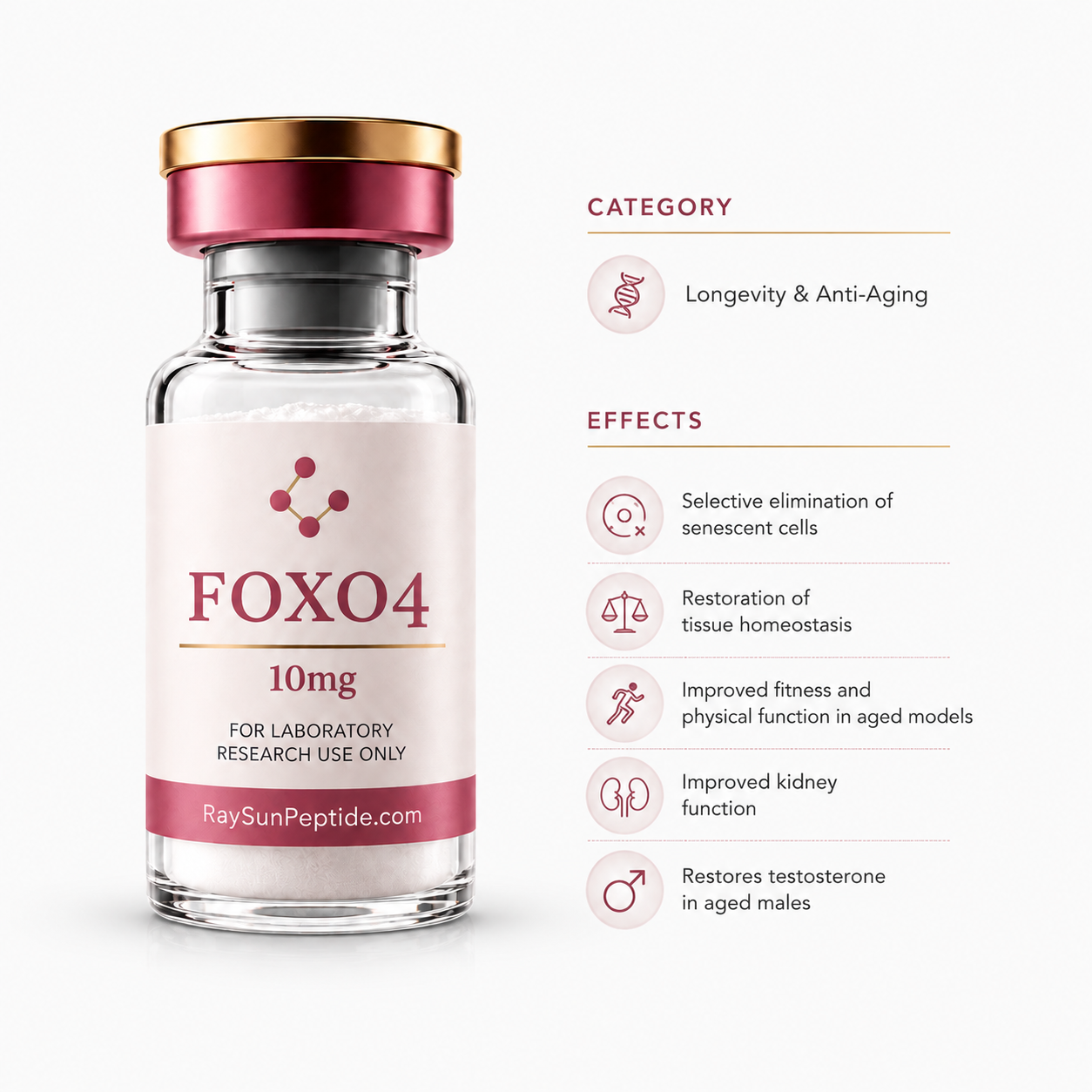
Selectively induces apoptosis in senescent cells while sparing healthy tissue.
Restores tissue homeostasis and function in naturally aged animal models.
Improved fitness, mobility, and physical appearance in aged mice.
Organ Function
Restored renal function in aged and fast-aging mouse models.
Improved testicular microenvironment and testosterone secretion in aged mice.
Removes senescent chondrocytes, potentially benefiting joint health.
Chemoprotection
Neutralizes doxorubicin-induced chemotoxicity by clearing treatment-induced senescent cells.
Peptide Interactions
Other senolytics may have additive effects on senescent cell clearance.
Different senolytic mechanisms; sequential use may be considered.
Different mechanisms; Humanin protects healthy cells while FOXO4-DRI clears senescent ones.
What to Expect
Side Effects & Safety
Common (Generally Mild)
- •Limited human data available
- •Generally well-tolerated in animal studies
Stop Signs (Seek Medical Attention)
- ⚠Allergic reactions
- ⚠Unexpected adverse effects
Contraindications
- ✕Not yet approved for human use
- ✕Pregnancy or breastfeeding
- ✕Unknown safety in immunocompromised individuals
- ✕Active cancer (theoretical - consult oncologist)
Quality Checklist
Good Signs ✓
- Stored at -20°C or below
- White lyophilized powder
- High purity (>95%)
- Clear solution after reconstitution
Warning Signs !
- Temperature excursions may affect potency
Bad Signs ✕
- Exposed to room temperature for extended periods
- Discoloration
- Repeated freeze-thaw cycles
References
FOXO4-DRI restored fitness, fur density, and renal function in aged mice using 5 mg/kg IP, 3 doses on alternate days. Well-tolerated under therapeutic conditions.
Self-experimenters have translated the mouse protocol to ~25 mg per injection subcutaneously, 3 doses every other day, for 75-100 mg total per treatment cycle.
View on PubMed →FOXO4-DRI improved testicular microenvironment and testosterone secretion by clearing senescent Leydig cells.
Removed >50% of senescent chondrocytes without affecting healthy early-passage cells.
Structural analysis revealed FOXO4-DRI binds disordered p53TAD2, forming transiently folded complex.
FAQs
What makes FOXO4-DRI different from other anti-aging approaches?
FOXO4-DRI is the first senolytic peptide that selectively eliminates 'zombie' senescent cells accumulating with age, whereas most anti-aging approaches target symptoms or regeneration. It disrupts FOXO4-p53 interaction in senescent cells to trigger apoptosis, effectively removing damaged cells rather than just supporting healthy ones.
Is FOXO4-DRI safe if I have a history of cancer?
FOXO4-DRI is theoretically contraindicated in active cancer due to p53 pathway modulation, though the mechanism (disrupting FOXO4-p53 interaction) differs from therapies affecting healthy p53. Cancer history requires careful medical consideration. Most sources recommend consulting an oncologist before using, especially with active malignancy.
How much FOXO4-DRI should a human dose based on mouse studies?
The original 2017 mouse study used 5 mg/kg IP, 3 times on alternate days. For a 60kg human, this translates to approximately 25mg per dose, administered as 3 doses every other day (75-100mg total per cycle). However, human pharmacokinetics differ significantly from mice, making these translations speculative.
What visible changes occurred in aged mice treated with FOXO4-DRI?
Aged mice receiving FOXO4-DRI showed restored fur density, improved physical fitness, enhanced organ function (particularly kidneys), and improved testosterone levels. These dramatic improvements suggest senescent cell clearance genuinely restored tissue homeostasis, though results in humans remain theoretical.