Glutathione (GSH)
Extensively StudiedTripeptide
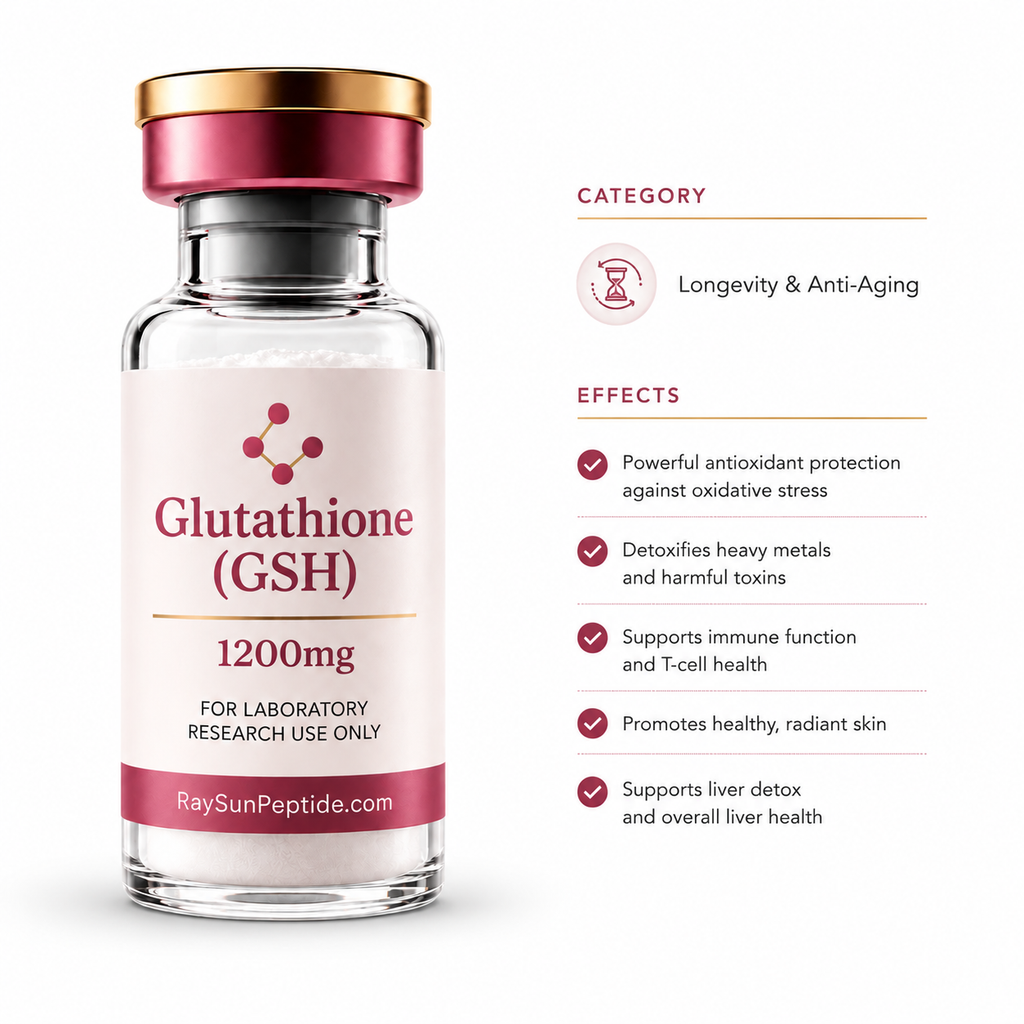
Glutathione (GSH) is a tripeptide composed of glutamate, cysteine, and glycine that serves as a major intracellular antioxidant. It has been extensively studied in biochemistry research for its role in redox homeostasis, xenobiotic metabolism, and cellular defense against oxidative stress. Published research has examined its enzymatic recycling pathways and its interactions with reactive oxygen species. RaysunPeptide supplies Glutathione for qualified research and laboratory applications.
Mechanism of Action
Glutathione acts as the primary intracellular antioxidant, directly neutralizing reactive oxygen species and regenerating other antioxidants like vitamins C and E. It plays crucial roles in detoxification by conjugating with toxins for elimination, supports immune function through T-cell regulation, protects mitochondria, and maintains cellular redox balance. The thiol group of cysteine provides its antioxidant activity.
Key Benefits
Molecular Data
Dosing Protocols
| Goal | Dose | Frequency | Route |
|---|---|---|---|
| General wellness | 100-200 mg | 2-3x weekly | SubQ |
| Intensive therapy | 200-600 mg | 2-3x weekly | SubQ or IV |
| Detoxification | 600-1000 mg | Weekly IV | IV (clinical) |
| Parkinson's support | 1400 mg | 2-3x weekly | IV (clinical) |
Research Indications
Antioxidant & Detox
Primary cellular antioxidant that neutralizes free radicals and protects against oxidative damage.
Binds and facilitates elimination of heavy metals and environmental toxins.
Essential for hepatic detoxification pathways and liver protection.
Neurological
IV glutathione showed improvements in mental function and speech quality in case studies.
Protects neurons against oxidative damage and supports brain health.
Immune & Skin
Improved Th1 cytokines and immune markers in HIV patients with supplementation.
Supports skin health with potential brightening effects through melanin modulation.
Combats age-related oxidative stress and supports cellular longevity.
Peptide Interactions
Both support cellular energy and antioxidant systems; commonly combined in longevity protocols.
Glutathione regenerates oxidized vitamin C, creating synergistic antioxidant effects.
Both protect mitochondria; different mechanisms complement each other.
No known negative interactions.
What to Expect
Side Effects & Safety
Common (Generally Mild)
- •Injection site reactions
- •Mild nausea (usually with higher doses)
- •Abdominal cramping
Stop Signs (Seek Medical Attention)
- ⚠Signs of allergic reaction (rash, difficulty breathing)
- ⚠Severe abdominal pain
- ⚠Signs of zinc deficiency
Contraindications
- ✕Known allergy to glutathione
- ✕Pregnancy or breastfeeding (insufficient safety data)
- ✕Asthma (may trigger bronchospasm in some)
Quality Checklist
Good Signs ✓
- White to off-white lyophilized powder
- Clear solution after reconstitution
- Reduced (not oxidized) form
- Intact vacuum seal
Warning Signs !
- Slight yellowing may indicate oxidation
Bad Signs ✕
- Dark yellow or brown coloration
- Cloudy solution
- Strong sulfur odor (beyond mild)
References
21 PD subjects randomized to IV glutathione 1,400 mg or placebo 3x weekly for 4 weeks. Well tolerated with no safety concerns. Preliminary data suggested possibility of mild symptomatic effect.
View on PubMed →13-week liposomal glutathione supplementation in HIV-infected individuals resulted in significant increases in plasma Th1 cytokines IL-12 and IFN-γ, restoring immune response.
View on PubMed →Narrative review concluding glutathione has potential as a depigmenting agent. Oral supplementation shows significant but variable melanin reduction. IV use associated with safety concerns including anaphylaxis.
View on PubMed →Comprehensive review establishing glutathione's roles in antioxidant defense, nutrient metabolism, regulation of gene expression, DNA/protein synthesis, cell proliferation and apoptosis, immune response, and protein glutathionylation.
View on PubMed →FAQs
Why is injectable glutathione better than oral supplements?
Oral glutathione has poor bioavailability due to GI breakdown by enzymes and stomach acid, with most being destroyed before absorption. Injectable glutathione bypasses GI degradation for direct cellular uptake. IV or SubQ delivery achieves 10-100x higher bioavailable concentrations than even liposomal oral forms.
Can glutathione actually improve skin tone or is it just a myth?
Glutathione shows legitimate skin-lightening effects through melanin modulation—systematic reviews found oral glutathione at 250-500mg significantly reduced melanin index versus placebo. IV glutathione also shows effects but with variable and controversial results. It's not a myth but results vary greatly individually.
Does glutathione help with Parkinson's disease?
A double-blind pilot study found IV glutathione (1,400 mg, 3x weekly for 4 weeks) was well-tolerated in 21 Parkinson's patients with preliminary suggestions of symptomatic benefit. However, effects were modest. It's a research-supported adjunct therapy rather than a primary treatment, requiring medical supervision.
What's the difference between reduced and oxidized glutathione?
Reduced glutathione (GSH) is the active antioxidant form that neutralizes free radicals. Oxidized glutathione (GSSG) is the inactive form after neutralizing a free radical. You want reduced glutathione supplements—oxidized forms provide no antioxidant benefit. Quality products specify 'reduced' on the label.