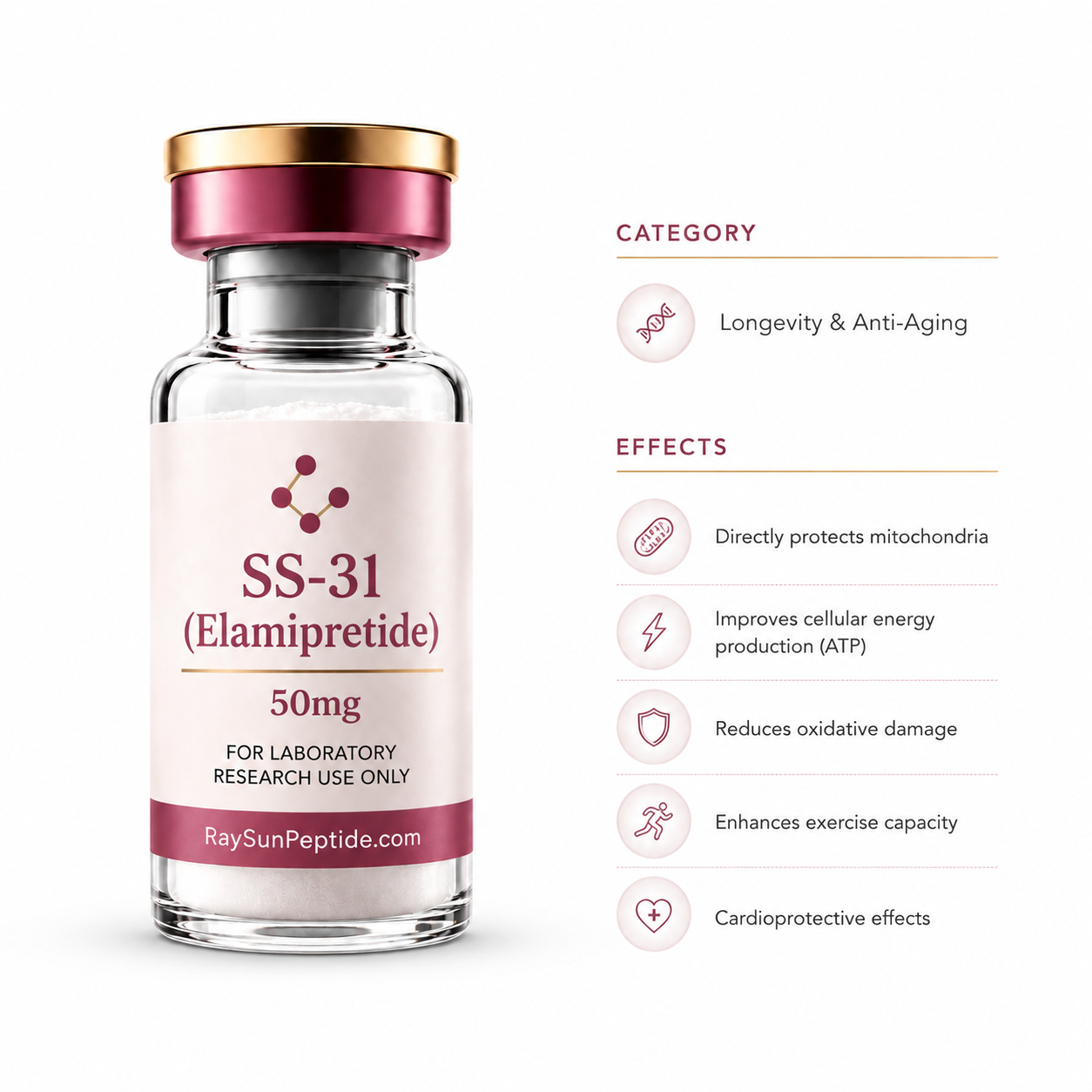
SS-31 (Elamipretide)
Well StudiedAromatic-cationic tetrapeptide
SS-31 (Elamipretide/Bendavia) is a mitochondria-targeting peptide that has been studied in preclinical research for its effects on mitochondrial function and oxidative stress. It has been investigated for its interactions with cardiolipin in the inner mitochondrial membrane and its effects on electron transport chain efficiency. Published research has examined its role in cellular bioenergetics. RaysunPeptide supplies SS-31 for qualified research and laboratory applications.
Mechanism of Action
Selectively binds to cardiolipin in inner mitochondrial membrane, preventing lipid peroxidation and optimizing electron transport chain function. This improves ATP production and reduces oxidative damage at the mitochondrial level.
Key Benefits
Molecular Data
Dosing Protocols
| Goal | Dose | Frequency | Route |
|---|---|---|---|
| General mitochondrial support | 5-10mg | Once daily | SubQ |
| Athletic performance | 10-20mg | Once daily pre-workout | SubQ |
| Clinical protocols | 40mg | Once daily | SubQ or IV |
| Acute cardioprotection | 0.25mg/kg/hr | Continuous infusion | IV |
Research Indications
Mitochondrial
Optimizes electron transport chain function for improved cellular energy.
Prevents cardiolipin peroxidation and reduces mitochondrial oxidative damage.
Significant improvements in 6-minute walk test and fatigue scores in PMM patients.
Cardiovascular
Reduces cardiac injury markers and improves mitochondrial function in surgical patients.
Reduces ischemia-reperfusion injury and supports cardiac function.
Enhanced exercise capacity and reduced fatigue.
Anti-Aging
Reversed age-related decline in muscle function in animal studies.
Neuroprotective effects demonstrated in Alzheimer's models.
Supports overall cellular health through mitochondrial optimization.
Peptide Interactions
Both support mitochondrial function through different mechanisms.
Both are mitochondrial peptides with complementary mechanisms.
May work together to protect cellular function.
Different mechanisms; no conflicts.
BPC-157 focuses on tissue repair while SS-31 targets cellular energetics.
Both cardioprotective via different pathways.
What to Expect
Side Effects & Safety
Common (Generally Mild)
- •Excellent safety profile in clinical trials
- •No significant side effects reported at therapeutic doses
- •Mild injection site reactions possible
- •Safe for long-term use based on current data
Stop Signs (Seek Medical Attention)
- ⚠Severe injection site reactions
- ⚠Allergic reaction signs (rash, breathing difficulty)
- ⚠Unusual fatigue or weakness (paradoxical reaction)
- ⚠Cardiovascular symptoms
- ⚠Severe headaches or vision changes
Contraindications
- ✕Known hypersensitivity to peptides
- ✕Pregnancy or breastfeeding (limited data)
Quality Checklist
Good Signs ✓
- Pharmaceutical grade (>98% purity required for clinical applications)
- Clear, colorless solution after reconstitution
- Certificate of Analysis available
- Proper cold chain maintenance
Warning Signs !
- Light sensitive - protect from exposure using amber vials
- Solution pH should be 6.5-7.5 (physiological range)
Bad Signs ✕
- Yellow or brown discoloration indicates degradation
- Cloudy solution or visible particles
- Improper storage conditions
References
Phase I/II trial in 36 patients showed dose-dependent improvement in 6-minute walk test (64.5m vs 20.4m placebo at highest dose) after 5 days of treatment with excellent safety profile.
View on PubMed →IV infusion in heart failure patients showed significant decrease in left ventricular end-diastolic volume (-18 mL, P=0.009) and end-systolic volume (-14 mL, P=0.005) at the highest dose.
View on PubMed →8 weeks of SS-31 (3 mg/kg/day) in aged mice reversed age-related decline in mitochondrial ATP production, restored redox homeostasis, and significantly increased treadmill endurance.
View on PubMed →40mg daily in Barth syndrome patients. Primary endpoints not met at 12 weeks, but open-label extension showed cumulative 96.1m improvement in 6MWT at 168 weeks (P=0.003) with sustained fatigue improvements.
View on PubMed →Phase 3 trial (218 patients) did not meet primary 6MWT endpoint overall, but post-hoc analysis showed improvement in patients with nuclear DNA variants. Well-tolerated with mild-to-moderate adverse events.
View on PubMed →Comprehensive review covering PROGRESS-HF, TAZPOWER, MMPOWER-3, and ReCLAIM trials. Highlights elamipretide's unique cardiolipin-binding mechanism and broad therapeutic potential across mitochondrial diseases.
View on PubMed →FAQs
Is SS-31 light sensitive and does it really need amber vials?
Yes, SS-31 is photosensitive and requires light protection. Store reconstituted solutions in amber vials or dark containers at 2-8°C. The peptide's aromatic-cationic structure is vulnerable to photodegradation, which can compromise its mitochondrial-binding effectiveness.
How quickly does SS-31 improve exercise tolerance?
Initial improvements in energy and fatigue appear within 1-3 days, with better exercise endurance noticed by week 1-2. Peak exercise capacity improvements typically develop over 4-8 weeks as mitochondrial ATP production optimizes.
Can SS-31 be used with NAD+ boosters and will they interact?
Yes, SS-31 and NAD+ are synergistic because both target mitochondrial function through complementary mechanisms - SS-31 directly protects cardiolipin while NAD+ supports electron transport chain enzymes. Combining them may enhance energy production more than either alone.
What's the difference between clinical-grade SS-31 (40mg daily) and athletic performance doses?
Athletic protocols use 10-20mg daily, while clinical trials for mitochondrial disease used 40mg daily. The higher clinical dose targets more significant mitochondrial dysfunction; athletic users typically achieve performance benefits at lower doses with less potential for excessive metabolic stimulation.