PNC-27
EmergingChimeric peptide
PNC-27 is a synthetic peptide containing a p53 binding domain and a cell-penetrating sequence. It has been studied in cancer research for its effects on HDM2 binding and its potential role in tumor cell apoptosis pathways. Published research has investigated its cellular uptake mechanisms and interactions with MDM2. RaysunPeptide supplies PNC-27 for qualified research and laboratory applications.
Mechanism of Action
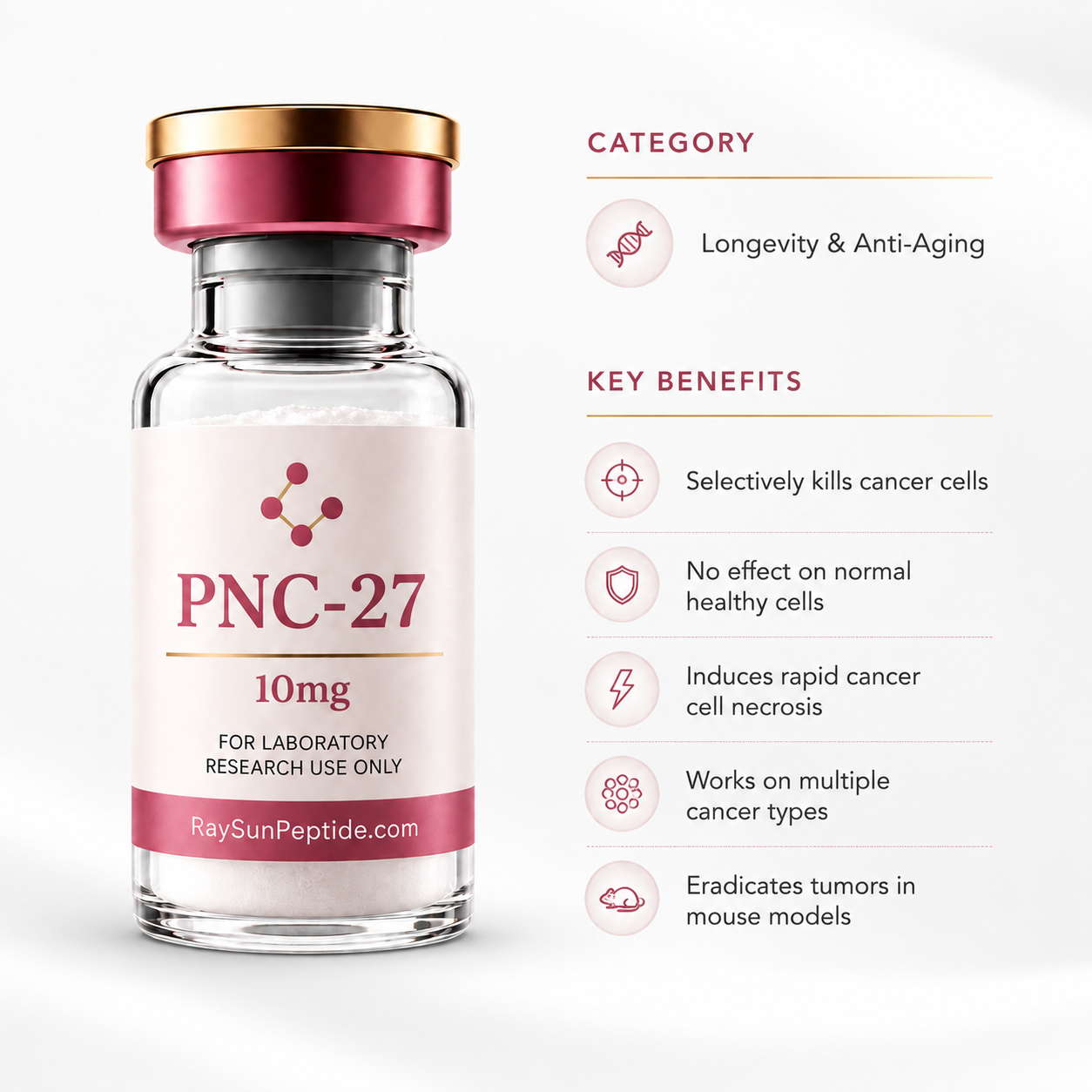
PNC-27 exploits a unique vulnerability of cancer cells: the presence of HDM-2 (human double minute 2, also called MDM2) on their cell surface. The peptide's p53 residues adopt a conformation that binds directly to membrane-bound HDM-2, inducing transmembrane pore formation. This causes rapid tumor cell necrosis (not apoptosis). Additionally, PNC-27 enters cancer cells and disrupts mitochondrial membranes. Normal cells lack surface HDM-2 expression and are completely spared.
Key Benefits
Molecular Data
Dosing Protocols
| Goal | Dose | Frequency | Route |
|---|---|---|---|
| Research protocol | Variable by study | Research protocols | IP or direct tumor injection (research) |
Research Indications
Cancer Research
PNC-27 shows selective cytotoxicity against pancreatic cancer cells in research.
Demonstrated effectiveness against breast cancer cell lines.
Induces necrosis of K-562 leukemia cells through HDM-2 binding.
Shows selective targeting of melanoma cells.
Mechanism Studies
Most effective against cancers with high membrane HDM-2 expression.
Model compound for studying cancer-selective therapies.
Peptide Interactions
Potential for combination therapy being researched.
Combination studies not yet published.
What to Expect
Side Effects & Safety
Common (Generally Mild)
- •Limited data - primarily preclinical research
- •Generally well-tolerated in animal studies
Stop Signs (Seek Medical Attention)
- ⚠Not applicable - not approved for human use
Contraindications
- ✕Not approved for human use
- ✕Experimental research peptide only
- ✕Cancers without membrane HDM-2 may not respond
Quality Checklist
Good Signs ✓
- White lyophilized powder
- High purity (>95%)
- Clear solution after reconstitution
- Proper storage conditions
Warning Signs !
- Research chemical - limited quality standards
- Not all cancers express membrane HDM-2
Bad Signs ✕
- Discoloration
- Cloudy solution
- Particulates visible
References
PNC-27 binds membrane-bound HDM-2, inducing pore formation and cancer cell necrosis while sparing normal cells.
PNC-27 also enters cancer cells and disrupts mitochondrial membranes.
PNC-27 induces necrosis of K-562 leukemia cells lacking p53 through p53-independent pathway.
PNC-27 binds HDM-2 in p53 peptide-like structure, induces selective membrane-pore formation leading to cancer cell lysis.
FAQs
Why is PNC-27 described as 'cancer cell-selective' when normal cells can express HDM-2?
The key difference is location. Normal cells express HDM-2 intracellularly, not on their cell surface. PNC-27 requires membrane-bound HDM-2 to form pores. Cancer cells uniquely express HDM-2 on their plasma membrane, making them susceptible to attack while normal cells are completely spared.
Is PNC-27 closer to clinical trials than other peptide cancer therapies?
Not yet. PNC-27 remains in preclinical research with no human clinical trials initiated as of 2025.
Why would someone take PNC-27 if it doesn't prevent cancer recurrence?
PNC-27 is purely experimental—it eradicates tumor cells in mouse models through a unique mechanism (membrane pore formation + mitochondrial damage).
Could PNC-27 work on cancers that don't express HDM-2?
No. PNC-27's entire mechanism depends on membrane HDM-2 binding. Cancers without membrane HDM-2 expression wouldn't respond.