Pancragen
Moderate ResearchTetrapeptide bioregulator
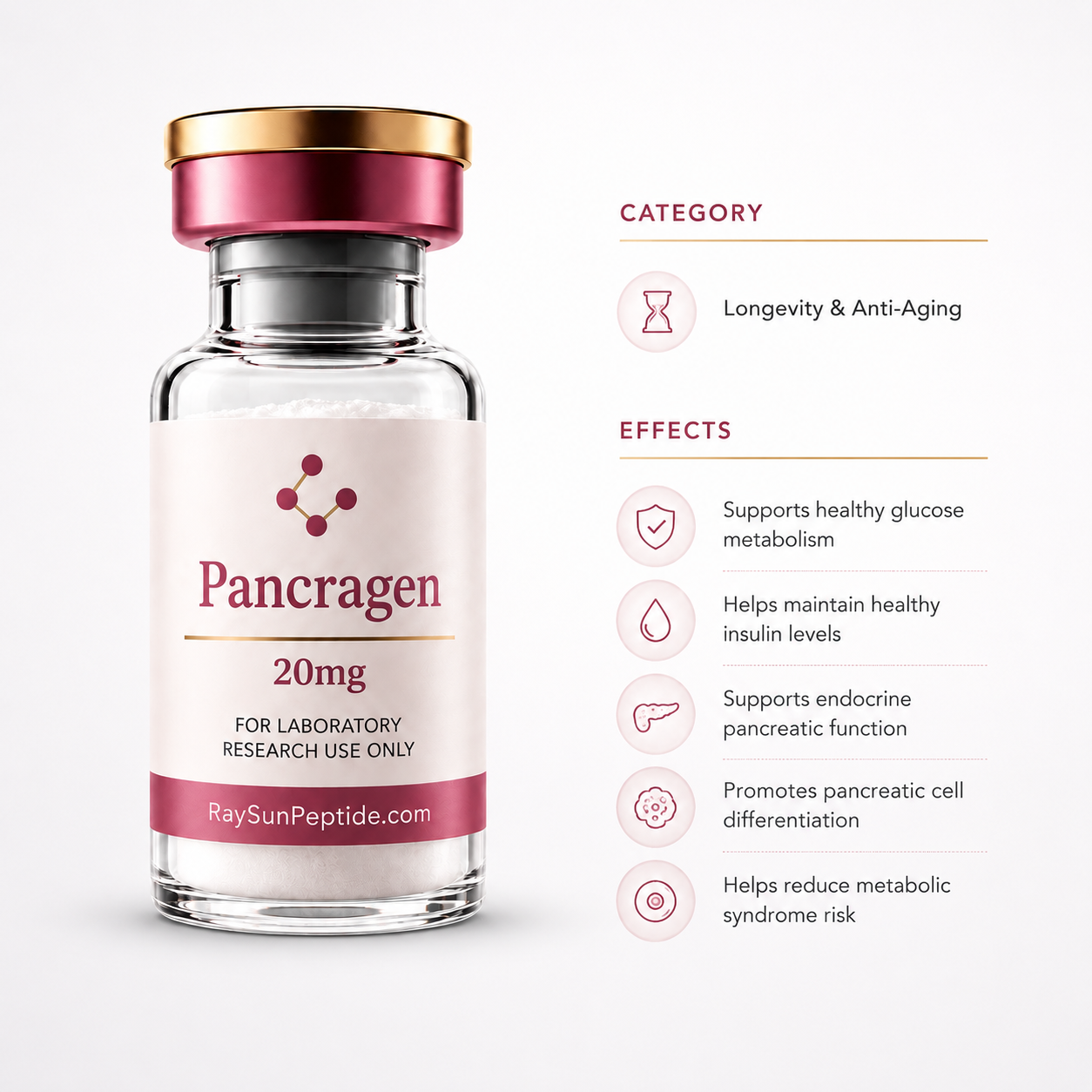
Pancragen is a peptide bioregulator that has been studied in pancreatic research for its effects on pancreatic tissue gene expression. Published research has investigated its role in pancreatic tissue regulation. RaysunPeptide supplies Pancragen for qualified research and laboratory applications.
Mechanism of Action
Pancragen works through epigenetic regulation by interacting with chromatin complexes and DNA structures to modulate pancreatic gene expression. Research shows it upregulates critical transcription factors for pancreatic cell maturation including Pdx1, Pax6, Ptf1a, Foxa2, Nkx2.2, and Pax4.
Key Benefits
Molecular Data
Dosing Protocols
| Goal | Dose | Frequency | Route |
|---|---|---|---|
| Standard protocol | 10-20 mg | Daily for 10-20 days | Oral capsules |
| Maintenance | 10 mg | 2-3 cycles yearly | Oral capsules |
Research Indications
Metabolic Support
Corrects age-related glucose tolerance disturbances in primate studies.
Reduces incidence and magnitude of metabolic syndrome.
Helps control blood sugar through pancreatic function support.
Pancreatic Health
Impacts differentiation of pancreatic cells during aging.
Improves endocrine function of the pancreas.
Addresses age-related imbalance of pancreatic function.
Anti-Aging
Directly interacts with DNA to regulate pancreatic gene expression.
Peptide Interactions
Often combined in comprehensive anti-aging Khavinson protocols.
Different organ targets; can be used in comprehensive bioregulator protocols.
Part of Khavinson bioregulator family; targets different tissue.
Both affect glucose metabolism; interaction unknown.
What to Expect
Side Effects & Safety
Common (Generally Mild)
- •Generally well-tolerated
- •Minimal side effects reported
Stop Signs (Seek Medical Attention)
- ⚠Allergic reactions
- ⚠Unusual blood sugar changes
- ⚠Signs of hypoglycemia
Contraindications
- ✕Active pancreatic emergencies (seek medical care)
- ✕Known hypersensitivity
- ✕Pregnancy or breastfeeding
- ✕Type 1 diabetes (consult physician)
Quality Checklist
Good Signs ✓
- White powder or capsules
- Clear solution if reconstituted
- Proper packaging and labeling
Warning Signs !
- Unknown source or purity
Bad Signs ✕
- Discoloration
- Unusual odor
- Damaged packaging
References
Pancragen normalized insulin and C-peptide levels, suggesting recovery of disturbed glucose tolerance in old animals.
KEDW directly interacts with DNA and regulates pancreatic gene expression.
Pancragen affects pancreatic cell differentiation during aging process.
Pancragen shows promise for correction of metabolic disorders in elderly people.
FAQs
Does Pancragen actually cure glucose intolerance, or just mask it?
Pancragen works through epigenetic regulation—it directly interacts with DNA to upregulate pancreatic transcription factors. In primate studies, it normalized insulin and C-peptide levels, suggesting actual restoration of pancreatic function rather than masking. However, this only works for age-related glucose tolerance decline, not for Type 1 diabetes or severe pancreatic damage.
Can I take Pancragen if I have Type 1 diabetes?
The contraindications specifically list Type 1 diabetes as requiring physician consultation. Type 1 involves autoimmune pancreatic destruction, which is different from the age-related metabolic decline Pancragen targets.
How long before Pancragen improves my blood sugar levels?
Pancragen works through gene expression changes, so results are cumulative. During the 10-20 day cycle, transcription factors are upregulated, but visible glucose improvements typically emerge over weeks to months.
Should I monitor my blood sugar more closely while taking Pancragen?
Yes. The file specifically recommends blood glucose monitoring and HbA1c testing with long-term use.