NAD+ (Nicotinamide Adenine Dinucleotide)
Extensively StudiedCoenzyme
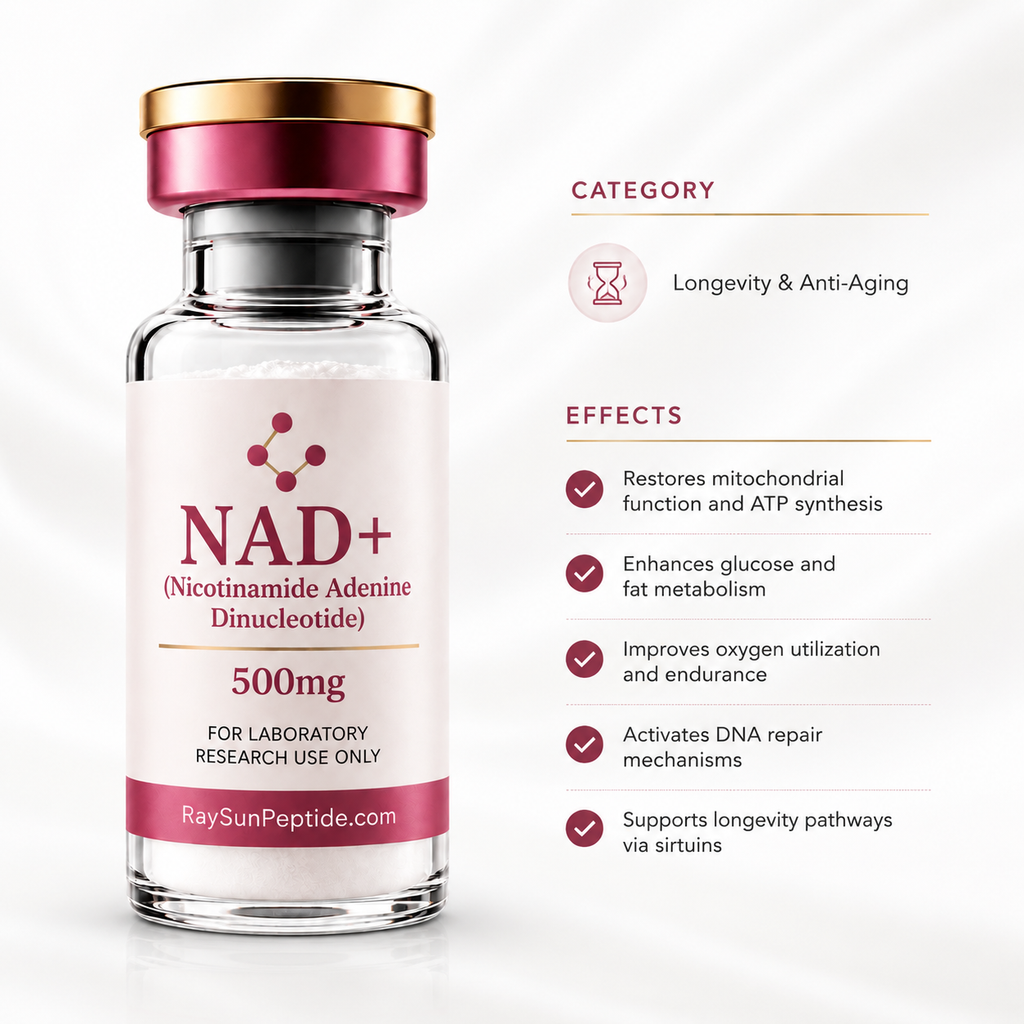
Nicotinamide Adenine Dinucleotide (NAD+) is a coenzyme found in all living cells that has been studied in metabolism and aging research. It has been investigated for its role in redox reactions, sirtuin activation, and PARP-mediated DNA repair. Published research has examined its decline with age and its effects on mitochondrial function. RaysunPeptide supplies NAD+ for qualified research and laboratory applications.
Mechanism of Action
Direct delivery to bloodstream ensures maximum cellular availability for energy production via ATP synthesis, DNA repair through PARP activation, and sirtuin-mediated longevity pathways. Supports mitochondrial function and metabolic homeostasis.
Key Benefits
Molecular Data
Dosing Protocols
| Goal | Dose | Frequency | Route |
|---|---|---|---|
| IV Infusion | 250-1000mg | 1-2x weekly | Intravenous |
| IM/SubQ | 100-500mg | 2-3x weekly | Intramuscular or Subcutaneous |
Research Indications
Energy & Metabolism
Restores NAD+ levels for optimal ATP synthesis
Enhances glucose and fat metabolism
Improves oxygen utilization and endurance
Anti-Aging
Activates PARP enzymes for genomic stability
Supports longevity pathways
May help clear senescent cells
Neurological
Improves mental clarity and focus
Supports neuronal health and function
Peptide Interactions
Enhanced cellular repair and energy production
Complementary tissue regeneration effects
Supports metabolic pathways enhanced by GLP-1 agonists
Growth hormone pathways benefit from improved energy metabolism
Enhanced recovery and anti-aging effects
Alcohol significantly reduces NAD+ levels and effectiveness
What to Expect
Side Effects & Safety
Common (Generally Mild)
- •Mild flushing during IV infusion
- •Temporary nausea
Stop Signs (Seek Medical Attention)
- ⚠Severe injection site reactions or infection signs
- ⚠Persistent nausea or gastrointestinal distress
- ⚠Unusual fatigue or weakness
- ⚠Allergic reactions (rash, swelling, breathing difficulty)
Contraindications
- ✕IV administration requires medical supervision
- ✕Avoid alcohol during treatment
- ✕Maintain consistent dosing schedule
Quality Checklist
Good Signs ✓
- Clear, colorless solution (injectable)
- Proper refrigeration at 2-8°C
- Sterile injection technique
- Third-party tested for purity
Warning Signs !
- Use reconstituted solution within 28 days
Bad Signs ✕
- Cloudy or discolored solution indicates contamination
- Room temperature storage degrades NAD+ rapidly
References
Seminal review establishing that NAD+ decline is central to aging, driving defects in sirtuin-mediated nuclear and mitochondrial functions and resulting in age-associated pathologies.
View on PubMed →Randomized crossover trial showing NR (1000 mg/day for 6 weeks) is well tolerated and effectively elevates NAD+ in healthy middle-aged and older adults, with preliminary evidence for reduced blood pressure and arterial stiffness.
View on PubMed →First human clinical trial showing NMN (250 mg/day for 10 weeks) increases skeletal muscle insulin signaling and sensitivity in overweight/obese postmenopausal women with prediabetes.
View on PubMed →Comprehensive review of NAD+ metabolism during aging, detailing how senescent cells drive NAD+ decline via CD38+ macrophage activation and outlining therapeutic restoration strategies.
View on PubMed →Meta-analysis of 8 RCTs (342 adults) found NMN significantly elevates blood NAD+ levels, but short-term supplementation (250-2000 mg/d) did not show significant improvements in glucose control or lipid profile in the general population.
View on PubMed →NR was well tolerated and significantly increased blood NAD+ concentrations in older adults with MCI. Global methylation analyses indicated modest NR-associated reduction in epigenetic age by PhenoAge and GrimAge clocks.
View on PubMed →FAQs
Why does NAD+ need to be injected instead of taken as a pill?
While oral NAD+ precursors (NMN, NR) are available and better absorbed than direct NAD+, injectable forms achieve 100% bioavailability and immediate cellular uptake. IV NAD+ bypasses the digestive system entirely, making it ideal for rapid energy restoration and those wanting guaranteed delivery.
Can I take NAD+ if I drink alcohol regularly?
No. Alcohol significantly reduces NAD+ levels and severely reduces the therapy's effectiveness. You should avoid alcohol during NAD+ treatment. If you drink regularly, consider addressing that habit first for maximum therapeutic benefit.
How long do the energy benefits of NAD+ last?
With IV NAD+, energy improvements typically appear within 1-2 weeks initially. However, the benefits build over time—by weeks 9-12, you'll see optimized metabolic function and sustained energy. Oral precursors take longer (weeks 5-8+) but provide continuous support when taken daily.
Does NAD+ actually reduce aging, or just make you feel more energetic?
NAD+ addresses aging mechanisms directly by activating sirtuins (longevity enzymes) and supporting DNA repair via PARP activation. However, it's not a fountain of youth—it optimizes cellular maintenance. Combined with healthy habits, NAD+ may help with appearance and age-related decline, but results vary individually.