N-Acetyl Epithalon Amidate
ResearchModified tetrapeptide
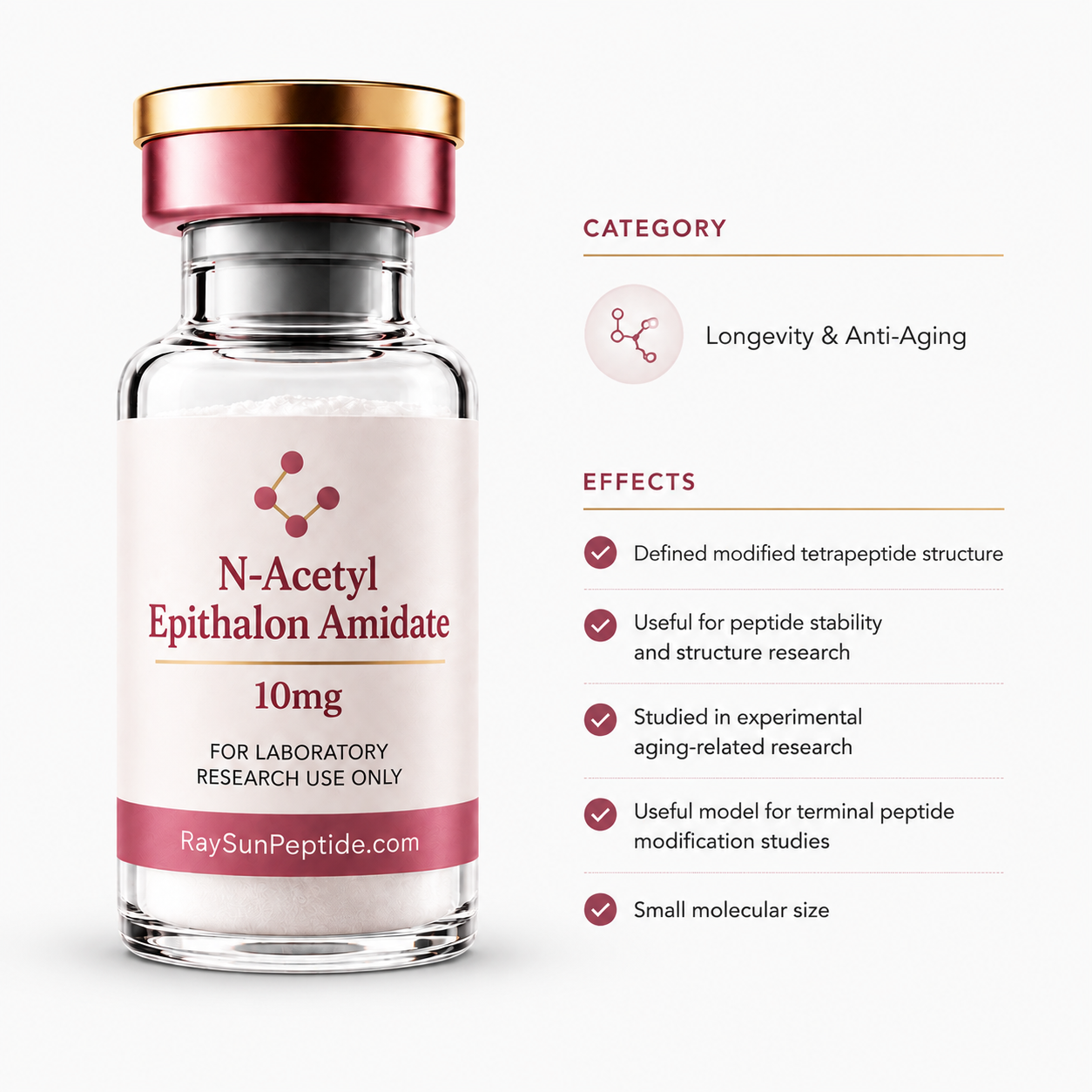
N-Acetyl Epithalon Amidate is a modified analog of Epithalon with enhanced metabolic stability due to N-terminal acetylation and C-terminal amidation. It has been studied in aging research for its effects on telomerase activity. RaysunPeptide supplies N-Acetyl Epithalon Amidate for qualified research and laboratory applications.
Mechanism of Action
Mechanistic evidence for the amidated derivative is limited. Research on Epitalon-related peptides has investigated cellular, oxidative-stress and longevity-associated pathways, but these findings should not be extrapolated directly to the modified derivative.
Key Benefits
Molecular Data
Research Indications
Aging Research
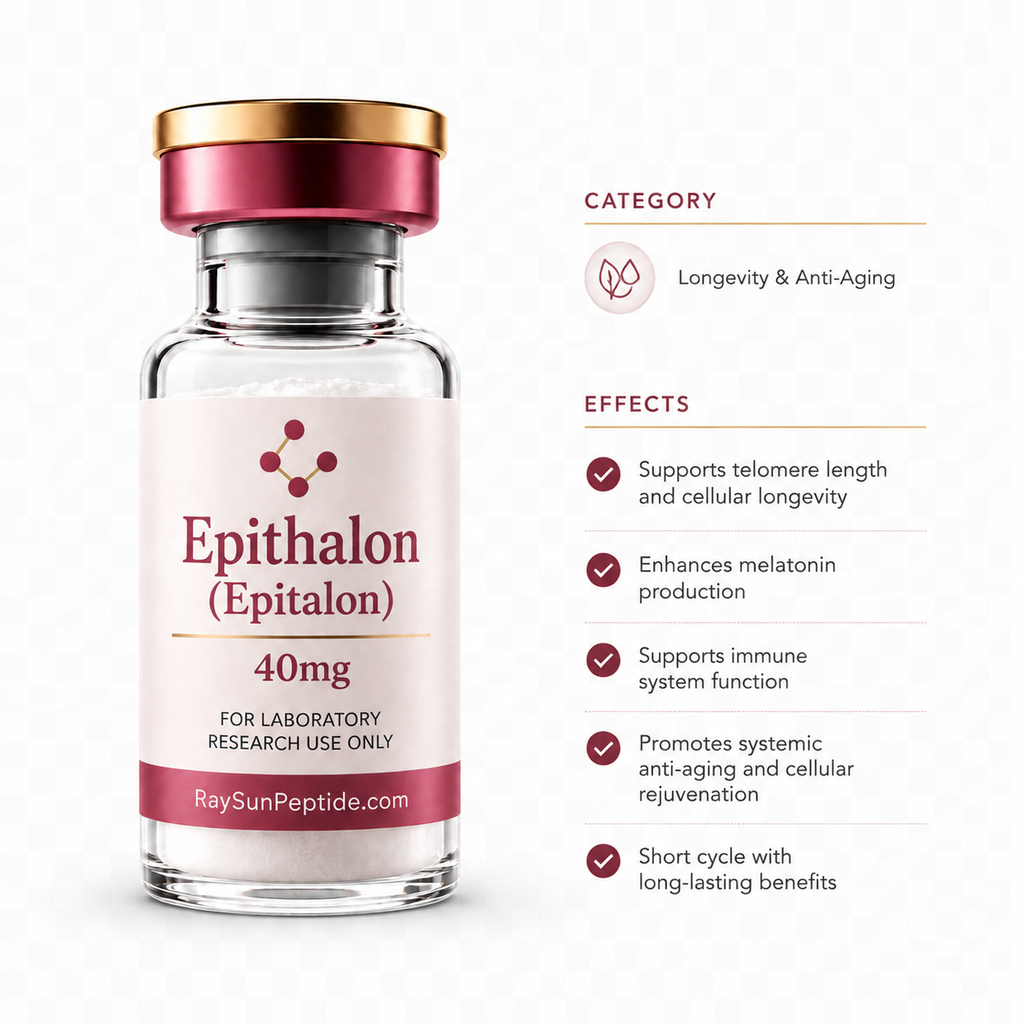
Epitalon-related compounds have been investigated in experimental models of cellular aging and longevity, although evidence for this specific derivative remains limited.
Peptide Chemistry
The compound provides a model for investigating the effect of N-acetylation and C-terminal amidation on peptide properties.
What to Expect
Side Effects & Safety
Common (Generally Mild)
- •Human safety profile not established
Stop Signs (Seek Medical Attention)
- ⚠Unknown clinical safety profile
- ⚠Unexpected reaction to experimental material
Contraindications
- ✕No established approved human therapeutic indication
- ✕Insufficient clinical safety data
FAQs
What is the sequence of N-Acetyl-Epitalon-Amidate?
The peptide backbone is AEDG, corresponding to Ala-Glu-Asp-Gly, with N-terminal acetylation and C-terminal amidation.
Is N-Acetyl-Epitalon-Amidate FDA approved?
No. It should be treated as an experimental research compound rather than an FDA-approved therapeutic.