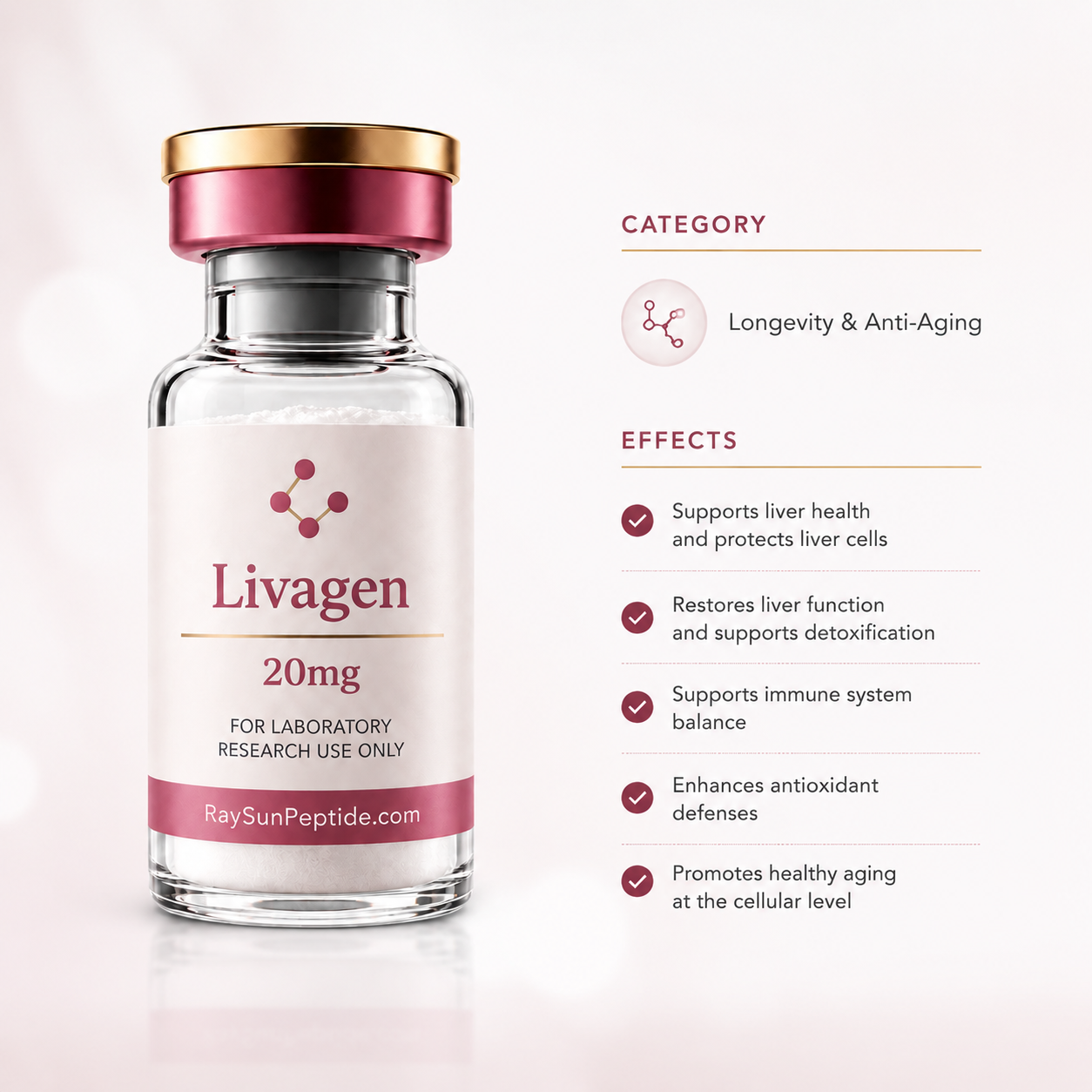
Livagen
Moderate ResearchTetrapeptide bioregulator
Livagen is a peptide bioregulator that has been studied in hepatology research for its effects on liver tissue gene expression and hepatocyte function. Published research has investigated its role in liver tissue regulation. RaysunPeptide supplies Livagen for qualified research and laboratory applications.
Mechanism of Action
Livagen works through direct effects on DNA structure and function. It decondenses chromatin (tightly packed DNA), increasing expression of certain genes and improving the 'youthful' profile of cells. The peptide activates multiple genes in lymphocytes, including previously silent ribosomal genes, boosting protein synthesis and cell activity. It exhibits hepatoprotective effects through normalizing immune and antioxidant status in liver tissue.
Key Benefits
Molecular Data
Dosing Protocols
| Goal | Dose | Frequency | Route |
|---|---|---|---|
| Standard protocol | 10-20 mg | Daily for 10-20 days | Oral capsules |
| Maintenance | 10 mg | 2-3 cycles yearly | Oral capsules |
Research Indications
Liver Support
Protects liver tissue through normalizing immune and antioxidant status.
Restores liver functions in both acute and chronic hepatitis models.
Shows protective properties in liver fibroid induration models.
Anti-Aging
Decondenses chromatin to restore youthful gene expression patterns.
Maximum hepatoprotective effects occur during aging.
Activates silent genes including ribosomal genes for improved protein synthesis.
Immune Support
Normalizes immune function alongside liver protective effects.
Peptide Interactions
Structurally similar; often combined in comprehensive anti-aging protocols.
Both support liver function and antioxidant status.
Complementary liver bioregulators with different sequences.
Different organ targets; can be combined in bioregulator protocols.
What to Expect
Side Effects & Safety
Common (Generally Mild)
- •Generally well-tolerated
- •Minimal side effects reported
Stop Signs (Seek Medical Attention)
- ⚠Allergic reactions
- ⚠Unusual liver symptoms
Contraindications
- ✕Active liver emergencies (seek medical care)
- ✕Known hypersensitivity
- ✕Pregnancy or breastfeeding
Quality Checklist
Good Signs ✓
- White powder or capsules
- Clear solution if reconstituted
- Proper packaging and labeling
Warning Signs !
- Unknown source or purity
Bad Signs ✕
- Discoloration
- Unusual odor
- Damaged packaging
References
KEDA exhibits hepatoprotective, immunomodulatory, and geroprotective properties with maximum effects during aging.
Livagen activates chromatin decondensation and multiple genes in aged lymphocytes.
KEDA normalizes immune and antioxidant status and restores liver functions in hepatitis.
Comprehensive review of bioregulator peptides and their epigenetic mechanisms.
FAQs
What does 'decondensing chromatin' actually do?
Chromatin decondensation refers to loosening tightly-packed DNA, making previously silent genes accessible for expression. Livagen activates this process, turning on genes related to protein synthesis and cellular function that typically decrease with age. This restores more youthful gene expression patterns.
Is Livagen the same as Epitalon?
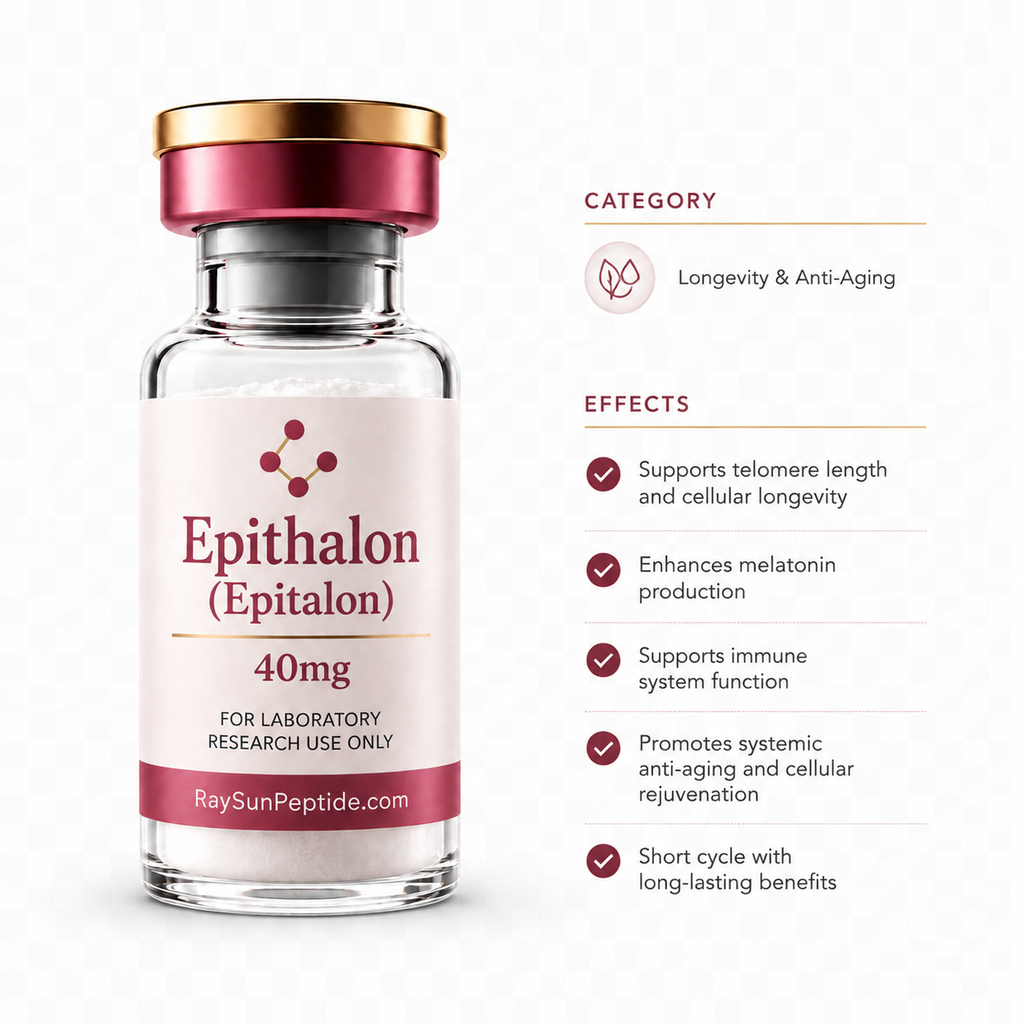
No, though they're both Khavinson bioregulator tetrapeptides with similar structures. Livagen (KEDA) focuses on liver function and chromatin remodeling, while epitalon targets the pineal gland. They're often used together in comprehensive anti-aging protocols.
How do I know if Livagen is working?
Benefits from Livagen are subtle and build over weeks. Liver function markers (transaminases, bilirubin) may improve on blood work. Systemic effects include improved immune markers and energy. Results are assessed best through lab work and multi-week observation rather than immediate symptoms.
Can I take Livagen continuously or do I need to cycle?
Traditional protocols recommend 10-20 day cycles, 2-3 times per year with breaks between cycles. This allows chromatin changes and gene expression effects to take hold while avoiding potential adaptation. Continuous daily use hasn't been well-studied.