5-Amino-1MQ
Moderate ResearchSmall molecule NNMT enzyme inhibitor
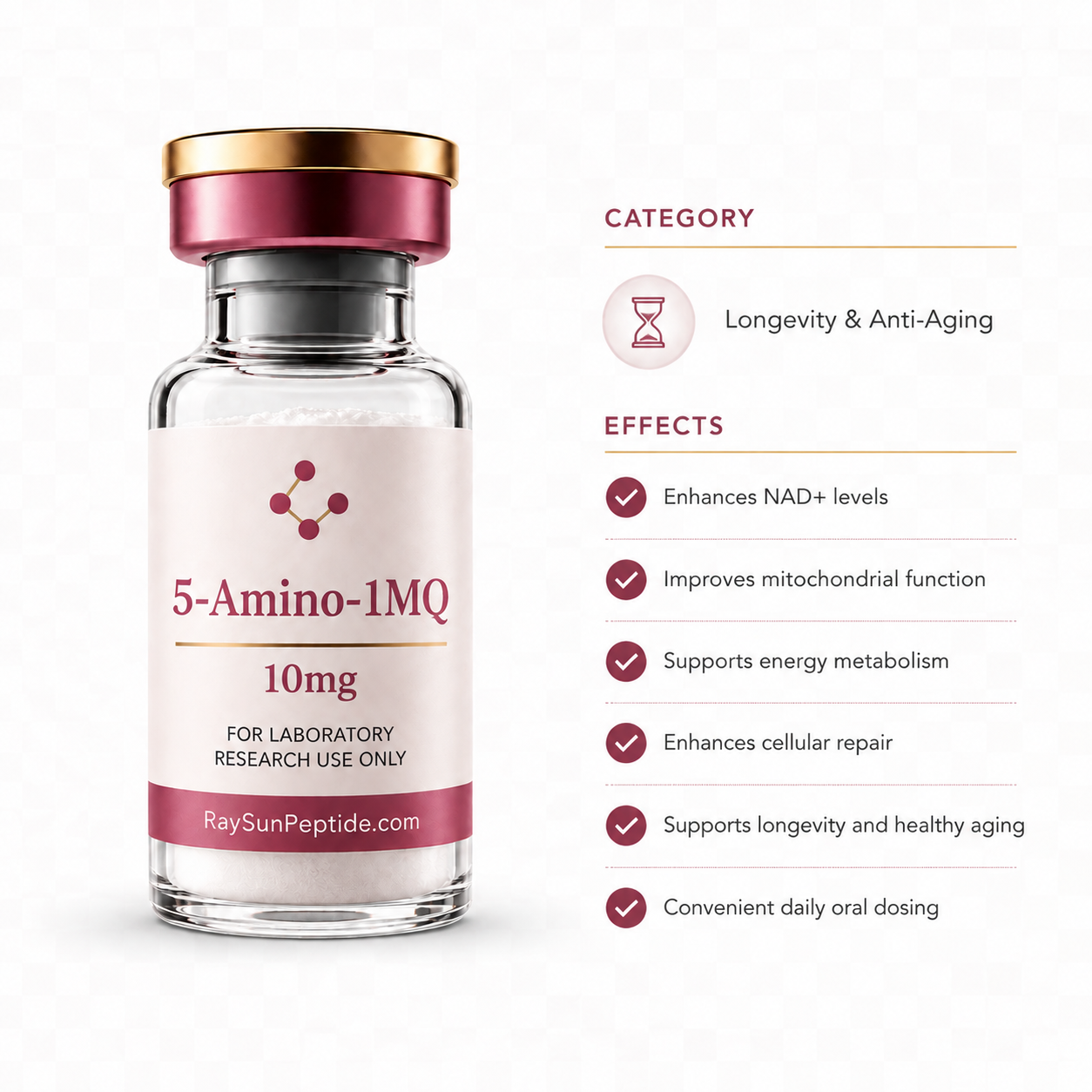
5-Amino-1MQ is a selective inhibitor of nicotinamide N-methyltransferase (NNMT) that has been studied in metabolic research. It has been investigated for its effects on NAD+ metabolism, methylation pathways, and metabolic regulation in adipose tissue. Published research has examined its effects on energy expenditure and metabolic rate in laboratory models. RaysunPeptide supplies 5-Amino-1MQ for qualified research and laboratory applications.
Mechanism of Action
Inhibits NNMT enzyme systemically, preventing NAD+ degradation and maintaining elevated cellular NAD+ levels to support mitochondrial function and metabolic processes.
Key Benefits
Molecular Data
Dosing Protocols
| Goal | Dose | Frequency | Route |
|---|---|---|---|
| Conservative initiation | 25mg | 1x daily | Oral with food |
| Standard starting dose | 50mg | 1x daily | Oral with food |
| Typical maintenance | 75mg | 1x daily | Oral with food |
| Maximum dose | 100mg | 1x daily | Oral with food |
| Split dosing protocol | 50mg | 2x daily | Oral with meals |
Research Indications
Longevity
Significantly increases cellular NAD+ levels by inhibiting NNMT enzyme, supporting cellular energy production and DNA repair mechanisms essential for healthy aging.
Improves mitochondrial biogenesis and efficiency, enhancing cellular energy production and reducing oxidative stress markers associated with aging.
Enhanced NAD+ availability supports sirtuins and other longevity pathways involved in DNA repair, cellular maintenance, and stress resistance.
Metabolism
Improvement through enhanced mitochondrial efficiency.
Enhancement via cellular energy optimization.
Improved glucose/fat substrate switching.
Weight Loss
Supports increased basal metabolic rate.
Improvements in fat burning capacity.
Peptide Interactions
May work synergistically by preventing breakdown while supporting production.
Both support longevity; resveratrol activates sirtuins while 5-Amino-1MQ provides NAD+ substrate.
Both affect metabolic pathways; combination may enhance effects but requires careful monitoring.
No known interactions; different mechanisms with potential complementary benefits.
Limited interaction data; consult healthcare provider before combining.
Both affect metabolic pathways; potential additive glucose metabolism effects.
What to Expect
Side Effects & Safety
Common (Generally Mild)
- •Generally minimal side effects
- •Occasional mild GI adjustment
- •Potential sleep interference if dosed late in day
Stop Signs (Seek Medical Attention)
- ⚠Severe gastrointestinal upset or persistent nausea
- ⚠Unusual fatigue or weakness (opposite of expected effect)
- ⚠Persistent headaches or dizziness
- ⚠Sleep disturbances or insomnia
- ⚠Allergic reactions (rash, swelling, difficulty breathing)
- ⚠Significant mood changes or anxiety
Contraindications
- ✕Pregnancy or breastfeeding
- ✕Pre-existing metabolic conditions (consult healthcare provider)
Quality Checklist
Good Signs ✓
- White to off-white (or orange/amber for powder) appearance
- Uniform color and size with clear labeling and batch information
- Third-party testing certificates (COA) with >98% purity
- Proper pharmaceutical packaging with moisture protection
- Clear expiration dates and professional labeling
Warning Signs !
- Moisture damage or clumping may indicate degradation
Bad Signs ✕
- Sticky, discolored, or heat-damaged appearance
- Unusual odor (should be relatively odorless)
- Strong chemical odors indicating contamination
- Cloudy reconstitution solution (injectables)
References
Diet-induced obese mice showed significant weight loss and adipocyte size reduction with 5-amino-1MQ treatment. Demonstrated that NNMT inhibition increases energy expenditure, reduces body weight and white adipose mass, improves insulin sensitivity, and normalizes glucose tolerance.
View on PubMed →Demonstrated 38.4% oral bioavailability, half-life 6.9hr (oral) and 3.8hr (IV). Validated sensitive LC-MS/MS method for pharmacokinetic assessment supporting oral administration viability.
View on PubMed →NNMTi-treated aged sedentary mice showed ~40% greater grip strength than controls. Combined with exercise, 60% grip strength increase. Also improved intramuscular lipid content and gastrocnemius fiber cross-sectional area.
View on PubMed →FAQs
What is the difference between the mcg and mg protocols for 5-Amino-1MQ injection?
Two vastly different dosing protocols exist differing by 100-200x: the mcg protocol uses 150-500mcg daily while the mg protocol uses ~350mg (5mg/kg) daily. This massive discrepancy creates serious overdose risk. Always verify units (mcg vs mg) before reconstitution to avoid a potentially 100+ fold dosing error.
Does 5-Amino-1MQ actually increase NAD+ levels in humans?
Animal studies demonstrate significant NAD+ elevation through NNMT inhibition. A 2024 study showed aged mice treated with 5A1MQ gained ~40% greater grip strength vs controls, with improved intramuscular lipid content and muscle fiber cross-sectional area, providing evidence that NAD+ enhancement translates to functional improvements.
Can I take 5-Amino-1MQ with food or does it need to be on an empty stomach?
Take 5-Amino-1MQ with food to improve absorption and reduce potential GI effects. Consistent daily timing helps maintain steady NAD+ levels, and morning or early afternoon dosing is preferred to avoid potential sleep interference.
What's the timeline for seeing metabolic benefits from 5-Amino-1MQ?
Week 1-2 shows gradual energy increase and mental clarity. Week 2-4 brings enhanced exercise performance and recovery. Week 4-8 shows improved metabolic markers and body composition changes. Peak longevity benefits with sustained cellular health improvements appear by week 8-12 with continuous use.