Tirzepatide
Extensively StudiedDual GLP-1/GIP agonist
Tirzepatide is a dual glucose-dependent insulinotropic polypeptide (GIP) and GLP-1 receptor agonist that has been studied in metabolic research. It has been investigated for its effects on glucose regulation through dual receptor activation, with published research examining its binding affinity at both GIP and GLP-1 receptors. Clinical studies have investigated its dose-dependent effects on metabolic parameters. RaysunPeptide supplies Tirzepatide for qualified research and laboratory applications.
Mechanism of Action
Dual agonist targeting both GIP and GLP-1 receptors, producing glucose-dependent insulin stimulation, delayed gastric emptying, glucagon suppression, and central satiety signaling via hypothalamic pathways.
Key Benefits
Molecular Data
Dosing Protocols
| Goal | Dose | Frequency | Route |
|---|---|---|---|
| Weight loss initiation | 2.5mg | Once weekly x 4 weeks | SubQ injection |
| Weight loss progression | 5mg | Once weekly | SubQ injection |
| Weight loss optimization | 7.5-10mg | Once weekly | SubQ injection |
| Maximum weight loss | 12.5-15mg | Once weekly | SubQ injection |
| Diabetes management (mild) | 5-7.5mg | Once weekly | SubQ injection |
| Diabetes management (severe) | 10-15mg | Once weekly | SubQ injection |
Research Indications
Weight Loss
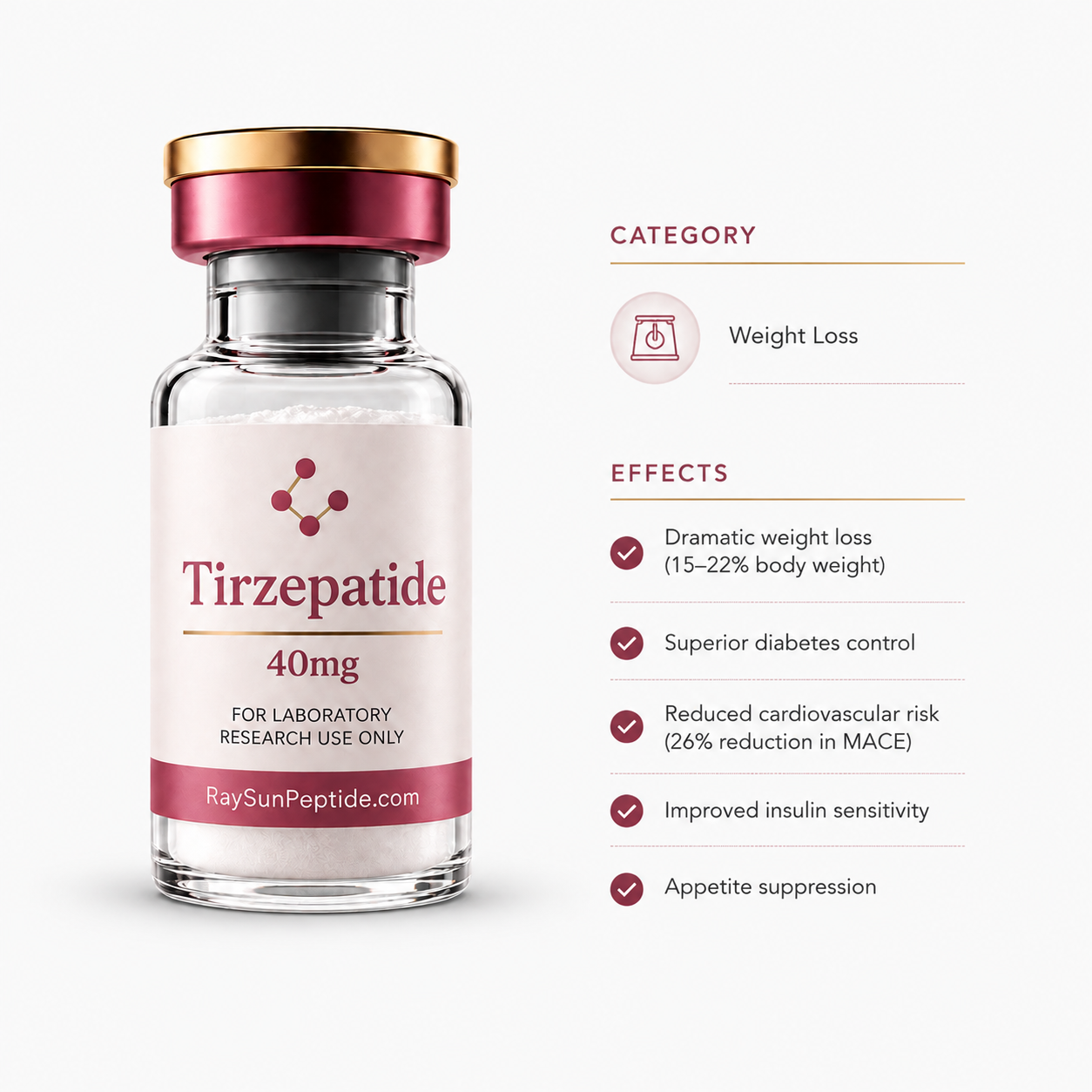
Clinical trials demonstrate 15-22% body weight reduction in non-diabetic obese individuals, superior to existing weight loss medications.
Improvements in waist circumference, blood pressure, triglycerides, HDL cholesterol, and insulin resistance markers.
Preferentially reduces visceral adipose tissue while preserving lean muscle mass with resistance training.
Diabetes
Superior HbA1c reduction of 1.5-2.4% in clinical trials.
Improves insulin sensitivity across diverse populations.
May help preserve and restore pancreatic beta cell function.
Cardiovascular
26% reduction in major adverse cardiovascular events demonstrated in SURPASS-CVOT trial.
Systolic and diastolic blood pressure reductions of 8-12 mmHg.
Triglyceride improvements of 20-30%, HDL enhancement, and apolipoprotein B reduction.
Peptide Interactions
Both are GLP-1 agonists—combining increases hypoglycemia and severe GI side effect risk.
Another GLP-1 agonist—dual therapy contraindicated due to additive effects.
May require significant insulin dose reduction due to improved sensitivity.
Complementary mechanisms for diabetes management and weight loss.
Growth hormone support may help preserve muscle mass during weight loss.
May help maintain metabolic rate and muscle preservation.
No known interactions, may support gut health and reduce GI effects.
NNMT inhibition may complement GLP-1 effects for metabolic optimization.
What to Expect
Side Effects & Safety
Common (Generally Mild)
- •Nausea (mild to moderate, first 2-4 weeks)
- •Appetite reduction
- •Possible fatigue during adaptation
- •Diarrhea or constipation
- •Reduced food cravings
Stop Signs (Seek Medical Attention)
- ⚠Severe/persistent abdominal pain (pancreatitis risk)
- ⚠Neck lumps, hoarseness, difficulty swallowing (thyroid concerns)
- ⚠Severe nausea/vomiting preventing adequate nutrition
- ⚠Severe hypoglycemic signs (confusion, sweating, rapid heartbeat)
- ⚠Kidney problems (decreased urination, swelling)
- ⚠Severe allergic reactions (rash, breathing difficulty)
- ⚠Suicidal thoughts or severe depression
- ⚠Gallbladder problems (severe upper right pain)
- ⚠Dehydration from persistent vomiting
Contraindications
- ✕Personal or family history of medullary thyroid carcinoma
- ✕Multiple Endocrine Neoplasia syndrome type 2 (MEN2)
- ✕Pregnancy or breastfeeding
- ✕History of pancreatitis
Quality Checklist
Good Signs ✓
- White to off-white lyophilized powder without clumping
- Clear, colorless reconstituted solution
- Intact vial seal with visible mg dosage labeling and batch numbers
- Proper storage maintenance at 2-8°C, protected from light
Warning Signs !
- Compounded versions without proper quality control
Bad Signs ✕
- Powder clumping, discoloration, or yellow/brown appearance
- Persistent cloudiness after reconstitution
- Unusual crystallization patterns
References
Landmark phase 3 trial: 15mg weekly achieved 22.5% weight loss vs 2.4% placebo over 72 weeks. Weight reduction of ≥20% achieved in 57% of 15mg recipients.
View on PubMed →Tirzepatide was noninferior and superior to semaglutide 1mg for HbA1c reduction and weight loss in type 2 diabetes. The 15mg dose achieved nearly twice the weight loss of semaglutide.
View on PubMed →15mg dose achieved 15.7% weight loss over 72 weeks with significant cardiometabolic improvements. 79-83% of tirzepatide recipients achieved ≥5% weight loss vs 32% placebo.
View on PubMed →Tirzepatide was noninferior to dulaglutide for MACE (composite of CV death, MI, or stroke). Several secondary endpoints favored tirzepatide, including reduced all-cause mortality after 4-year median follow-up.
View on PubMed →Three years of tirzepatide resulted in sustained weight reduction of up to 19.7% (15mg) and 93% lower risk of progression to type 2 diabetes vs placebo (HR 0.07).
View on PubMed →Tirzepatide reduced the composite of CV death or worsening heart failure by 38% (HR 0.62) vs placebo over median 104 weeks. Improved health status scores and 6-minute walk distance.
View on PubMed →Head-to-head comparison: tirzepatide achieved 20.2% weight loss vs 13.7% with semaglutide at 72 weeks. Tirzepatide was superior for body weight and waist circumference reduction.
View on PubMed →Tirzepatide significantly reduced AHI with resolution of OSA in approximately 50% of participants. Also reduced body weight, hypoxic burden, hsCRP, and systolic blood pressure.
View on PubMed →FAQs
How much weight does tirzepatide cause compared to semaglutide?
Tirzepatide achieves 20.2% weight loss vs semaglutide's 13.7% at 72 weeks in head-to-head trials (SURMOUNT-5). The dual GIP/GLP-1 mechanism makes tirzepatide significantly more effective - nearly 7% greater weight reduction, with 57% of tirzepatide users achieving ≥20% weight loss.
Can tirzepatide improve heart failure with preserved ejection fraction (HFpEF)?
Yes, the SUMMIT trial showed tirzepatide reduced the composite of cardiovascular death or worsening heart failure by 38% in HFpEF patients with obesity. This represents a major cardiovascular indication beyond weight loss and diabetes, establishing tirzepatide as cardioprotective at the tissue level.
Does tirzepatide help prevent progression from prediabetes to diabetes?
Yes, 3-year data from SURMOUNT-1 extension showed a 93% reduction in progression to type 2 diabetes in prediabetic individuals with obesity treated with tirzepatide. Combined with sustained 19.7% weight loss, this makes it highly effective for diabetes prevention in at-risk populations.
Why would someone choose tirzepatide over a lower-cost GLP-1 like semaglutide?
Superior weight loss efficacy (20% vs 13%), cardiovascular outcome benefits (38% HFpEF improvement), and once-weekly convenience make tirzepatide worth higher cost for patients seeking maximal results. The SURPASS and SUMMIT trials show tirzepatide superiority justifies premium pricing for optimized outcomes.