Retatrutide
Extensively StudiedTriple GLP-1/GIP/glucagon agonist
Retatrutide is a novel triple-acting peptide agonist that targets GLP-1, GIP, and glucagon receptors simultaneously. It has been studied in metabolic research for its effects on glucose regulation, energy expenditure, and metabolic rate. Published clinical research has investigated its dose-dependent effects on body weight and metabolic parameters. RaysunPeptide supplies Retatrutide for qualified research and laboratory applications.
Mechanism of Action
Activates GLP-1 for appetite suppression, GIP for insulin sensitivity, and glucagon for increased energy expenditure and hepatic fat oxidation.
Key Benefits
Molecular Data
Dosing Protocols
| Goal | Dose | Frequency | Route |
|---|---|---|---|
| Starting Dose (Week 1-4) | 0.5mg | Once weekly | SubQ |
| Low Maintenance (Week 4-8) | 1mg | Once weekly | SubQ |
| Escalation (Week 8-12) | 2mg | Once weekly | SubQ |
| Moderate (Week 12-16) | 4mg | Once weekly | SubQ |
| Advanced (Week 16-20) | 8mg | Once weekly | SubQ |
| Maximum Efficacy (Week 20+) | 12mg | Once weekly | SubQ |
Research Indications
Weight Loss
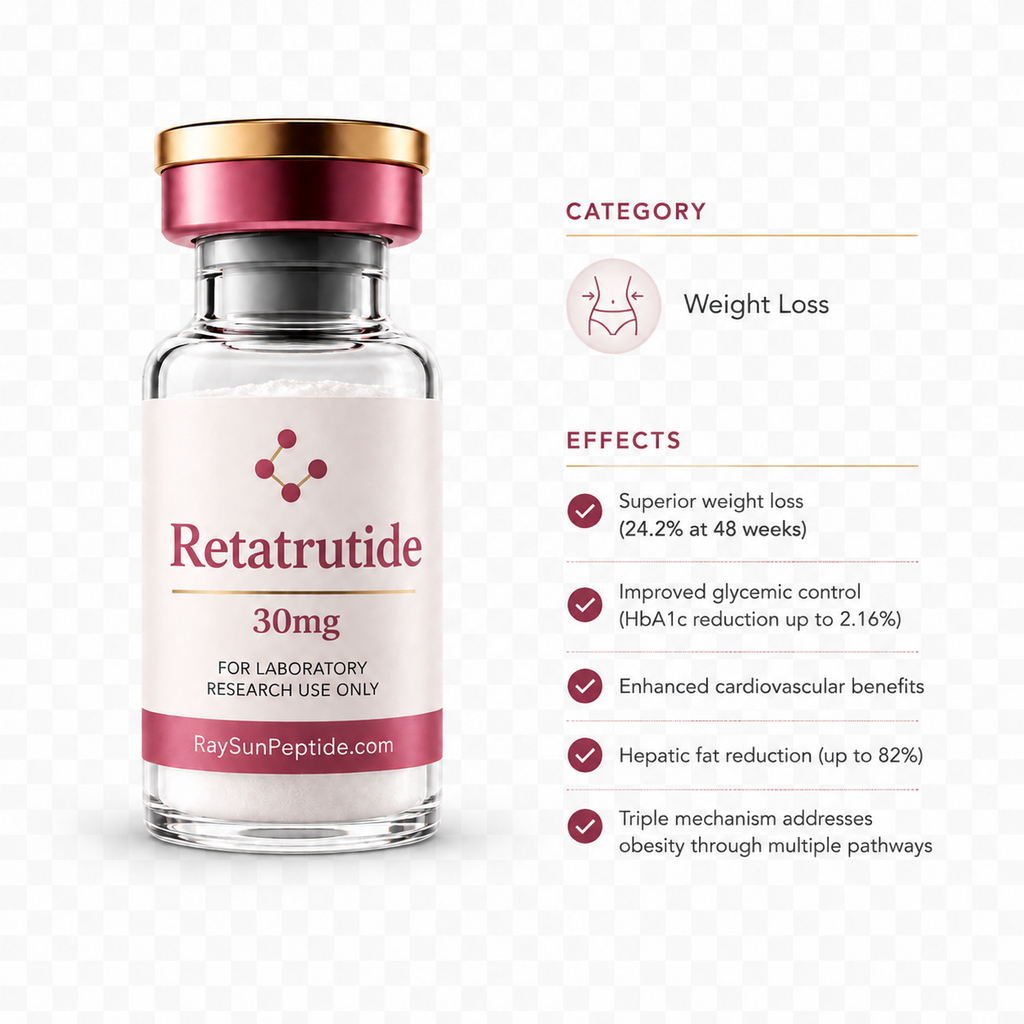
Clinical trials show 17.5% weight loss at 24 weeks and 24.2% at 48 weeks.
Continuous weight loss with no plateau at 48 weeks suggests greater long-term potential.
Addresses obesity through appetite suppression, energy expenditure, and metabolic efficiency.
Type 2 Diabetes
HbA1c reductions up to 2.16% with 82% achieving target levels below 6.5%.
Balanced glycemic control with minimal hypoglycemia risk.
Marked improvements in sensitivity with potential for reduced exogenous insulin requirements.
Cardiovascular/Metabolic
Non-HDL cholesterol reductions up to 26.9%, triglyceride reductions up to 40.6%.
Consistent decreases in systolic and diastolic blood pressure across trials.
Up to 82% reduction in liver fat with normalization in 90% of participants.
Peptide Interactions
Do not combine with other dual/triple agonists—risk of severe hypoglycemia and excessive GI effects.
Do not combine—overlapping GLP-1 agonist mechanisms increase severe hypoglycemia risk.
Both cause significant GI effects. Not recommended without specialist supervision.
May significantly reduce insulin requirements. Monitor blood glucose and adjust insulin doses accordingly.
Safe combination tested in clinical trials. Different mechanisms work complementarily for glucose control.
Clinical trials included SGLT2 inhibitors with no safety concerns.
Safe combination; BPC-157 may provide GI protective benefits during retatrutide use.
Space oral contraceptives by 1 hour before retatrutide due to delayed gastric emptying.
What to Expect
Side Effects & Safety
Common (Generally Mild)
- •Gastrointestinal effects (nausea, vomiting, diarrhea)—typically mild to moderate
- •Heart rate increases—common especially in first 24 weeks
- •Appetite suppression
- •Mild dehydration
Stop Signs (Seek Medical Attention)
- ⚠Severe persistent nausea or vomiting preventing adequate nutrition
- ⚠Signs of pancreatitis: severe abdominal pain radiating to back
- ⚠Severe hypoglycemia symptoms: confusion, dizziness, sweating
- ⚠Excessive weight loss (>3 lbs per week consistently or >25% total body weight)
- ⚠Gallbladder problems: severe right upper abdominal pain
Contraindications
- ✕Personal or family history of medullary thyroid carcinoma
- ✕MEN2 syndrome
- ✕Severe renal impairment
Quality Checklist
Good Signs ✓
- Pharmaceutical-grade white powder with uniform texture
- Proper cold chain maintenance (2-8°C refrigeration)
- Clear, colorless reconstituted solution without particles
- Stable extended half-life effects (consistent appetite suppression between doses)
Warning Signs !
- Source verification critical—counterfeit versions circulate due to investigational status
Bad Signs ✕
- Rapid tolerance or effectiveness loss suggests degraded or counterfeit product
- Unusual side effect profile may indicate contamination
References
Landmark phase 2 RCT showing dose-dependent weight loss: 24.2% at 48 weeks with 12mg dose — the highest recorded for any obesity medication at the time. Weight reduction of ≥15% achieved in 83% of 12mg recipients.
View on PubMed →Phase 2 trial in type 2 diabetes demonstrating clinically meaningful HbA1c reductions and robust weight loss of up to 16.9% at 36 weeks, with safety profile consistent with GLP-1 receptor agonists.
View on PubMed →Dose-dependent liver fat reduction: 82.4% at 12mg dose. Normal liver fat (<5%) achieved in 86% of 12mg recipients vs 0% placebo at 24 weeks.
View on PubMed →Cryo-EM structures reveal how retatrutide simultaneously activates GLP-1R, GIPR, and GCGR through distinct receptor-binding modes.
View on PubMed →Phase 3 TRIUMPH program design: four multicenter, randomized, double-blind studies assessing weekly retatrutide for obesity, obstructive sleep apnea, knee osteoarthritis, and weight management in cardiovascular disease populations.
View on PubMed →Substudy demonstrating significant total body fat mass reduction with retatrutide vs placebo and dulaglutide. Proportion of lean mass loss to total weight loss was similar to other obesity treatments.
View on PubMed →FAQs
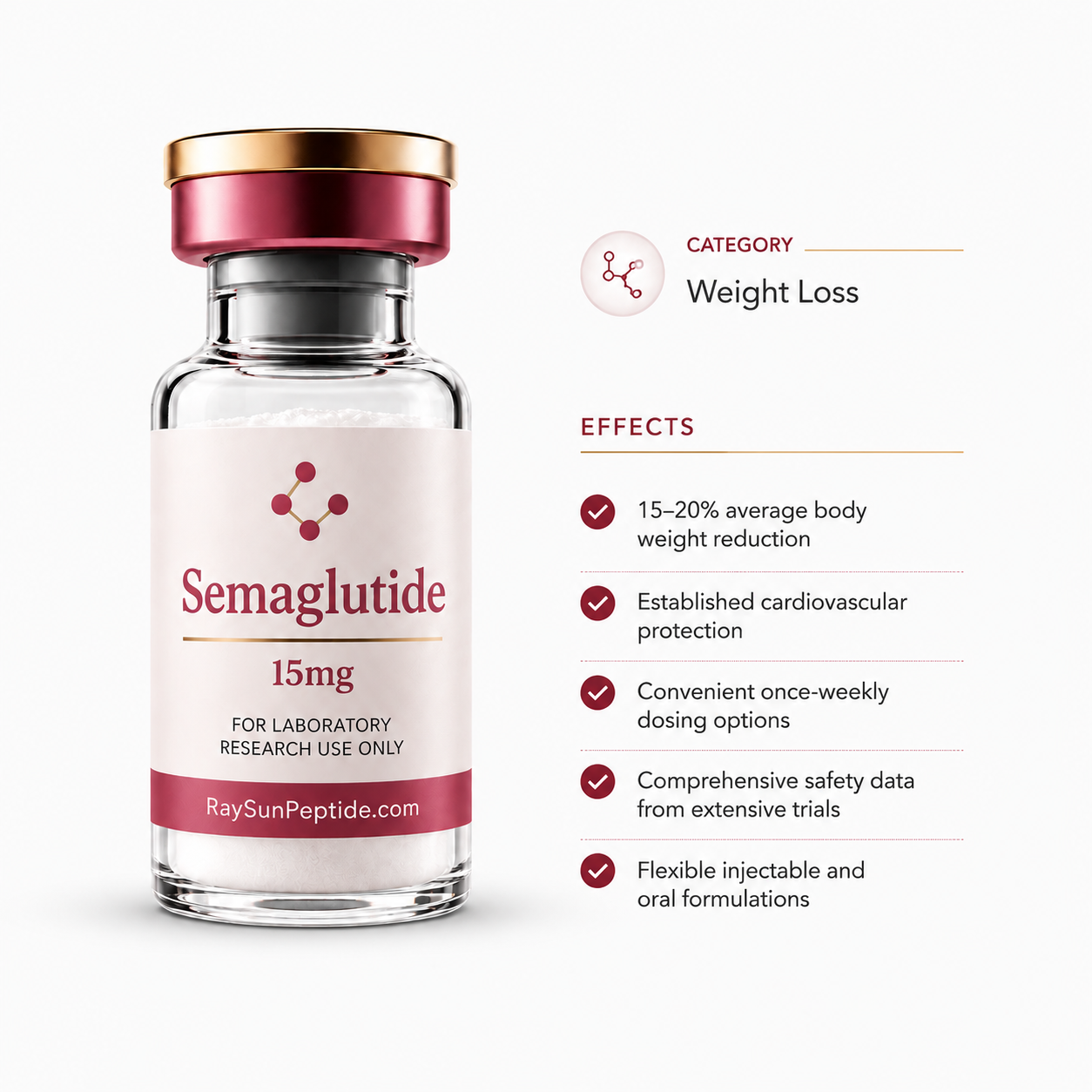
What makes retatrutide's 24.2% weight loss so much higher than semaglutide's 15-20%?
Retatrutide is a triple agonist activating GLP-1, GIP, and glucagon receptors simultaneously. GLP-1 suppresses appetite, GIP improves insulin sensitivity, and glucagon increases energy expenditure and fat oxidation. Semaglutide only activates GLP-1. The triple mechanism addresses obesity through three distinct pathways, explaining the superior results.
Does retatrutide actually reduce liver fat, or just overall fat loss?
It specifically targets liver fat. Clinical trials showed up to 82% liver fat reduction and complete normalization in 90% of participants at 24 weeks. This isn't just general weight loss—it's preferential hepatic fat oxidation, making retatrutide potentially valuable for NAFLD/MASH, not just obesity.
Why is retatrutide more likely to cause gastrointestinal side effects?
Triple agonism means triple GI effects. GLP-1, GIP, and glucagon all slow gastric emptying and affect GI motility. Combining three mechanisms means more nausea, diarrhea, and vomiting, especially during dose escalation. However, most people tolerate it by week 4-8 as their body adapts.
Could I eventually stop taking retatrutide, or do I need it forever?
Unknown. Phase 2 trials ran 48 weeks—long enough to achieve 24% weight loss but not long enough to study discontinuation. Clinical experience with semaglutide suggests weight returns if stopped. Phase 3 TRIUMPH trials (results expected 2026) should provide data on maintenance therapy vs. indefinite use.