HGH Fragment 176-191
Moderate ResearchhGH C-terminal fragment (176-191)
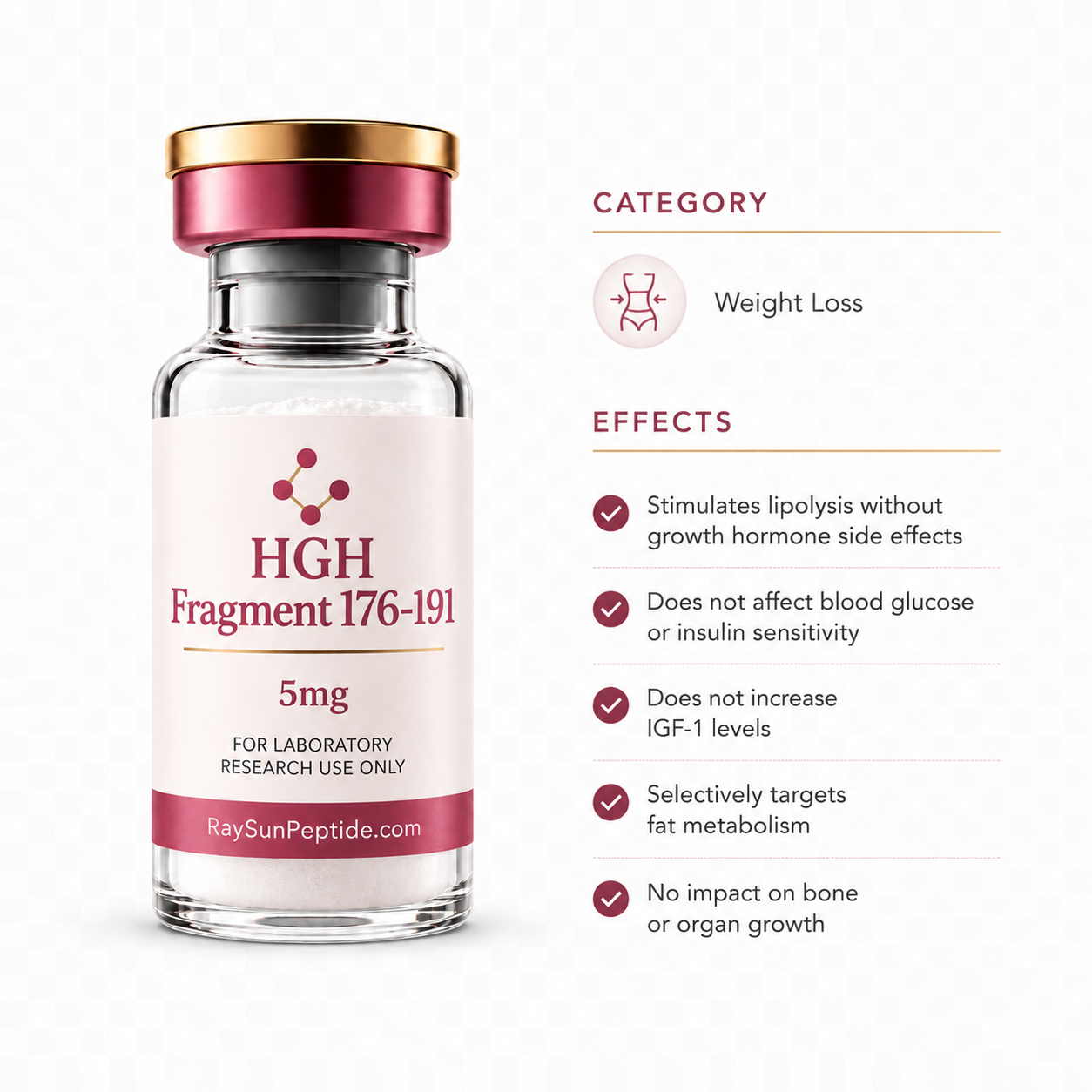
HGH Fragment 176-191 is a synthetic peptide corresponding to amino acids 176-191 of human growth hormone. It has been studied in metabolic research for its effects on lipolysis and fat metabolism, without the diabetogenic effects associated with full-length GH. Published research has investigated its interaction with the growth hormone receptor and its metabolic effects. RaysunPeptide supplies HGH Fragment 176-191 for qualified research and laboratory applications.
Mechanism of Action
Mimics the lipolytic region of human growth hormone by stimulating fat breakdown through beta-3 adrenergic receptor pathways. Unlike full HGH, it does not bind the growth hormone receptor, so it does not increase IGF-1 levels or interfere with glucose metabolism. The fragment selectively targets adipose tissue to promote fat oxidation.
Key Benefits
Molecular Data
Dosing Protocols
| Goal | Dose | Frequency | Route |
|---|---|---|---|
| Fat loss - Standard | 250mcg | Twice daily (morning fasted + pre-bed) | SubQ |
| Enhanced fat loss | 500mcg | Twice daily (morning fasted + pre-bed) | SubQ |
| Conservative start | 250mcg | Once daily (morning, fasted) | SubQ |
Research Indications
Fat Loss
Increases fat oxidation and breakdown of stored triglycerides in adipose tissue without affecting glucose homeostasis.
Reduces new fat synthesis and storage, complementing the lipolytic action for overall fat reduction.
Promotes selective fat loss while preserving lean mass, particularly effective when combined with a caloric deficit and exercise.
Peptide Interactions
Redundant lipolytic mechanism. Full HGH already contains the 176-191 sequence, so combining provides diminishing returns for fat loss while adding HGH-related side effects.
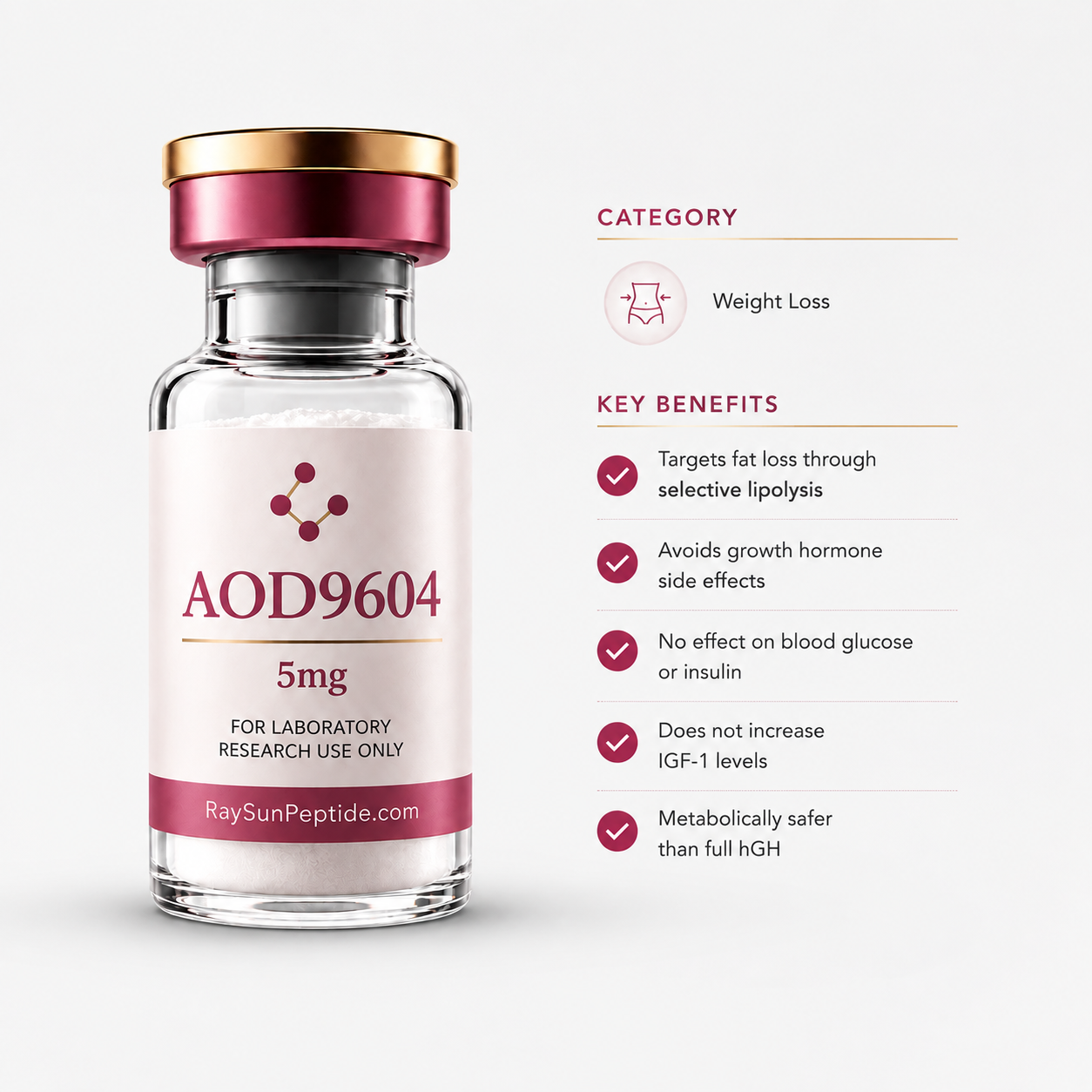
Same mechanism of action. AOD-9604 is a modified version of this fragment; using both is redundant and unnecessary.
Both target fat loss through complementary adrenergic pathways. The combination may enhance lipolysis beyond either compound alone.
What to Expect
Side Effects & Safety
Common (Generally Mild)
- •Injection site irritation (redness, mild swelling)
- •Headache, particularly in the first few days
- •Generally well-tolerated with a favorable safety profile
Stop Signs (Seek Medical Attention)
- ⚠Severe injection site reactions or signs of infection
- ⚠Hypoglycemia symptoms if combined with insulin (dizziness, sweating, confusion)
- ⚠Allergic reactions (rare)
- ⚠Any persistent or concerning symptoms
Contraindications
- ✕Pregnancy or breastfeeding
- ✕Active cancer or history of malignancy
- ✕WADA prohibited - athletes subject to testing must avoid
Quality Checklist
Good Signs ✓
- White lyophilized powder with uniform appearance
- Crystal clear solution without particles after reconstitution
- Certificate of Analysis showing >98% purity by HPLC
- Proper cold-chain shipping
Warning Signs !
- Not FDA approved - research chemical only
- WADA prohibited substance
Bad Signs ✕
- Discolored or clumped powder (yellow indicates degradation)
- Cloudy solution after reconstitution
- Collapsed or moisture-damaged appearance
References
Both hGH and the C-terminal fragment (176-191) reduced body weight gain, increased fat oxidation, and stimulated lipolysis in obese ob/ob mice without affecting glucose metabolism.
View on PubMed →The hGH fragment and its modified form AOD-9604 both increased beta-3 adrenergic receptor expression in obese mice. Effects were abolished in beta-3-AR knockout mice, confirming this receptor pathway is essential for the lipolytic action.
View on PubMed →Characterized the metabolic properties of the hGH 176-191 lipolytic domain, demonstrating antilipogenic activity independent of the growth hormone receptor.
View on PubMed →Oral treatment with the synthetic hGH fragment for 30 days significantly reduced body weight gain and altered lipogenic and lipolytic activity in adipose tissue of obese mice.
View on PubMed →FAQs