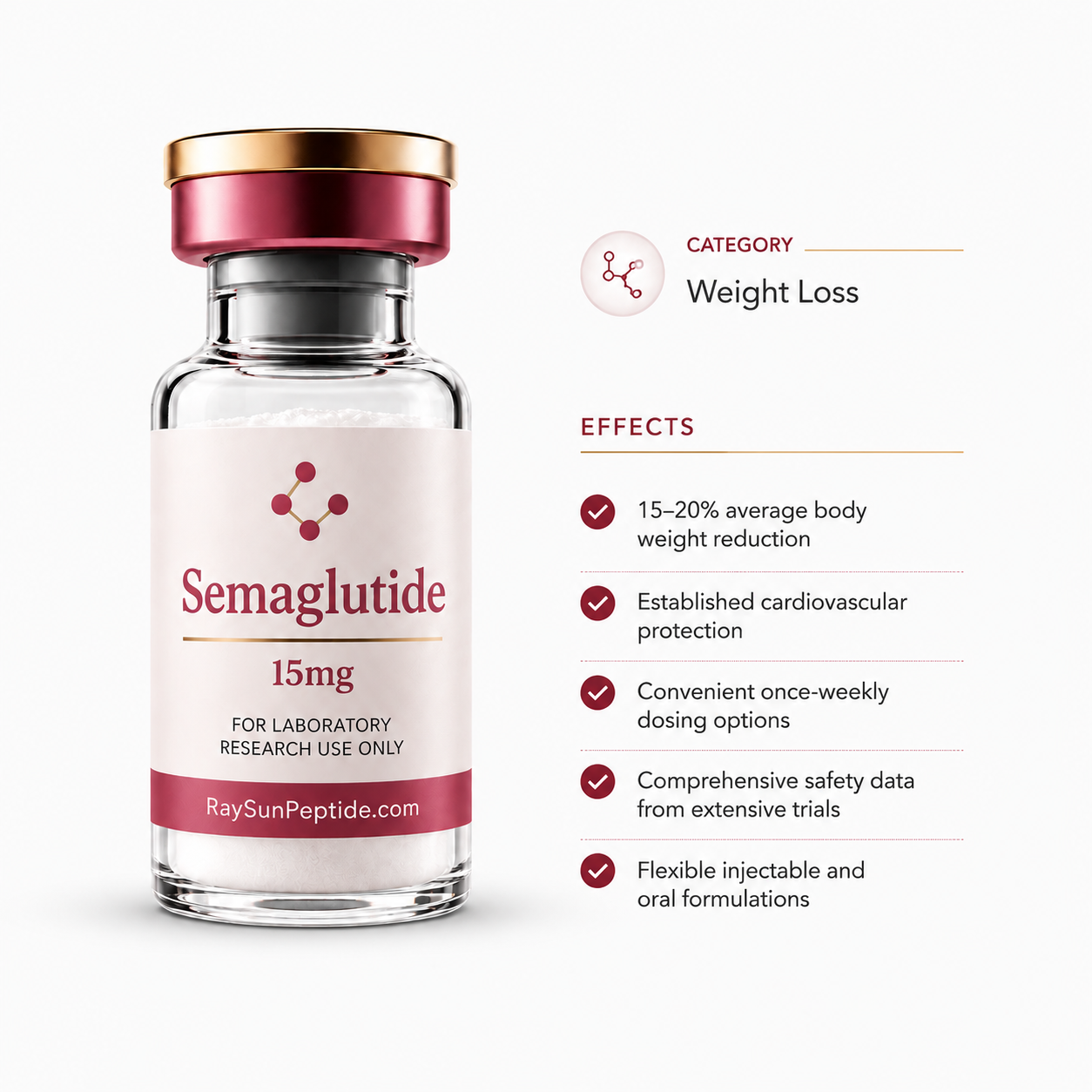
Semaglutide
FDA ApprovedGLP-1 receptor agonist
Semaglutide is a glucagon-like peptide-1 (GLP-1) receptor agonist that has been extensively studied in metabolic research. It has been investigated for its effects on glucose-dependent insulin secretion, glucagon suppression, and appetite regulation through GLP-1 receptor activation. Published research has examined its pharmacokinetics, receptor binding properties, and metabolic effects in preclinical and clinical studies. RaysunPeptide supplies Semaglutide for qualified research and laboratory applications.
Mechanism of Action
Mimics native GLP-1, binding to receptors to stimulate glucose-dependent insulin secretion, suppress glucagon, slow gastric emptying, and reduce appetite via hypothalamic pathways.
Key Benefits
Molecular Data
Dosing Protocols
| Goal | Dose | Frequency | Route |
|---|---|---|---|
| Weight Loss Initiation | 0.25mg | Weekly x 4 weeks, then increase | Subcutaneous |
| Weight Loss Maintenance | 2.4mg | Weekly (after 16-week titration) | Subcutaneous |
| Diabetes Management | 0.5-1mg | Weekly | Subcutaneous |
| Cardiovascular Protection | 0.5-1mg | Weekly | Subcutaneous |
| Tolerability-Based | 0.25-2.4mg | Weekly (individualized) | Subcutaneous |
Research Indications
Weight Loss
FDA-approved for chronic weight management with average 15-20% body weight loss in clinical trials.
Reduces hunger and food cravings through central nervous system GLP-1 receptor activation.
Long-term studies show maintained weight loss with continued treatment over 2+ years.
Diabetes
FDA-approved for type 2 diabetes with HbA1c reductions of 1.5-2% in clinical trials.
Proven 26% reduction in cardiovascular death, MI, or stroke in high-risk diabetes patients.
Improves insulin secretion and may preserve pancreatic beta cell function.
Metabolic
Addresses multiple components: weight, glucose, blood pressure, and lipids.
Emerging evidence for improvements in non-alcoholic fatty liver disease.
Decreases systemic inflammation markers independent of weight loss.
Peptide Interactions
May increase hypoglycemia risk when combined; requires blood glucose monitoring.
Both are incretin mimetics with overlapping mechanisms; concurrent use increases side effects.
Combined as CagriSema in clinical trials for enhanced weight loss efficacy.
Commonly used together for diabetes management with good safety profile.
No contraindications; may help with GI side effects.
Increased hypoglycemia risk; may require sulfonylurea dose reduction.
Delayed gastric emptying may affect absorption of oral medications.
What to Expect
Side Effects & Safety
Common (Generally Mild)
- •Nausea
- •Diarrhea
- •Vomiting
- •Constipation
- •Abdominal pain
Stop Signs (Seek Medical Attention)
- ⚠Severe persistent abdominal pain (possible pancreatitis)
- ⚠Persistent vomiting preventing fluid intake
- ⚠Signs of thyroid tumor (neck lump, hoarseness, trouble swallowing)
- ⚠Severe allergic reaction (rash, itching, difficulty breathing)
- ⚠Vision changes (possible diabetic retinopathy progression)
- ⚠Severe hypoglycemia (if combined with insulin/sulfonylureas)
- ⚠Kidney problems (decreased urination, swelling)
Contraindications
- ✕Personal or family history of medullary thyroid cancer
- ✕Multiple Endocrine Neoplasia syndrome type 2 (MEN 2)
- ✕Pregnancy or breastfeeding
- ✕History of pancreatitis
Quality Checklist
Good Signs ✓
- FDA-approved branded products (Ozempic, Wegovy, Rybelsus)
- Proper refrigeration verified and not expired
- Clear, colorless to slightly yellow solution in pen/vial
Warning Signs !
- Compounded versions - FDA warns about untested compounded semaglutide
Bad Signs ✕
- Cloudy or discolored solution
- Particles or precipitation visible
- Non-pharmacy sources or unverified online sellers
References
14.9% average weight loss vs 2.4% placebo over 68 weeks with 2.4mg weekly. 86% achieved ≥5% weight loss; 51-64% achieved ≥15% weight loss.
View on PubMed →20% reduction in MACE (CV death, MI, or stroke) with semaglutide 2.4mg vs placebo over mean 40 months. First GLP-1 RA to demonstrate cardiovascular benefit in non-diabetic population.
View on PubMed →26% reduction in MACE (HR 0.74) with semaglutide vs placebo. Established cardiovascular safety and benefit profile for semaglutide in type 2 diabetes.
View on PubMed →Sustained weight loss of 15.2% at week 104 vs 2.6% placebo. 77.1% achieved ≥5% weight loss at 2 years, demonstrating long-term efficacy.
View on PubMed →Oral semaglutide was noninferior to placebo for cardiovascular safety. Numerically fewer CV deaths in oral semaglutide group (0.9% vs 1.9%).
View on PubMed →16.1% BMI reduction with semaglutide vs 0.6% increase with placebo over 68 weeks. 44.9% of semaglutide recipients reclassified to normal-weight or overweight BMI category.
View on PubMed →Semaglutide 2.4mg reduced symptoms, physical limitations, and improved exercise function in obesity-related HFpEF. Reduced inflammation and appeared to improve adverse cardiac remodeling.
View on PubMed →24% lower risk of primary kidney outcome (kidney failure, sustained eGFR decline, or renal/CV death) with semaglutide vs placebo. 29% reduction in CV death. Trial stopped early for efficacy.
View on PubMed →62.9% achieved MASH resolution without fibrosis worsening vs 34.3% placebo at 72 weeks. Combined resolution and fibrosis improvement in 32.7% vs 16.1% placebo. Mean weight loss of 10.5%.
View on PubMed →FAQs
Does semaglutide prevent weight regain after you stop taking it?
No. Long-term studies show sustained weight loss only while continuing treatment. After discontinuation, weight typically returns. This means semaglutide is likely a long-term maintenance therapy, not a temporary reset. Phase 3 trials (2+ years of data) confirm the need for ongoing use to maintain weight loss.
Why does semaglutide help heart disease even without diabetes?
The SELECT trial (17,604 people) proved semaglutide reduces cardiovascular events by 20% in obese people without diabetes. The mechanism involves inflammation reduction, improved lipid profiles, blood pressure lowering, and hepatic fat reduction—benefits that protect the heart independent of glucose control.
Can I use oral Rybelsus instead of injections to avoid needles?
Yes, but with caveats. Rybelsus tablets require very strict administration (empty stomach, no food/meds for 30 minutes, specific water volume). Its bioavailability is lower than injections, so you need higher doses (7-14mg vs 0.5-2.4mg weekly for injections). Many people prefer injections despite the needle because they're more forgiving.
Is semaglutide's weight loss real fat loss or mostly water/muscle?
Mostly real fat loss. Clinical trials show semaglutide reduces fat mass substantially with lean mass preservation (similar ratio to other weight loss treatments). The 15-20% weight loss isn't just water—it's sustained fat reduction. However, some lean mass loss does occur, which is why resistance training is recommended.