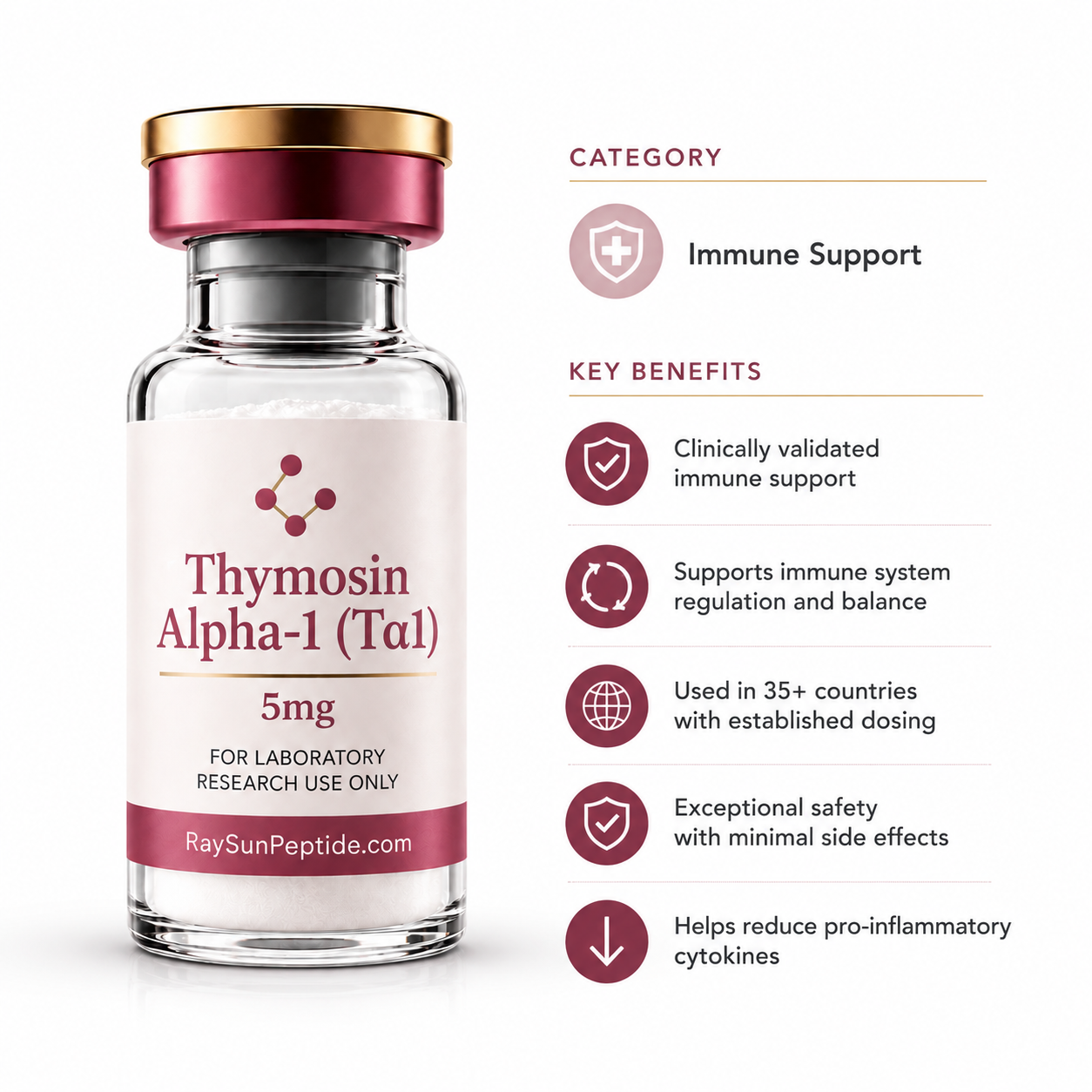
Thymosin Alpha-1 (Tα1)
Well StudiedAcetylated polypeptide
Thymosin Alpha-1 (Tα1) is a 28-amino acid polypeptide originally isolated from thymus tissue. It has been extensively studied in immunology research for its effects on T-cell maturation, cytokine production, and innate immune response modulation. Published research has examined its receptor interactions and clinical applications in immune deficiency models. RaysunPeptide supplies Thymosin Alpha-1 for qualified research and laboratory applications.
Mechanism of Action
Activates TLR pathways, enhances T-cell maturation, stimulates NK cells, and modulates dendritic cell function via systemic circulation. Injectable route achieves 90-95% bioavailability with 2-hour peak time.
Key Benefits
Molecular Data
Dosing Protocols
| Goal | Dose | Frequency | Route |
|---|---|---|---|
| Standard immune support | 1.6mg | 2x weekly | SubQ |
| Acute conditions (sepsis) | 1.6mg | 2x daily for 5 days, then daily | SubQ/IM |
| Cancer/hepatitis support | 1.6mg | 2x weekly | SubQ |
| Maintenance/prevention | 1.6mg | 2x weekly | SubQ |
Research Indications
Immunity
FDA orphan designation for DiGeorge syndrome; restores T-cell function.
Improved antibody responses in elderly and hemodialysis patients (H1N1, COVID-19).
Restores CD4+ counts and reduces opportunistic infections.
Inflammation
Reduces pro-inflammatory cytokines TNF-α, IL-1β, IL-6 by 40-60%.
Enhanced antiviral efficacy when combined with interferon.
Helps manage inflammatory autoimmune conditions.
Recovery
Restores immune function after surgical stress.
Manages immune suppression from intense training.
Anti-Aging
Supports thymus gland function with aging.
Delays age-related immune decline in elderly populations.
Peptide Interactions
Fatal graft rejection risk in transplant patients - contraindicated.
Pharmacodynamic antagonism possible.
Enhanced antiviral efficacy in hepatitis treatment.
Enhances vaccine immunogenicity.
Protective against bone marrow damage.
What to Expect
Side Effects & Safety
Common (Generally Mild)
- •Mild injection site reactions (<10% incidence)
- •Generally well-tolerated with exceptional safety record
Stop Signs (Seek Medical Attention)
- ⚠Signs of graft rejection in transplant recipients
- ⚠Persistent injection site reactions or infection signs
- ⚠Unusual immune system hyperactivity
- ⚠Severe allergic reactions (rare)
Contraindications
- ✕Organ transplant recipients (risk of graft rejection)
- ✕Pregnancy and breastfeeding
Quality Checklist
Good Signs ✓
- White, fluffy lyophilized powder filling vial bottom
- Crystal clear solution after reconstitution (no particles/cloudiness)
- Professional pharmaceutical labeling with batch numbers, expiration
Warning Signs !
- Minor powder compaction during shipping (acceptable if dissolves cleanly)
Bad Signs ✕
- Yellow, brown, or collapsed powder (heat/moisture degradation)
- Persistent cloudiness or particles post-reconstitution
- Non-professional sourcing or unclear labeling
References
Mortality significantly reduced in severe COVID-19: 11.11% with thymosin alpha 1 vs 30.00% untreated (P=0.044). Restored CD4+ and CD8+ T-cell numbers and reversed T-cell exhaustion markers PD-1 and Tim-3.
View on PubMed →1,106 adults with sepsis across 22 centres. 28-day mortality: 23.4% thymosin alpha 1 vs 24.1% placebo (HR 0.99, P=0.93). No overall benefit, but prespecified subgroup analysis showed potential benefit in elderly and diabetic patients.
View on PubMed →Comprehensive overview of thymosin alpha 1 from discovery to clinical application. Evidence for combined treatments with interferon or IL-2 restoring immune responses depressed by tumor growth and/or cytostatic drugs.
View on PubMed →Narrative review of 11,000+ patients across 30+ clinical trials. Exceptional safety profile with <1% serious adverse events. Applications in COVID-19, autoimmune conditions, hepatitis, and cancer.
View on PubMed →FAQs
Can Thymosin Alpha-1 be combined with coronavirus vaccines to boost protection?
Yes, Thymosin Alpha-1 enhances antibody responses to vaccines in elderly and immunocompromised patients. Clinical trials show improved vaccine immunogenicity with co-administration. This is particularly relevant for high-risk groups seeking enhanced vaccine protection.
Does Thymosin Alpha-1 actually work for COVID-19 or just reduce symptoms?
A clinical trial showed Thymosin Alpha-1 significantly reduced mortality in severe COVID-19 (11.11% vs 30% untreated, P=0.044) by restoring CD4+ and CD8+ T-cell numbers and reversing T-cell exhaustion. It works by immune restoration rather than direct antiviral activity.
Why is Thymosin Alpha-1 less popular than other immune peptides if it's studied so extensively?
Despite 11,000+ patients in 30+ trials with excellent safety (<1% serious adverse events), Thymosin Alpha-1 has limited commercial availability. It's not FDA-approved for most indications (only orphan status for DiGeorge syndrome), making prescription access difficult outside research settings or specific countries.
Is intranasal Thymosin Alpha-1 as effective as injectable?
Injectable has 90-95% bioavailability versus nasal spray's 40-60%. Injectable is the primary FDA-studied route with most clinical validation. Nasal spray may work for local immune effects but requires compounding pharmacy preparation and shows lower systemic absorption - inject for maximum efficacy.