LL-37
Well StudiedCationic antimicrobial peptide
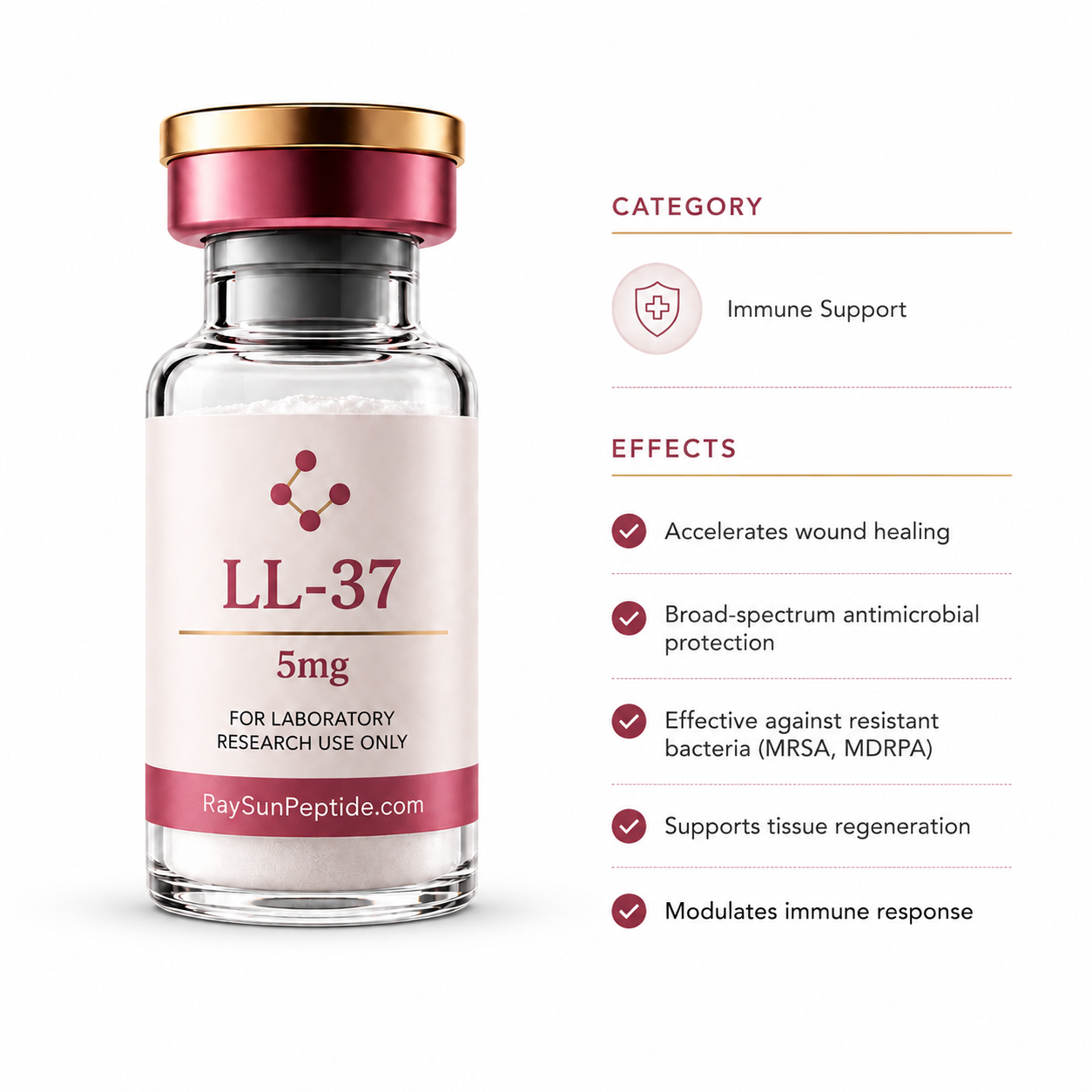
LL-37 is a 37-amino acid cationic antimicrobial peptide derived from the precursor protein cathelicidin. It has been studied in immunology and microbiology research for its broad-spectrum antimicrobial activity and its role in innate immune defense. Published research has investigated its membrane disruption mechanisms and immunomodulatory properties. RaysunPeptide supplies LL-37 for qualified research and laboratory applications.
Mechanism of Action
Provides direct antimicrobial activity through membrane disruption, promotes wound healing by enhancing keratinocyte migration and angiogenesis, and modulates immune responses without systemic exposure when used topically.
Key Benefits
Molecular Data
Dosing Protocols
| Goal | Dose | Frequency | Route |
|---|---|---|---|
| Wound healing - Standard | 0.5mg/mL gel/cream | Daily to twice weekly | Direct wound application |
| Wound healing - Intensive | 1.6mg/mL gel/cream | Daily | Direct wound application |
Research Indications
Wound Healing
68% ulcer area reduction demonstrated with 0.5mg/mL concentration in clinical trials.
Enhanced granulation tissue formation and wound closure.
Accelerated healing demonstrated in animal models.
Immunity
Boosts natural immune defenses against pathogens.
Active against MRSA and multi-drug resistant bacteria with >4 log reduction in biofilms.
Balances immune responses without causing immunosuppression.
Skin Health
Stimulates skin cell growth and regeneration.
Promotes new blood vessel formation for tissue repair.
Supports collagen production for wound healing.
Peptide Interactions
Enhanced wound healing through complementary mechanisms.
Combined anti-inflammatory and healing effects.
FICI values 0.25-0.5 against resistant bacteria when combined.
Acts as cofactor for endogenous LL-37 production.
Safe combined use with no negative interactions.
High salt concentrations may reduce antimicrobial activity.
Physical incompatibility, especially with IV formulations.
What to Expect
Side Effects & Safety
Common (Generally Mild)
- •Generally well-tolerated
- •Mild injection site reactions (injectable)
- •Local irritation at application site (topical)
Stop Signs (Seek Medical Attention)
- ⚠Severe injection site reactions with spreading inflammation
- ⚠Allergic reaction signs (rash, difficulty breathing, swelling)
- ⚠Persistent flu-like symptoms
- ⚠Signs of wound infection (increased redness, warmth, drainage)
- ⚠Worsening wound condition or delayed healing
- ⚠Unusual pain or irritation at application site
Contraindications
- ✕Pre-existing hypersensitivity to peptides
- ✕Compromised immune status (relative contraindication)
- ✕Non-sterile wound environments
Quality Checklist
Good Signs ✓
- Sterile, clear formulation
- ≥98% purity by HPLC
- White to off-white lyophilized powder
- Proper cold chain maintenance (2-8°C)
- Appropriate gel base compatible with peptide activity
- Clinical-grade concentrations (0.5-1.6mg/mL)
Warning Signs !
- Brief room temperature exposure acceptable if promptly refrigerated
- Homemade topical formulations may lack sterility
Bad Signs ✕
- Discolored or cloudy solutions
- Yellow discoloration or visible particles
- Pre-mixed liquid formulations (LL-37 unstable long-term)
- Non-sterile preparations
- Microbial contamination
References
68% ulcer area reduction demonstrated at optimal doses in chronic venous leg ulcers.
Intratumoral LL-37 in melanoma patients demonstrated safety and immune stimulation (NCT02225366).
>4 log reduction in MRSA biofilms compared to conventional antibiotics.
NMR spectroscopy determining 3D structure of LL-37.
FAQs
How much faster does LL-37 heal wounds compared to standard care?
LL-37 at 0.5mg/mL concentration reduced chronic venous leg ulcer area by 68% in clinical trials. Healing acceleration is most dramatic in weeks 2-4, with granulation tissue formation and epithelial migration visibly increasing compared to untreated wounds.
Is LL-37 effective against antibiotic-resistant bacteria?
Yes. LL-37 showed >4 log reduction in MRSA biofilms compared to conventional antibiotics. Its broad-spectrum antimicrobial activity works through membrane disruption, bypassing resistance mechanisms. It's effective against resistant gram-positive and gram-negative bacteria.
Can LL-37 be combined with antibiotics?
Yes, synergistically. LL-37 combined with conventional antibiotics shows FICI values of 0.25-0.5, indicating synergistic antimicrobial activity. Using them together may enhance efficacy against resistant organisms.
Does topical LL-37 cause systemic effects?
No. Topical LL-37 has minimal systemic absorption when applied to wounds. Effects are localized to the wound site with direct antimicrobial and healing benefits. This makes it safe for wound-specific application without systemic side effects.