KPV
EmergingTripeptide
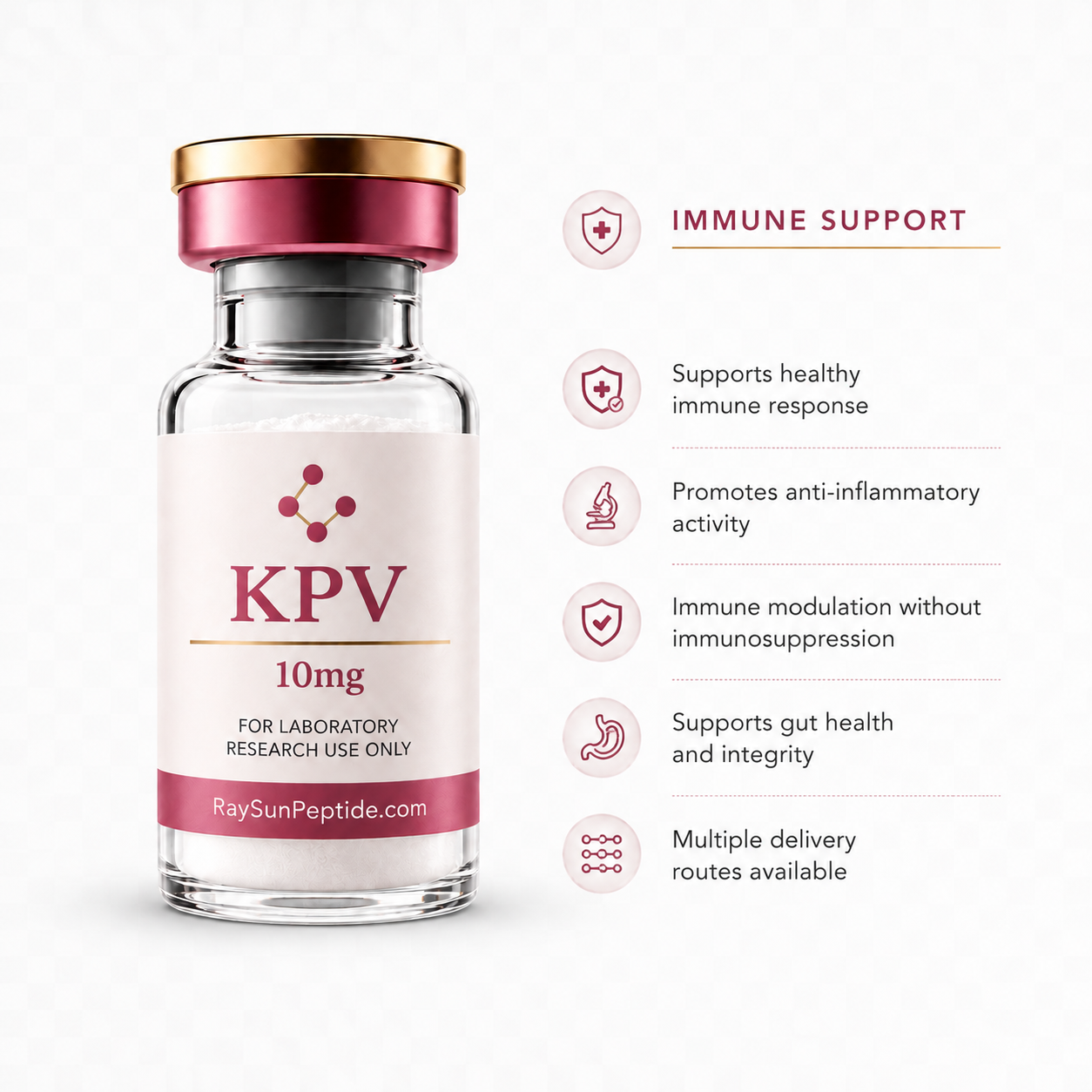
KPV (Lysine-Proline-Valine) is a tripeptide derived from the C-terminal end of alpha-melanocyte stimulating hormone (α-MSH). It has been studied in inflammation research for its effects on NF-κB signaling pathway modulation and its role in anti-inflammatory responses. Published research has investigated its effects on cytokine production and inflammatory markers. RaysunPeptide supplies KPV for qualified research and laboratory applications.
Mechanism of Action
Enters cells and inhibits inflammatory pathways at the nuclear level, particularly NF-κB signaling. Reduces pro-inflammatory cytokines (TNF-α, IL-6) without causing immunosuppression like steroids.
Key Benefits
Molecular Data
Dosing Protocols
| Goal | Dose | Frequency | Route |
|---|---|---|---|
| General anti-inflammatory | 200-300mcg | Once daily | SubQ |
| Active inflammation | 250mcg | Twice daily | SubQ |
| Autoimmune support | 500mcg | Once daily | SubQ |
| Acute flare-ups | 500mcg | 2x daily for 1 week, then reduce | SubQ |
Research Indications
Inflammation
Reduces TNF-α and IL-6 through NF-κB pathway inhibition.
May help balance overactive immune responses in autoimmune conditions.
Potential benefits for inflammatory arthritis through cytokine reduction.
Gut Health
Demonstrated benefit in Crohn's disease and ulcerative colitis models.
Helps restore intestinal barrier function.
Selective antimicrobial activity preserves beneficial gut bacteria.
Skin Health
Topical KPV reduced psoriatic markers by 60% and improved skin barrier function.
Reduces inflammatory skin conditions without systemic effects.
Peptide Interactions
Enhanced gut healing and anti-inflammatory effects through complementary mechanisms.
Different mechanisms; can be combined safely.
Complementary antimicrobial and healing effects.
Both support immune function through different pathways.
Synergistic for skin health and regeneration.
Both are α-MSH related; KPV lacks pigmentation effects but monitor for cumulative effects.
What to Expect
Side Effects & Safety
Common (Generally Mild)
- •Minimal to no side effects reported
- •Does not cause immunosuppression like steroids
- •No melanin production/tanning effects
- •May temporarily reduce inflammation-related symptoms
Stop Signs (Seek Medical Attention)
- ⚠Signs of infection (fever, chills) - very rare
- ⚠Severe injection site reactions
- ⚠Paradoxical inflammation increase
- ⚠Allergic reaction symptoms
- ⚠Unusual fatigue or weakness
Contraindications
- ✕Known peptide allergies
- ✕Active severe infections (theoretical)
- ✕Pregnancy or breastfeeding (limited data)
Quality Checklist
Good Signs ✓
- High purity >98%
- Clear, colorless solution after reconstitution
- Stable small peptide structure
- Certificate of analysis available
Warning Signs !
- pH should be 5.5-7 for optimal stability
Bad Signs ✕
- Visible particles indicate contamination/degradation
- Yellow coloration indicates oxidation/potency loss
References
Established that KPV exerts anti-inflammatory effects distinct from core MSH peptides, likely through inhibition of IL-1β functions rather than melanocortin receptor signaling.
View on PubMed →KPV is transported into cells via PepT1, where nanomolar concentrations inhibit NF-κB and MAP kinase signaling pathways. Oral KPV reduced DSS- and TNBS-induced colitis in mice.
View on PubMed →KPV showed significant anti-inflammatory effects in DSS colitis and CD45RBhi transfer colitis models, reducing weight loss, histological damage, and MPO activity. Effects partially independent of MC1R signaling.
View on PubMed →PepT1 is highly expressed in human colorectal tumors. PepT1-transported KPV prevented colitis-associated carcinogenesis in wild-type mice, with no effect in PepT1-knockout mice, confirming PepT1-dependent therapeutic mechanism.
View on PubMed →HA-functionalized KPV nanoparticles (~272.3 nm) successfully targeted colonic epithelial cells and macrophages, exerting combined mucosal healing and anti-inflammatory effects superior to free KPV in a UC mouse model.
View on PubMed →FAQs