Testagen
Moderate ResearchTetrapeptide bioregulator
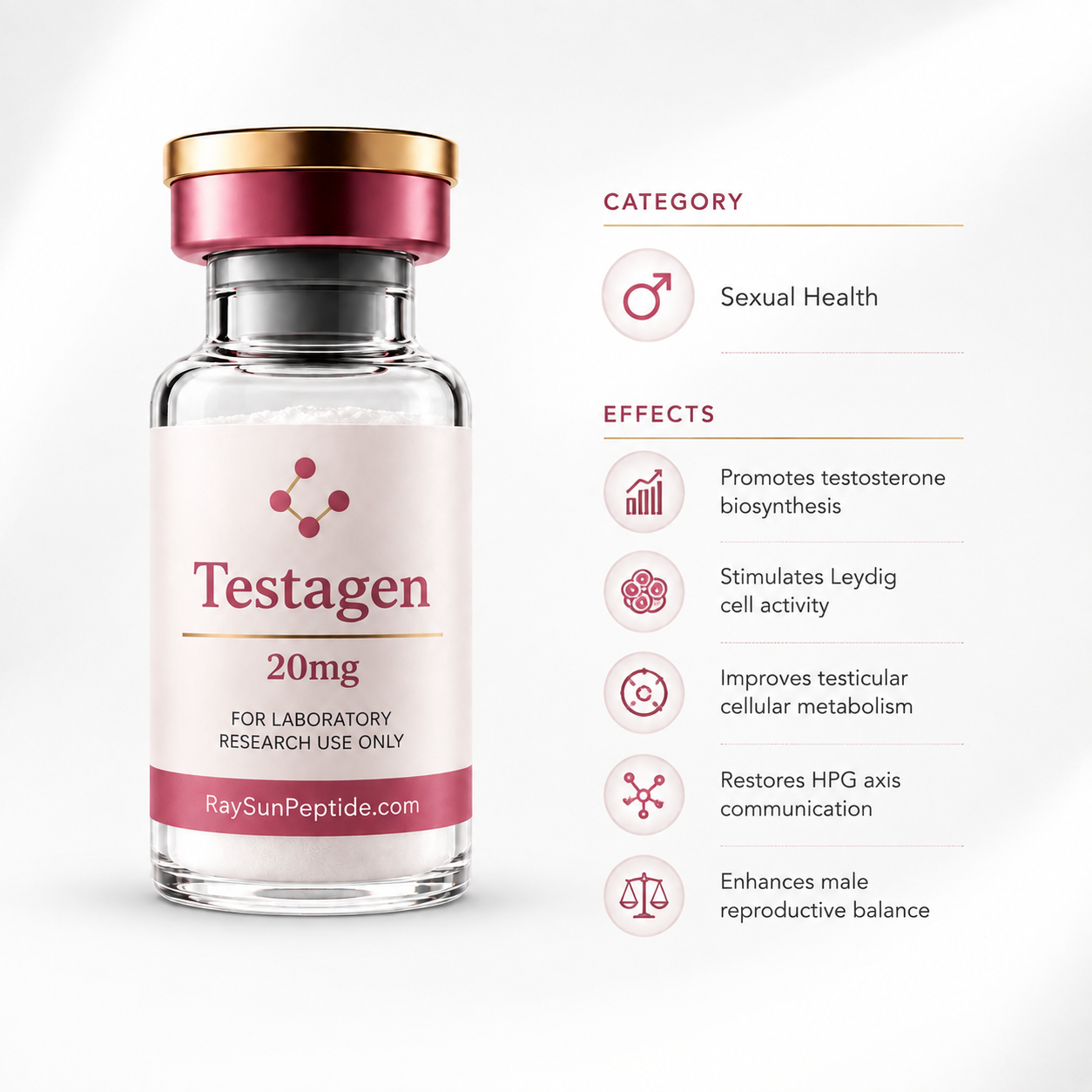
Testagen is a tripeptide bioregulator that has been studied in reproductive endocrinology research for its effects on testicular function and hormone regulation. Published research has investigated its role in reproductive tissue gene expression. RaysunPeptide supplies Testagen for qualified research and laboratory applications.
Mechanism of Action
Testagen works through epigenetic regulation, crossing both cell and nuclear membranes to interact directly with DNA of target tissues. It penetrates into cytoplasm, nucleus, and nucleolus of cells, interacting with various cellular components including DNA and RNA. The peptide can discriminate between different nucleotide sequences and recognize cytosine methylation status. It interacts with the anterior pituitary gland and endocrine pathways involved in testosterone and TSH synthesis, restoring HPG axis communication.
Key Benefits
Molecular Data
Dosing Protocols
| Goal | Dose | Frequency | Route |
|---|---|---|---|
| Standard protocol | 10-20 mg | Daily for 10-20 days | Oral capsules |
| Maintenance | 10 mg | 2-3 cycles yearly | Oral capsules |
Research Indications
Male Hormone Support
Promotes testosterone biosynthesis through Leydig cell stimulation.
Restores normal communication within hypothalamic-pituitary-gonadal axis.
Addresses declining testosterone through cellular metabolism improvement.
Male Reproductive Health
Supports spermatogenesis and reproductive balance.
Normalizes testicular function by reducing peptide deficiency.
May enhance male sexual function through testosterone support.
Prostate Support
Research shows reduction in inflammation markers in prostate tissue.
Peptide Interactions
Complementary male reproductive bioregulators; different tissue targets.
Both support HPG axis function through different mechanisms.
Often combined in comprehensive anti-aging Khavinson protocols.
Both support testosterone; different mechanisms.
What to Expect
Side Effects & Safety
Common (Generally Mild)
- •Generally well-tolerated
- •Minimal side effects reported
Stop Signs (Seek Medical Attention)
- ⚠Allergic reactions
- ⚠Signs of hormone imbalance
Contraindications
- ✕Hormone-sensitive cancers (consult oncologist)
- ✕Known hypersensitivity
- ✕Female use not established
Quality Checklist
Good Signs ✓
- White powder or capsules
- Clear solution if reconstituted
- Proper packaging and labeling
Warning Signs !
- Unknown source or purity
Bad Signs ✕
- Discoloration
- Unusual odor
- Damaged packaging
References
Testagen promotes testosterone biosynthesis by stimulating Leydig cell activity and improving testicular metabolism.
KEDG peptide helps restore communication within hypothalamic-pituitary-gonadal axis.
Testagen penetrates cell nuclei and interacts with DNA, recognizing methylation status.
Comprehensive review of bioregulator peptides isolated from testicular and other tissue extracts.
FAQs
Does Testagen actually increase testosterone or just support natural production?
Testagen promotes testosterone biosynthesis rather than providing exogenous testosterone. It stimulates Leydig cell activity and improves testicular cellular metabolism through epigenetic regulation, helping restore the body's own testosterone production rather than replacing it.
How long does Testagen take to increase testosterone levels?
Testagen works through gene expression changes and cellular metabolism improvements that develop over weeks to months. Most users report noticeable testosterone-related benefits (energy, libido, mood) after 2-4 weeks of cycling, with more significant improvements over 2-3 months of intermittent use.
Can Testagen be used continuously or must it be cycled?
Testagen follows Khavinson bioregulator cycling protocols: 10-20 days on, then off, repeated 2-3 times yearly. Continuous use isn't recommended as the epigenetic regulatory effects work best with cycling to allow the body's natural feedback mechanisms to maintain balance.
Is Testagen safe for men with prostate issues?
Testagen may actually benefit prostate health by reducing inflammation markers in prostate tissue. However, men with hormone-sensitive prostate cancer should consult an oncologist before use. Normal prostate conditions (BPH, inflammation) may improve due to Testagen's dual testosterone support and anti-inflammatory effects.