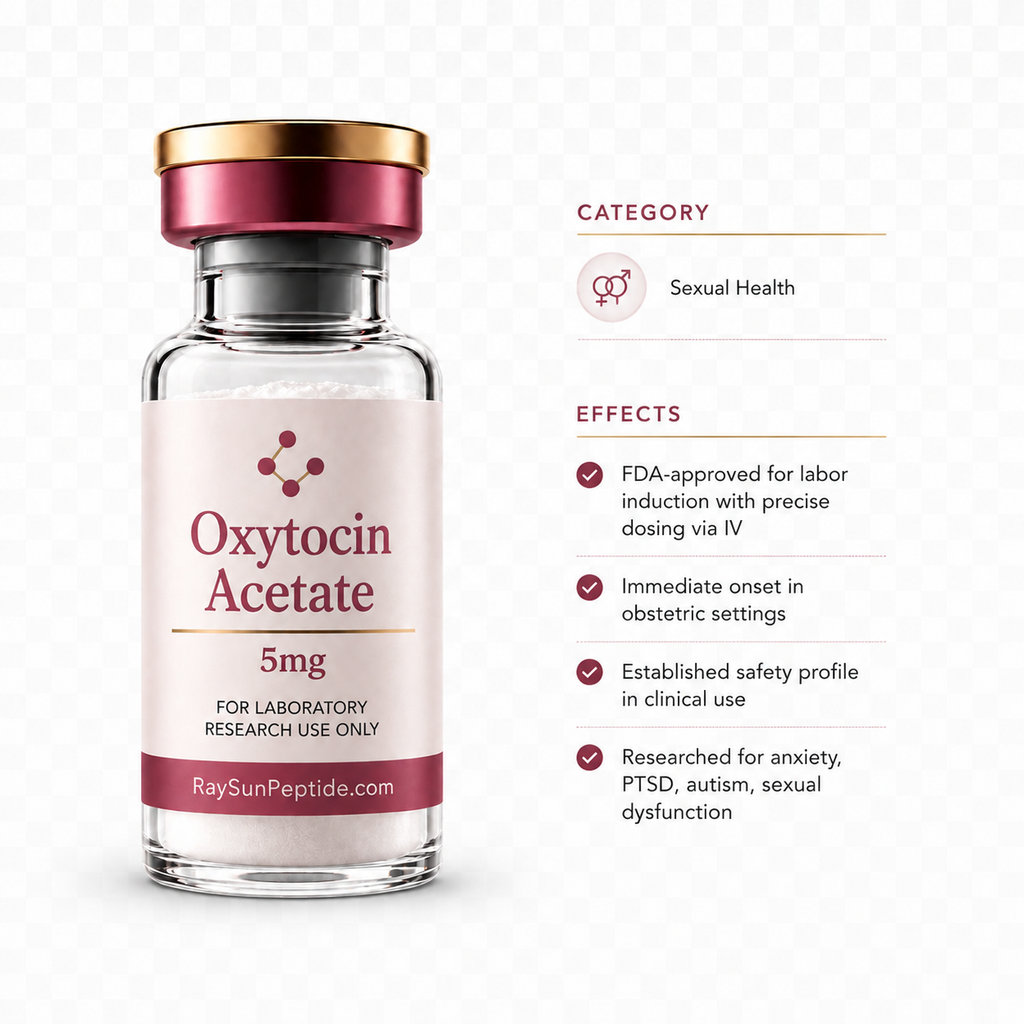
Oxytocin Acetate
FDA ApprovedCyclic nonapeptide
Oxytocin is a nonapeptide hormone produced in the hypothalamus and released by the posterior pituitary. It has been extensively studied in neuroscience and endocrinology research for its roles in social bonding, reproductive physiology, and maternal behavior. Published research has examined its receptor binding, signaling pathways, and distribution in various tissues. RaysunPeptide supplies Oxytocin Acetate for qualified research and laboratory applications.
Mechanism of Action
Binds oxytocin receptors on uterine smooth muscle, triggering calcium influx and myometrial contractions. Stimulates prostaglandin release. In CNS, modulates GABAergic, serotonergic, dopaminergic neurotransmission; reduces cortisol and HPA axis activity.
Key Benefits
Molecular Data
Dosing Protocols
| Goal | Dose | Frequency | Route |
|---|---|---|---|
| Labor Induction | 0.5-2 mU/min initial, titrate to 1-2 mU/min every 30-60 min | Continuous IV infusion | IV (diluted) |
| Postpartum Hemorrhage Prevention | 10 units IM or 10-40 units in IV solution | Single dose after placental delivery | IM or IV infusion |
Research Indications
Obstetric (FDA Approved)
Initiates or augments uterine contractions when vaginal delivery medically indicated.
Controls postpartum bleeding through uterine contraction stimulation during third stage.
Adjunctive therapy for incomplete or inevitable abortion in second trimester.
Research/Emerging
Extensive research with mixed results on social functioning; optimal dosing unclear.
Combined with exposure therapy; shows reduced PTSD/depression symptoms.
Decreases amygdala reactivity to social threats; normalizes brain connectivity.
Improves libido, arousal, orgasm intensity in both sexes.
Peptide Interactions
Structurally similar; overlapping receptor affinity with potential additive effects.
Complementary anxiolytic effects—Selank modulates GABA; oxytocin acts on central receptors.
Complementary sexual function effects via different pathways.
Both involved in reproduction; kisspeptin stimulates GnRH; oxytocin enhances arousal.
No direct interactions; different mechanisms (tissue repair vs social function).
SSRIs may affect endogenous oxytocin; combined use requires healthcare provider oversight.
Alcohol suppresses oxytocin release; reduces therapeutic effects.
What to Expect
Side Effects & Safety
Common (Generally Mild)
- •Mild headache
- •Nasal irritation (intranasal)
- •Nausea or vomiting
- •Transient blood pressure changes
Stop Signs (Seek Medical Attention)
- ⚠Uterine hyperstimulation or fetal distress (injectable)
- ⚠Severe or persistent headache
- ⚠Signs of water intoxication (confusion, seizures, swelling)
- ⚠Severe nasal irritation or bleeding
- ⚠Allergic reaction (rash, breathing difficulty)
Contraindications
- ✕Certain obstetric conditions (see prescribing info)
- ✕Pregnancy (without medical supervision)
- ✕Active sinus infection (intranasal)
- ✕Severe hyponatremia
Quality Checklist
Good Signs ✓
- FDA-approved pharmaceutical product from licensed pharmacies (injectable)
- Clear, colorless solution without particles or discoloration
- Proper packaging with verified lot number, expiration, concentration
- Licensed compounding pharmacy source with USP compliance
Warning Signs !
- Variable compounding quality between pharmacies
- Nasal congestion reduces intranasal absorption
- Sublingual has lower bioavailability than intranasal
Bad Signs ✕
- Cloudy, discolored, or particulate solution
- From unlicensed or unverified sources
- Improper storage or broken cold chain
References
N=290 children/adolescents; 48 IU daily; 24 weeks. Did not significantly improve social functioning vs placebo; highlights need for better patient selection.
Veterans with PTSD; 40 IU intranasal combined with PE therapy. Lower PTSD and depression symptoms; higher therapeutic alliance vs placebo.
N=61 adults with obesity; 24 IU four times daily; 8 weeks. No weight loss but significant reduction in caloric intake; improved mental health-related quality of life.
FAQs
Does intranasal oxytocin actually improve social anxiety, or is it just a placebo?
Research shows oxytocin decreases amygdala reactivity to social threats and normalizes brain connectivity related to social processing. It's not a placebo, but it's not a miracle either. The effects are measurable in brain imaging and behavioral tests, though the magnitude varies between individuals.
Can I use oxytocin for sexual function without a medical reason?
Yes, it's researched for sexual enhancement—the file lists sexual function as an indication with 24-40 IU taken 30-45 minutes before activity. However, it's FDA-approved only for obstetric use.
Will alcohol interfere with oxytocin's effects?
Yes. Alcohol suppresses endogenous oxytocin release, which would significantly reduce any therapeutic or enhancement benefits.
How is intranasal oxytocin different from the obstetric injection?
The obstetric injection (FDA-approved Pitocin) is high-dose IV for labor induction with immediate onset and precise dosing control. Intranasal oxytocin delivers much lower doses and achieves brain delivery via olfactory pathways with slower onset (15-30 minutes) but longer duration (2-4 hours).