Survodutide
Extensively StudiedPeptide with fatty acid acylation
Survodutide is a dual GLP-1 and glucagon receptor agonist that has been studied in metabolic research for its effects on glucose homeostasis and energy metabolism. Published research has investigated its receptor binding properties and metabolic effects in preclinical models. RaysunPeptide supplies Survodutide for qualified research and laboratory applications.
Mechanism of Action
Dual agonism: GLP-1R reduces appetite and slows gastric emptying; GCGR increases energy expenditure and hepatic fat oxidation. EC50 0.52nM GCGR, 0.33nM GLP-1R.
Key Benefits
Molecular Data
Dosing Protocols
| Goal | Dose | Frequency | Route |
|---|---|---|---|
| Obesity - Conservative Start | 0.6mg titrated over 24 weeks | Once weekly with 4-week intervals | SubQ |
| Obesity - Standard Protocol | 3.6-6.0mg | Once weekly | SubQ |
| MASH Treatment | 2.4-4.8mg | Once weekly | SubQ |
| Type 2 Diabetes | 0.3-2.7mg | Once weekly | SubQ |
Research Indications
Weight Loss
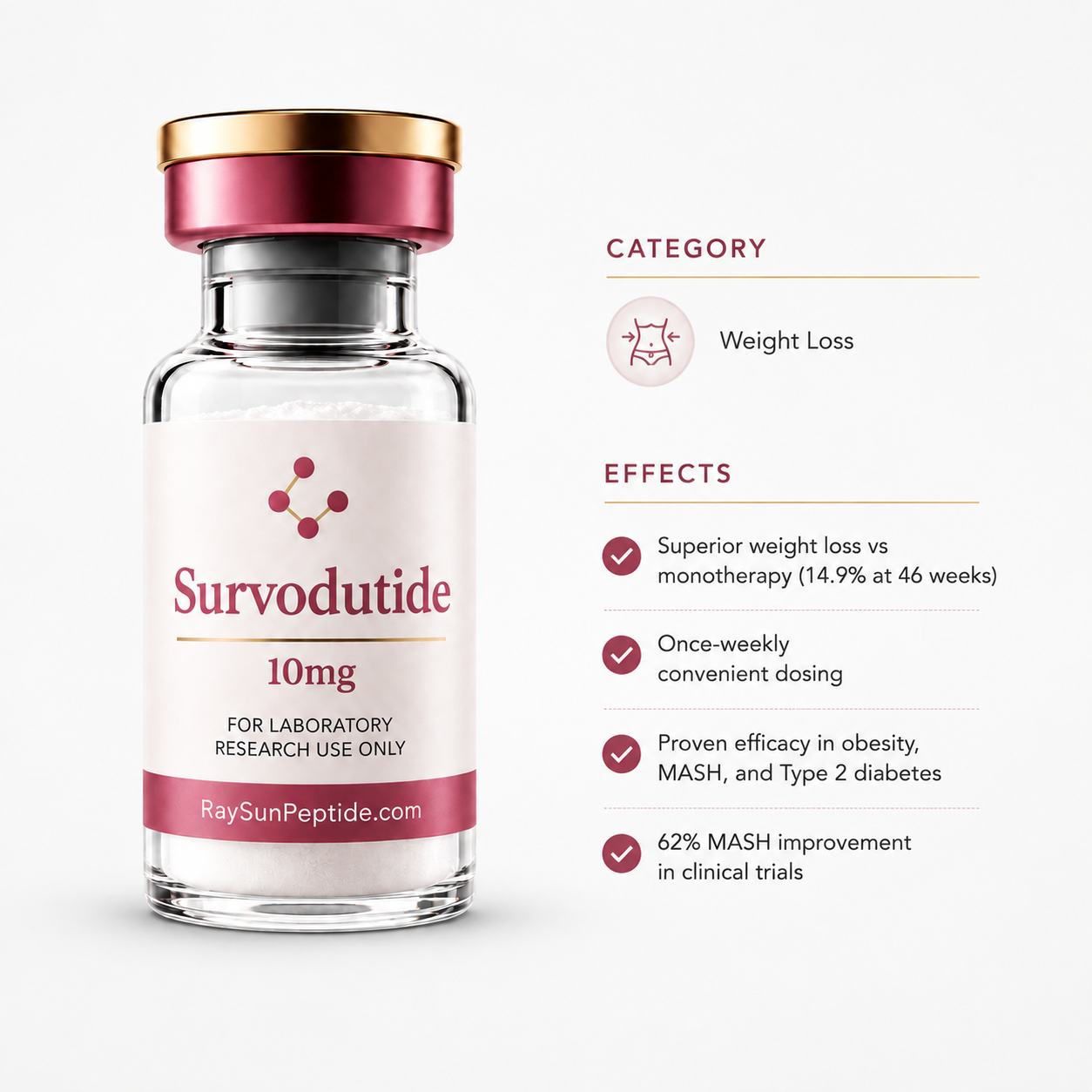
14.9% mean weight loss at 46 weeks (4.8mg); 55% achieved ≥15% reduction.
Superior to semaglutide: -8.7% vs -5.3% at 16 weeks.
Dual mechanism addresses both energy intake and expenditure.
Metabolic
62% achieved MASH improvement without fibrosis worsening at 4.8mg.
63-67% achieved ≥30% liver fat reduction.
HbA1c reduction up to -1.6% at highest doses.
Peptide Interactions
Both GLP-1 agonists; combining risks excessive activation and GI side effects.
Demonstrated together in Phase 2 diabetes trials.
No known interactions; allowed in Phase 3 with monitoring.
Hypoglycemia risk; consider dose reduction.
May require insulin dose reduction due to improved glycemic control.
Take 1+ hour before survodutide due to delayed gastric emptying.
Risk of excessive glucagon receptor activation.
What to Expect
Side Effects & Safety
Common (Generally Mild)
- •Nausea (40-66%)
- •Diarrhea (25-49%)
- •Vomiting (15-41%)
- •Slight heart rate increase (mean 2-5 bpm)
Stop Signs (Seek Medical Attention)
- ⚠Severe persistent nausea/vomiting preventing oral intake
- ⚠Signs of pancreatitis (severe abdominal pain radiating to back)
- ⚠Allergic reactions (rash, itching, difficulty breathing)
- ⚠Severe hypoglycemia with insulin/sulfonylureas
- ⚠Gallbladder symptoms (right upper quadrant pain)
- ⚠Significant tachycardia or arrhythmias
Contraindications
- ✕Not recommended in pregnancy or breastfeeding
- ✕Use contraception during treatment
Quality Checklist
Good Signs ✓
- Clear to slightly opalescent solution without visible particles
- Sealed vial with intact rubber stopper
- Within expiration date
Warning Signs !
- Slight foam after reconstitution is normal if disappears within minutes
Bad Signs ✕
- Cloudy solution or visible particles indicates contamination
- Discoloration of powder or solution
References
387 participants; BMI ≥27 kg/m²; 46 weeks. 14.9% mean weight loss at 4.8mg; 83% achieved ≥5%, 69% achieved ≥10%, 55% achieved ≥15%.
293 participants with biopsy-confirmed MASH; 48 weeks. MASH improvement: 62% (4.8mg) vs 14% placebo; 63-67% achieved ≥30% liver fat reduction.
Head-to-head vs semaglutide 1.0mg; 16 weeks. Survodutide -8.7% weight loss vs semaglutide -5.3%; HbA1c reduction up to -1.6%.
FAQs
Why is survodutide superior to semaglutide for weight loss?
Survodutide adds glucagon receptor agonism to GLP-1 effects, creating dual appetite suppression and energy expenditure increase. Head-to-head trials show -8.7% weight loss vs semaglutide's -5.3% at 16 weeks, because the glucagon pathway enhances fat burning independent of appetite.
Can survodutide reverse MASH (metabolic dysfunction-associated steatohepatitis)?
Yes, clinical trials show 62% of MASH patients achieved improvement without fibrosis worsening at 4.8mg weekly, with 63-67% achieving ≥30% liver fat reduction. This makes it one of the first investigational agents with FDA potential for both MASH treatment and weight loss.
Is survodutide's 6-day half-life long enough for once-weekly dosing?
Yes, the ~6-day half-life allows effective once-weekly dosing because peak levels remain therapeutic throughout the week. This contrasts with semaglutide (7-day half-life) - survodutide's slightly shorter half-life still covers the weekly interval adequately.
Does survodutide cause heart rate increases like other GLP-1 drugs?
Survodutide shows a mean 2-5 bpm heart rate increase, similar to semaglutide. The glucagon receptor activation is modest enough to avoid significant tachycardia, though patients with cardiac conditions should monitor closely as with all GLP-1 agonists.