PTD-DBM
Preclinical ResearchProtein transduction domain-fused signaling peptide
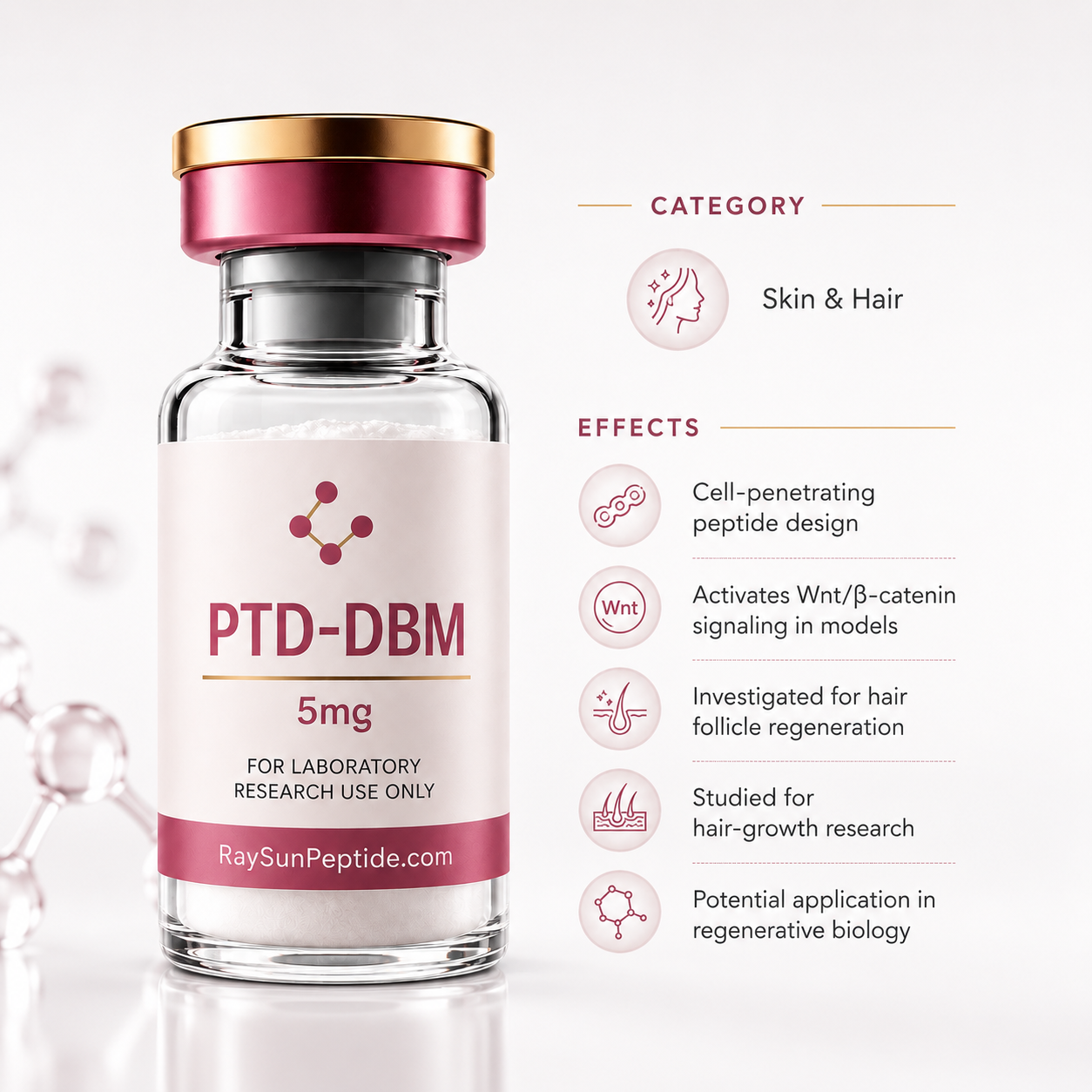
PTD-DBM is a cell-permeable peptide that has been studied in stem cell research for its effects on Wnt/β-catenin signaling pathway activation. Published research has investigated its role in tissue regeneration and stem cell differentiation. RaysunPeptide supplies PTD-DBM for qualified research and laboratory applications.
Mechanism of Action
PTD-DBM interferes with the interaction between CXXC5 and Dishevelled, relieving negative regulation of Wnt/β-catenin signaling and promoting downstream pathway activity.
Key Benefits
Molecular Data
Research Indications
Hair Research
Experimental studies have reported increased hair follicle formation and hair regrowth in animal models.
Activation of Wnt/β-catenin signaling through disruption of CXXC5-Dvl interaction has been investigated as a strategy for promoting hair growth.
Regenerative Biology
Used experimentally to study modulation of the Wnt/β-catenin pathway.
Peptide Interactions
Experimental studies have investigated combination with Wnt/β-catenin pathway activation.
What to Expect
Side Effects & Safety
Common (Generally Mild)
- •Human safety profile not established
Stop Signs (Seek Medical Attention)
- ⚠Unexpected systemic effects
- ⚠Unexpected local inflammatory response
Contraindications
- ✕No approved human therapeutic indication
- ✕Insufficient human safety data
FAQs
What does PTD-DBM stand for?
PTD-DBM refers to Protein Transduction Domain-fused Dishevelled Binding Motif.
What is PTD-DBM studied for?
It has primarily been investigated in preclinical models for Wnt/β-catenin signaling, hair follicle regeneration and hair growth.