GHK-Cu (Copper Peptide)
Well StudiedCopper tripeptide
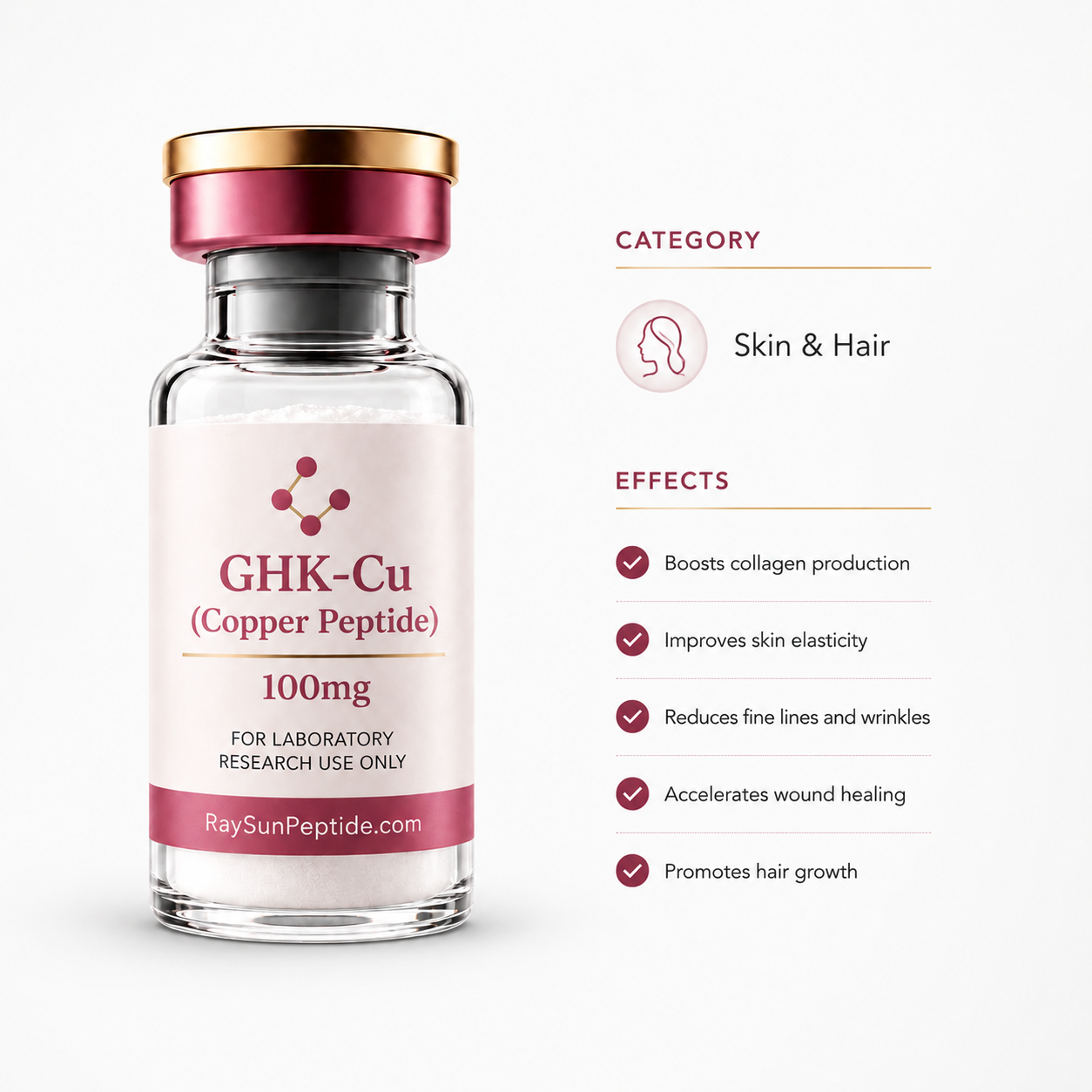
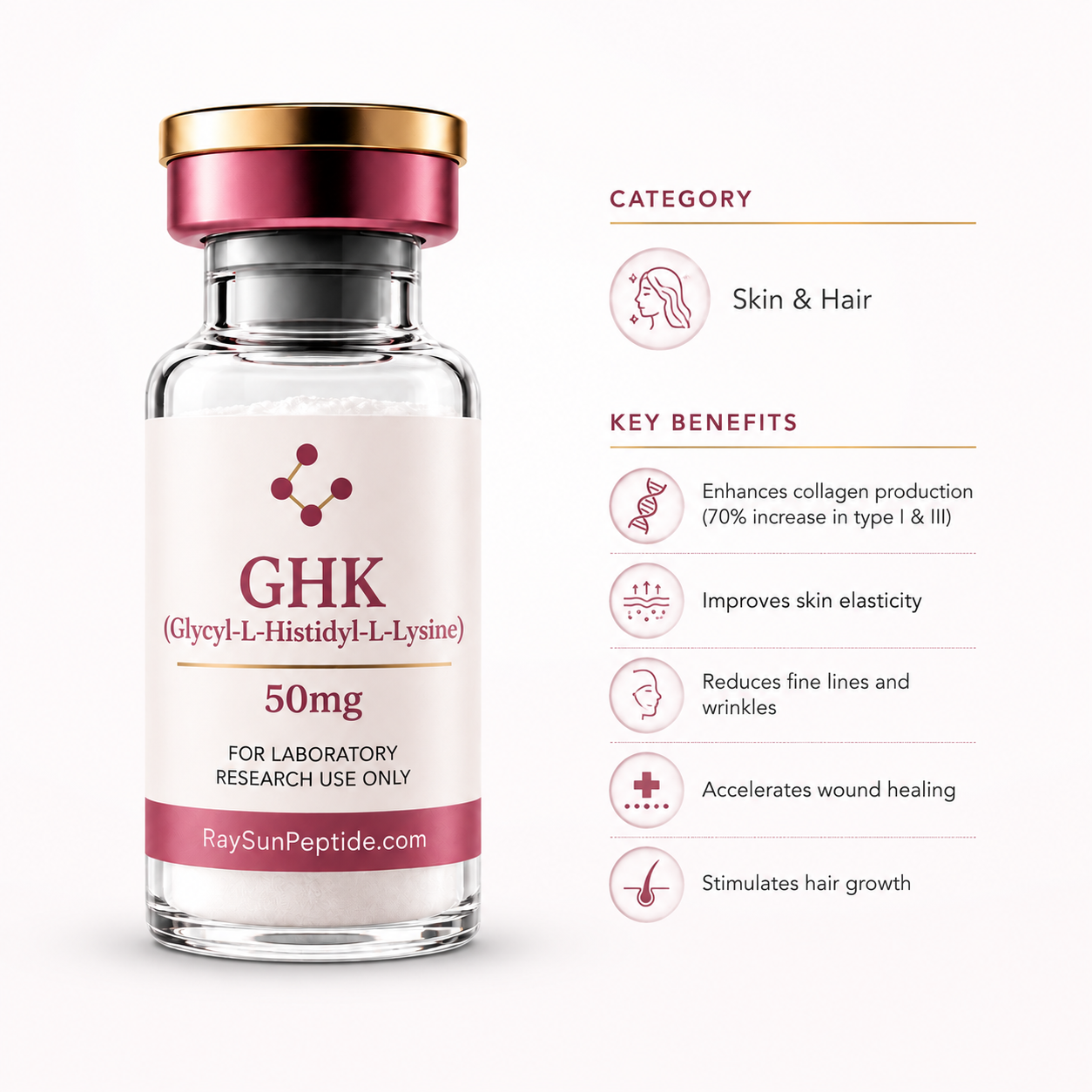
GHK-Cu (Glycyl-L-Histidyl-L-Lysine Copper) is a naturally occurring copper-binding tripeptide that has been studied in dermatology and tissue remodeling research. It has been investigated for its effects on collagen synthesis, glycosaminoglycan production, and extracellular matrix remodeling. Published research has examined its role in wound healing pathways and its interactions with copper-dependent enzymes. RaysunPeptide supplies GHK-Cu for qualified research and laboratory applications.
Mechanism of Action
Penetrates skin layers, activates fibroblasts, stimulates collagen and elastin synthesis, promotes angiogenesis, and modulates inflammatory responses. The copper ion is essential for enzyme cofactor activity in tissue repair processes.
Key Benefits
Molecular Data
Dosing Protocols
| Goal | Dose | Frequency | Route |
|---|---|---|---|
| Anti-aging skincare | 0.5-1% cream | 1-2x daily | Topical application |
| Hair growth stimulation | 1-2% solution | 1x daily | Scalp massage |
| Wound healing | 1-2% gel | 2-3x daily | Direct application |
| General skin health | 0.5% serum | 1x daily | Face and neck |
| Intensive repair | 2% cream | 1x daily | Targeted areas |
Research Indications
Skin Regeneration
Increases type I and III collagen production by up to 70% in human dermal fibroblasts.
Stimulates elastin synthesis for improved skin elasticity and resilience.
Strengthens protective barrier and improves moisture retention.
Hair Growth
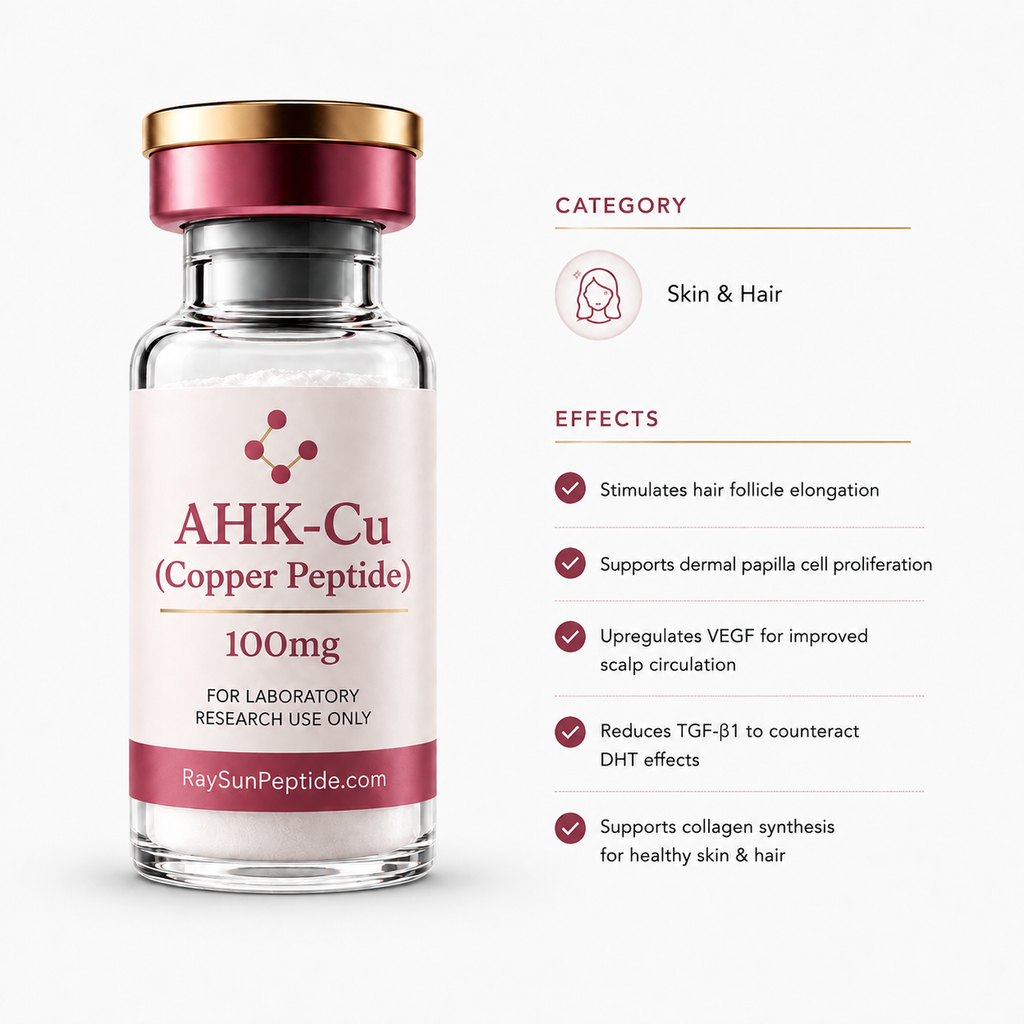
Promotes hair follicle enlargement and extends anagen (growth) phase.
Improves scalp circulation and reduces inflammation.
Anti-Inflammatory
Regulates inflammatory cytokine production.
Protects tissues from oxidative stress and damage.
Peptide Interactions
Complementary tissue healing and regeneration pathways.
Enhanced wound healing and tissue repair when combined.
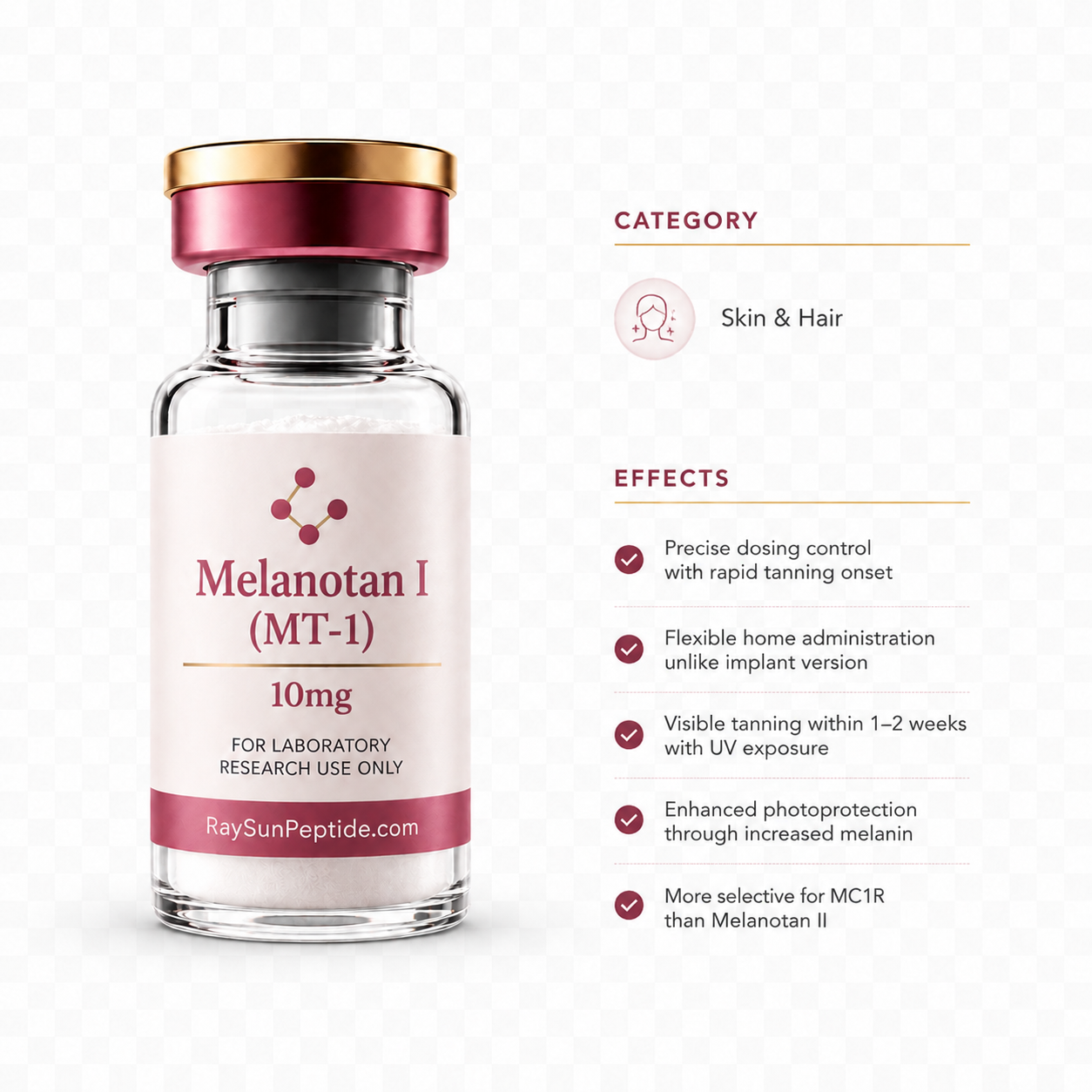
Both affect melanin production; use caution when combining.
Risk of copper toxicity; do not combine with oral copper supplements.
No known interactions.
May affect copper absorption and activity.
What to Expect
Side Effects & Safety
Common (Generally Mild)
- •Mild skin irritation initially (usually resolves)
- •Increased photosensitivity
Stop Signs (Seek Medical Attention)
- ⚠Severe skin irritation, burning, or persistent redness
- ⚠Allergic reactions (rash, swelling, difficulty breathing)
- ⚠Unusual skin discoloration or staining
- ⚠Persistent metallic taste (injectable)
- ⚠Worsening of skin condition after 4-6 weeks
Contraindications
- ✕Known copper sensitivity or Wilson's disease
- ✕Active skin infections at application site
- ✕Pregnancy or breastfeeding (injectable)
Quality Checklist
Good Signs ✓
- Light blue tint from copper content
- Smooth texture, non-gritty
- Stable formulation without separation or crystallization
- Professional packaging with UV protection
Warning Signs !
- Slight color variation acceptable within blue spectrum
Bad Signs ✕
- Green or dark discoloration (oxidation/contamination)
- Grainy texture (poor formulation or crystallization)
- Separation or settling of components
References
Broad regenerative potential demonstrated across skin, lung, bone, liver, and stomach tissue; cell protective actions including anti-cancer, anti-inflammatory, DNA repair, and proteasome activation via gene modulation.
View on PubMed →GHK-Cu stimulates synthesis of collagen, dermatan sulfate, chondroitin sulfate, and decorin; tightens loose skin, improves elasticity, density, and firmness; reduces fine lines, wrinkles, and photodamage.
View on PubMed →GHK possesses antioxidant, anti-inflammatory, and wound healing properties; regulates genes critical for neuronal development and maintenance; implications for cognitive health in aging.
View on PubMed →GHK and GHK-Cu modified silver nanoparticles demonstrated enhanced antibacterial activity and accelerated wound healing through improved delivery and bioactivity.
View on PubMed →Comprehensive review confirming GHK and Pal-GHK effectiveness as anti-wrinkle ingredients; skin permeability can be enhanced via metal complexation, chemical modification, and cell-penetrating peptides.
View on PubMed →FAQs
How much does GHK-Cu decline with age and why does that matter?
GHK-Cu levels drop dramatically from ~200 ng/ml at age 20 to ~80 ng/ml at age 60—a 60% decline. Since GHK-Cu affects 31.2% of human genes, this decline contributes significantly to aging phenotypes. Supplementation aims to restore youthful peptide levels and potentially reverse age-related gene expression changes.
Is topical GHK-Cu effective or should I inject it?
Topical GHK-Cu (0.5-2% creams/serums) is effective for skin applications with visible improvements in collagen, elastin, fine lines, and skin texture. Injectable forms (1-3mg SubQ) provide systemic benefits but lack FDA approval. For skin-focused anti-aging, topical is convenient and well-researched; for systemic effects, injection is more bioavailable.
Can I safely combine GHK-Cu topically with retinoids?
GHK-Cu can be combined with retinoids but may increase skin sensitivity and irritation, requiring careful introduction. Start with lower GHK-Cu concentrations (0.5%) and alternate retinoid use, or apply them on different days. Patch testing is essential before full-face combined use.
How long does it take to see visible skin improvements with GHK-Cu?
Timeline for topical GHK-Cu: improved hydration in weeks 1-2, reduction in fine lines by weeks 3-4, noticeable elasticity improvements by weeks 6-8, and peak anti-aging effects by weeks 8-12. Hair growth benefits take longer—typically 6-12 weeks for initial follicle stimulation effects.