AHK-Cu (Copper Peptide)
Well StudiedCopper tripeptide complex
AHK-Cu (Beta-Alanyl-L-Histidyl-L-Lysine Copper) is a copper-binding tripeptide analog that has been studied in cosmetic and dermatology research. It has been investigated for its effects on skin cell proliferation, collagen production, and extracellular matrix protein synthesis. Published research has examined its role in skin aging pathways. RaysunPeptide supplies AHK-Cu for qualified research and laboratory applications.
Mechanism of Action
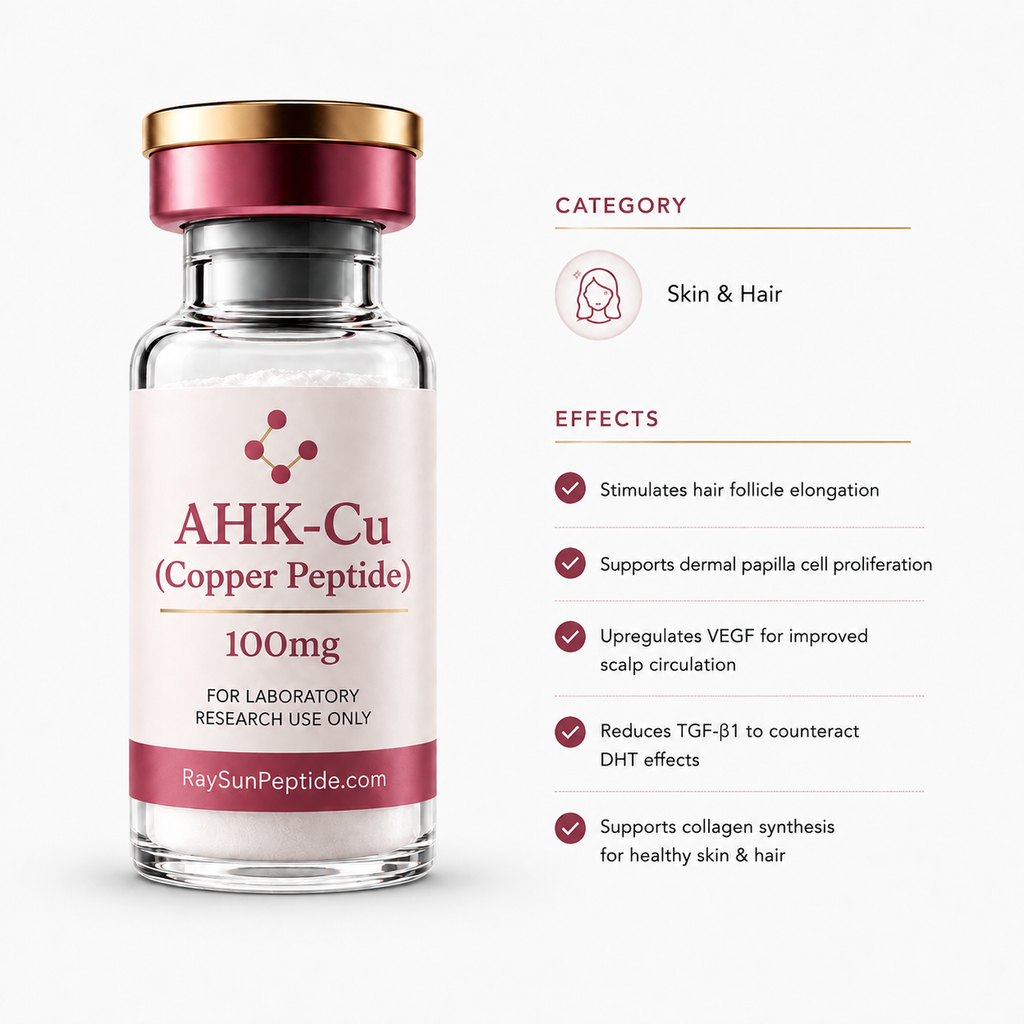
AHK-Cu penetrates scalp delivering copper directly to dermal papilla cells. Activates proliferation pathways, elevates Bcl-2/Bax ratio (anti-apoptotic), increases VEGF for blood flow, reduces TGF-β1, and promotes SOD production for oxidative stress reduction.
Key Benefits
Molecular Data
Dosing Protocols
| Goal | Dose | Frequency | Route |
|---|---|---|---|
| Hair Growth - Scalp Application | 0.5-1% solution/serum | Once or twice daily | Topical to scalp |
| Hair Growth - Combined Protocol | 0.3-0.5% AHK-Cu with minoxidil | Once or twice daily | Topical to scalp |
| Skin Regeneration | 0.3-1% in serum/cream | Once or twice daily | Topical to skin |
| DIY Formulation | Add 0.3-1% to water phase | Cool-down phase (<40°C) | Custom formulation |
Research Indications
Hair Growth
Ex vivo studies demonstrate AHK-Cu stimulates human hair follicle elongation at concentrations as low as 10⁻¹² M, promoting longer anagen phase.
Increases proliferation of dermal papilla cells, the key regulatory cells for hair follicle cycling and hair growth.
Boosts vascular endothelial growth factor production, improving blood flow and nutrient delivery to hair follicles.
Reduces TGF-β1 secretion and oxidative stress (via SOD), both contributing to DHT-induced follicle miniaturization.
Skin Regeneration
Activates fibroblast proliferation and collagen synthesis for improved skin structure and wound healing.
Elevates Bcl-2/Bax ratio and reduces caspase-3 activation, protecting cells from programmed death.
Promotes collagen and ECM component deposition for tissue renewal and repair.
Peptide Interactions
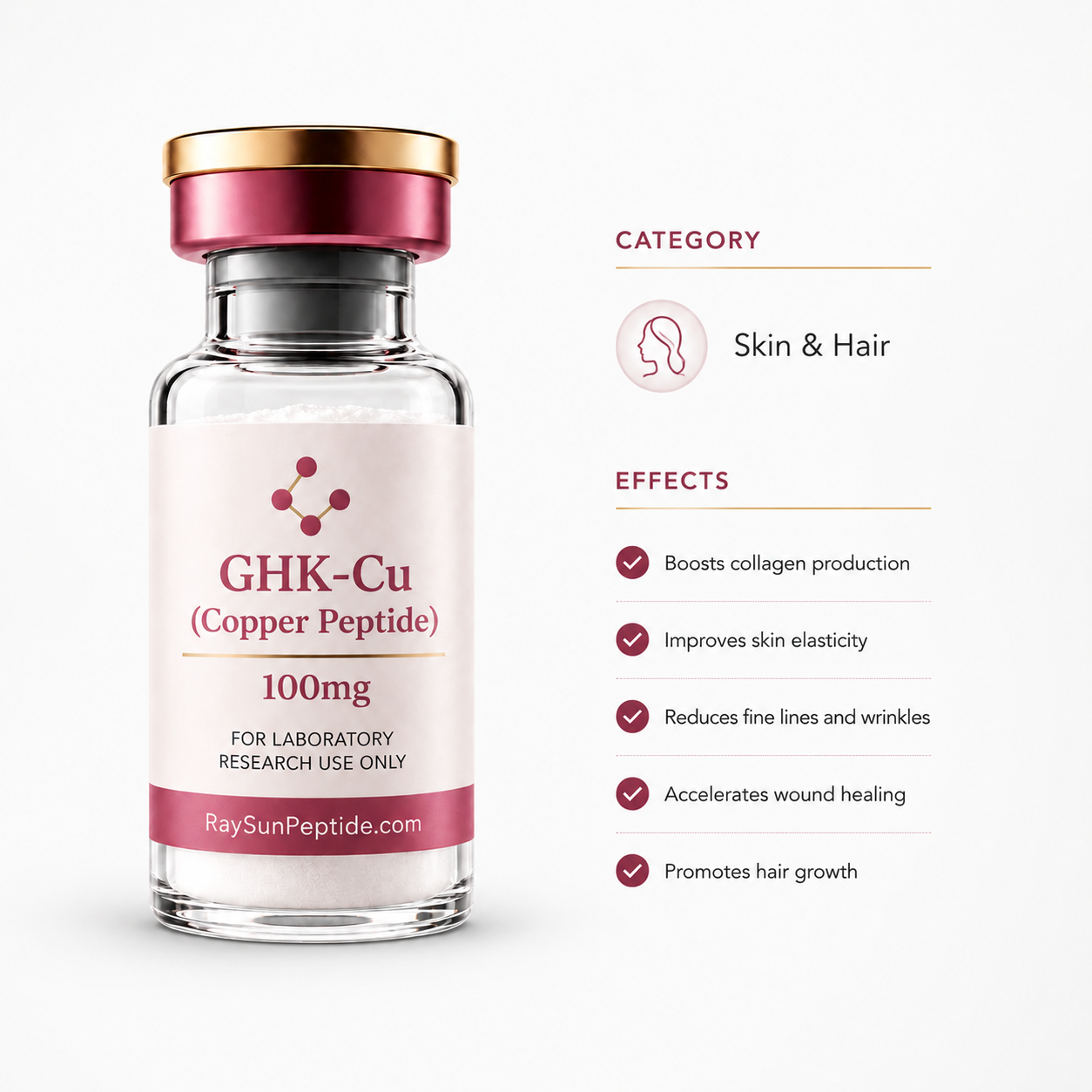
Complementary copper peptides targeting different aspects of tissue regeneration. GHK-Cu excels at skin repair while AHK-Cu targets hair follicles.
Both promote hair growth via different mechanisms - minoxidil via potassium channel opening and vasodilation, AHK-Cu via dermal papilla stimulation.
5-alpha reductase inhibitors block DHT production while AHK-Cu may help counter DHT effects on follicles.
Risk of copper toxicity when combined with additional copper sources. Monitor total copper intake.
Different tissue repair mechanisms - BPC-157 promotes systemic healing while AHK-Cu targets skin/hair.
Low pH of ascorbic acid can destabilize copper peptides. Use at different times.
Acidic exfoliants can destabilize copper peptide complexes. Use at different times.
Both are potent actives that can cause irritation. Introduce slowly or use at different times.
Excellent combination - hyaluronic acid provides hydration and supports peptide penetration.
What to Expect
Side Effects & Safety
Common (Generally Mild)
- •Generally well-tolerated with excellent safety profile in topical applications
- •Rare scalp irritation (patch test recommended)
- •Potential for mild redness on sensitive skin
Stop Signs (Seek Medical Attention)
- ⚠Persistent scalp irritation, itching, or burning
- ⚠Allergic reaction: rash, hives, swelling
- ⚠Increased hair shedding that doesn't improve after 4-6 weeks
- ⚠Signs of copper sensitivity: metallic taste, nausea
- ⚠Skin discoloration at application site
- ⚠Any unexpected adverse reactions
Contraindications
- ✕Not for use on broken or infected skin
- ✕Avoid eye area - may cause irritation
- ✕Do not use if allergic to copper or peptides
- ✕Not recommended during acute skin infections
Quality Checklist
Good Signs ✓
- Light blue powder - characteristic color from copper complex
- 99%+ purity with COA - pharmaceutical/cosmetic grade
- Proper copper complexation - dissolves to clear light blue solution
- pH-stable formulation - between 5.5-7.0
Warning Signs !
- Liposomal delivery preferred for enhanced penetration and stability
Bad Signs ✕
- Discolored or degraded appearance - brown, green, or colorless indicates degradation
- pH below 5.0 - destabilizes copper peptide complex
References
AHK-Cu (10⁻¹² to 10⁻⁹ M) stimulated human hair follicle elongation ex vivo and dermal papilla cell proliferation in vitro. Elevated Bcl-2/Bax ratio and reduced cleaved caspase-3/PARP levels indicate anti-apoptotic mechanism. Also increased VEGF production and decreased TGF-β1 secretion.
View on PubMed →Copper tripeptide (GHK-Cu) accelerates growth of normal and irradiated fibroblasts. Early increase in bFGF and VEGF production by treated fibroblasts; normal and keloid-producing fibroblasts treated with copper tripeptide secreted less TGF-β1.
View on PubMed →Copper tripeptide permeated through dermatomed skin with coefficient of 2.43 × 10⁻⁴ cm/h. 136.2 μg/cm² copper permeated over 48h while 97 μg/cm² retained as depot, demonstrating therapeutically effective amounts for topical delivery.
View on PubMed →Novel delivery system using thermodynamically stable ionic liquid microemulsions to improve topical delivery and stability of copper tripeptides including AHK-Cu.
View on PubMed →FAQs
How long before hair growth becomes visible with AHK-Cu topical application?
Most users see no visible changes weeks 1-2 as the peptide works at cellular level. Fine vellus hairs may appear in thinning areas by month 1-2. Noticeable improvements in hair density and quality emerge by month 3-4 with continued use. Full results with significant regrowth typically appear by 6-12 months.
Can I use AHK-Cu with vitamin C or other actives in my skincare routine?
No. Low pH ascorbic acid destabilizes the copper peptide complex. Use vitamin C at different times (morning vs evening). Similarly, acidic AHA/BHA exfoliants can destabilize AHK-Cu, as can retinol/retinoids which are potent actives that may cause irritation. Space these products by several hours.
Is AHK-Cu more effective than minoxidil for hair growth?
They work through different mechanisms: minoxidil opens potassium channels and vasodilates, while AHK-Cu stimulates dermal papilla cells and VEGF. Clinical studies show AHK-Cu alone produces positive results, and combining them is synergistic since they target different pathways. Neither is universally superior; combination likely produces best results.
Can I take copper supplements while using AHK-Cu topically?
No. AHK-Cu is complexed copper delivered topically, and additional copper supplementation creates toxicity risk. Monitor total copper intake from all sources including multivitamins. Topical application has minimal systemic absorption, but combining with oral copper supplementation is unnecessary and potentially dangerous.