Mazdutide
Extensively StudiedOxyntomodulin analog with fatty acid conjugation
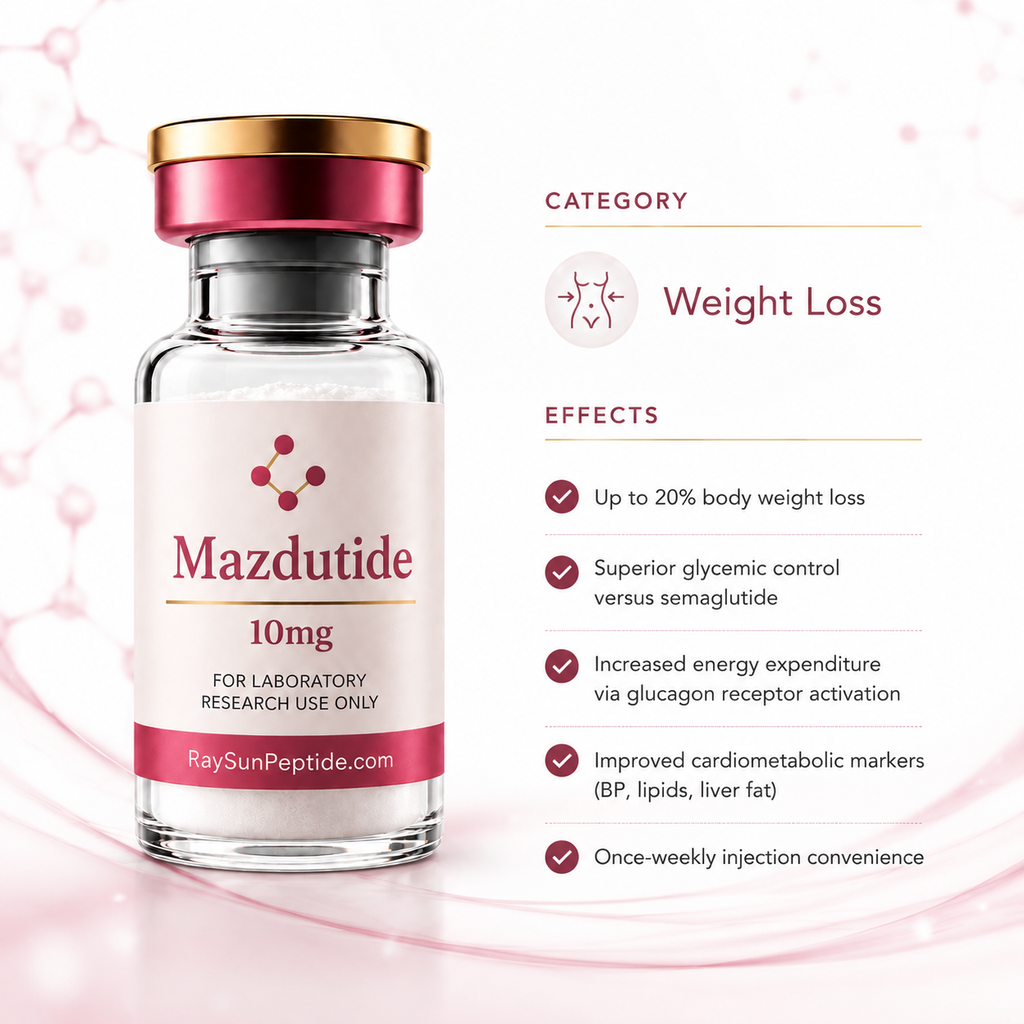
Mazdutide is a dual glucagon-like peptide-1 (GLP-1) and glucagon receptor agonist that has been studied in metabolic research. It has been investigated for its effects on glucose regulation, energy expenditure, and body weight through dual receptor activation. Published research has examined its pharmacological profile and metabolic effects. RaysunPeptide supplies Mazdutide for qualified research and laboratory applications.
Mechanism of Action
Dual agonist activation: GLP-1 stimulates insulin, suppresses glucagon, slows gastric emptying; Glucagon increases energy expenditure and thermogenesis while GLP-1 counteracts glucose-raising effects.
Key Benefits
Molecular Data
Dosing Protocols
| Goal | Dose | Frequency | Route |
|---|---|---|---|
| Weight loss initiation (3mg target) | 1.5mg → 3mg | Once weekly | SubQ |
| Weight loss progression (4.5mg target) | 1.5mg → 3mg → 4.5mg | Once weekly | SubQ |
| Weight loss optimization (6mg target) | 2mg → 4mg → 6mg | Once weekly | SubQ |
| Maximum weight loss (9mg target) | 3mg → 6mg → 9mg | Once weekly | SubQ |
| T2D management (mild-moderate) | 3-4.5mg weekly | Once weekly | SubQ |
Research Indications
Weight Loss
GLORY-2 demonstrated 20.1% weight loss with 9mg over 60 weeks; 48.7% achieved ≥20% reduction.
Significant reductions in waist circumference, systolic BP (-7.57 mmHg), triglycerides (-43%).
Exploratory analysis showed 80.2% reduction in liver fat, suggesting MASLD/MASH benefits.
Type 2 Diabetes
HbA1c reductions of 1.41-2.03% across trials; DREAMS-3 showed -2.03% vs semaglutide -1.84%.
48% achieved HbA1c <7.0% AND ≥10% weight loss versus 21% with semaglutide.
Cardiovascular
Systolic reduction of -7.57 mmHg, diastolic -2.98 mmHg in clinical trials.
Total cholesterol -16.82%, triglycerides -43.29%, LDL -17.07%.
Peptide Interactions
Both are GLP-1 agonists; combining increases hypoglycemia and severe GI side effect risk.
Both target GLP-1 receptor; additive effects on GI symptoms and hypoglycemia risk.
Another GLP-1 agonist; dual therapy contraindicated due to additive receptor activation.
May require significant dose reduction due to improved glucose control; monitor for hypoglycemia.
Increased hypoglycemia risk; dose reduction may be necessary.
Complementary mechanisms; clinical trials allowed stable metformin use with enhanced efficacy.
No known interactions; may support gut health and potentially reduce GI side effects.
Delayed gastric emptying may affect absorption; separate administration by 1 hour.
What to Expect
Side Effects & Safety
Common (Generally Mild)
- •Nausea (mild-moderate, typically improves over time)
- •Diarrhea
- •Vomiting
- •Increased heart rate (5-17 bpm observed)
Stop Signs (Seek Medical Attention)
- ⚠Severe or persistent abdominal pain (potential pancreatitis)
- ⚠Neck lumps, hoarseness, or difficulty swallowing
- ⚠Severe nausea/vomiting preventing adequate nutrition or hydration
- ⚠Signs of severe hypoglycemia (confusion, sweating, shakiness)
- ⚠Severe allergic reactions (rash, difficulty breathing, facial swelling)
- ⚠Unusual mood changes, depression, or suicidal thoughts
- ⚠Signs of gallbladder problems (severe upper right abdominal pain)
Contraindications
- ✕Personal or family history of medullary thyroid carcinoma
- ✕MEN2 syndrome history (class warning for GLP-1 agonists)
- ✕Pregnancy or breastfeeding (insufficient safety data)
Quality Checklist
Good Signs ✓
- White to off-white lyophilized powder without clumping or discoloration
- Completely clear and colorless appearance after reconstitution—no visible particles
- Intact vial seal and clear labeling with mg dosage, batch numbers, expiration dates
Warning Signs !
- Source verification critical—available from research chemical suppliers
Bad Signs ✕
- Clumping, discoloration, or moisture in powder
- Persistent cloudiness or particles after reconstitution indicates degradation
References
610 Chinese adults with obesity/overweight; 48 weeks. First Phase 3 weight management trial showing clinically meaningful weight reductions.
462 Chinese adults with obesity; 60 weeks; 9mg dose. 20.1% weight loss vs 2.8% placebo; 48.7% achieved ≥20% reduction; no plateau observed.
349 Chinese adults with T2D and obesity; 32 weeks. Mazdutide superiority: 48% vs 21% achieved HbA1c <7.0% AND ≥10% weight reduction (p<0.0001).
Chinese adults with T2D; 20 weeks. HbA1c reductions 1.41-1.67% vs 0.03% placebo; weight loss up to 7.1%.
FAQs
How much weight does mazdutide cause compared to semaglutide?
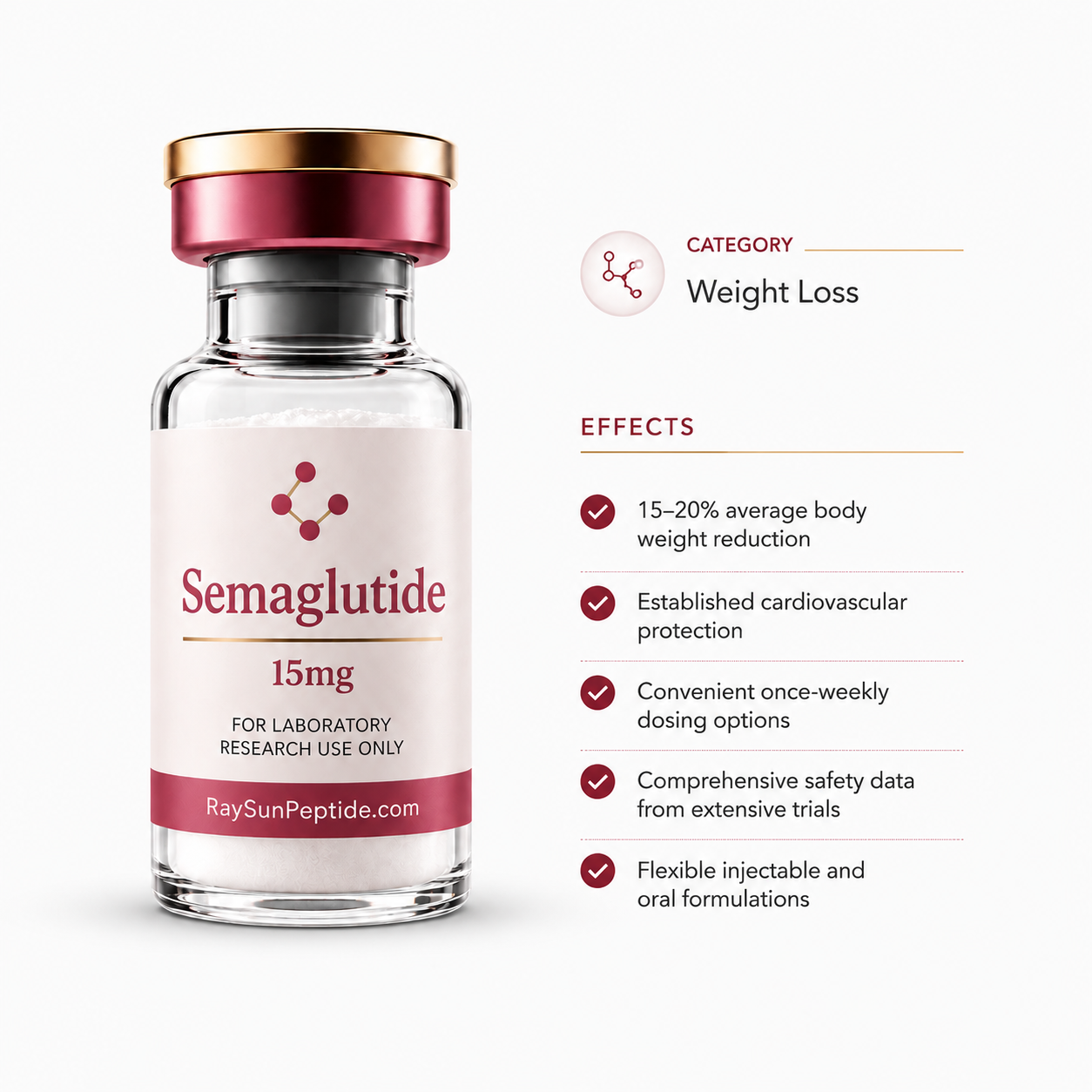
Mazdutide demonstrated 20.1% weight loss over 60 weeks in Phase 3 trials (GLORY-2), with 48.7% of users achieving ≥20% reduction. This exceeded semaglutide's typical 12-17% losses. The dual GLP-1/glucagon mechanism accounts for superior weight loss and metabolic improvements.
Why does mazdutide cause thermogenesis while semaglutide doesn't?
Mazdutide's glucagon receptor agonism increases energy expenditure and thermogenesis—burning calories actively rather than just reducing appetite. Semaglutide is GLP-1 only. This dual-agonist approach explains mazdutide's superior metabolic rate elevation.
Is mazdutide safer than semaglutide for nausea?
Not necessarily. Both cause GLP-1-induced nausea early in treatment, though it typically improves with dose escalation. Mazdutide's additional heart rate increase (5-17 bpm) from glucagon agonism is a distinct side effect requiring cardiovascular monitoring.
Can I switch from semaglutide to mazdutide?
Potentially, but with medical supervision. Both are GLP-1 agonists, so overlap during transition risks hypoglycemia and severe GI effects. Wait 1-2 weeks after stopping semaglutide before starting mazdutide, and monitor glucose carefully. Never combine them.