Matrixyl (Palmitoyl Pentapeptide-4)
Cosmetic / ResearchPalmitoylated matrikine / collagen signaling peptide
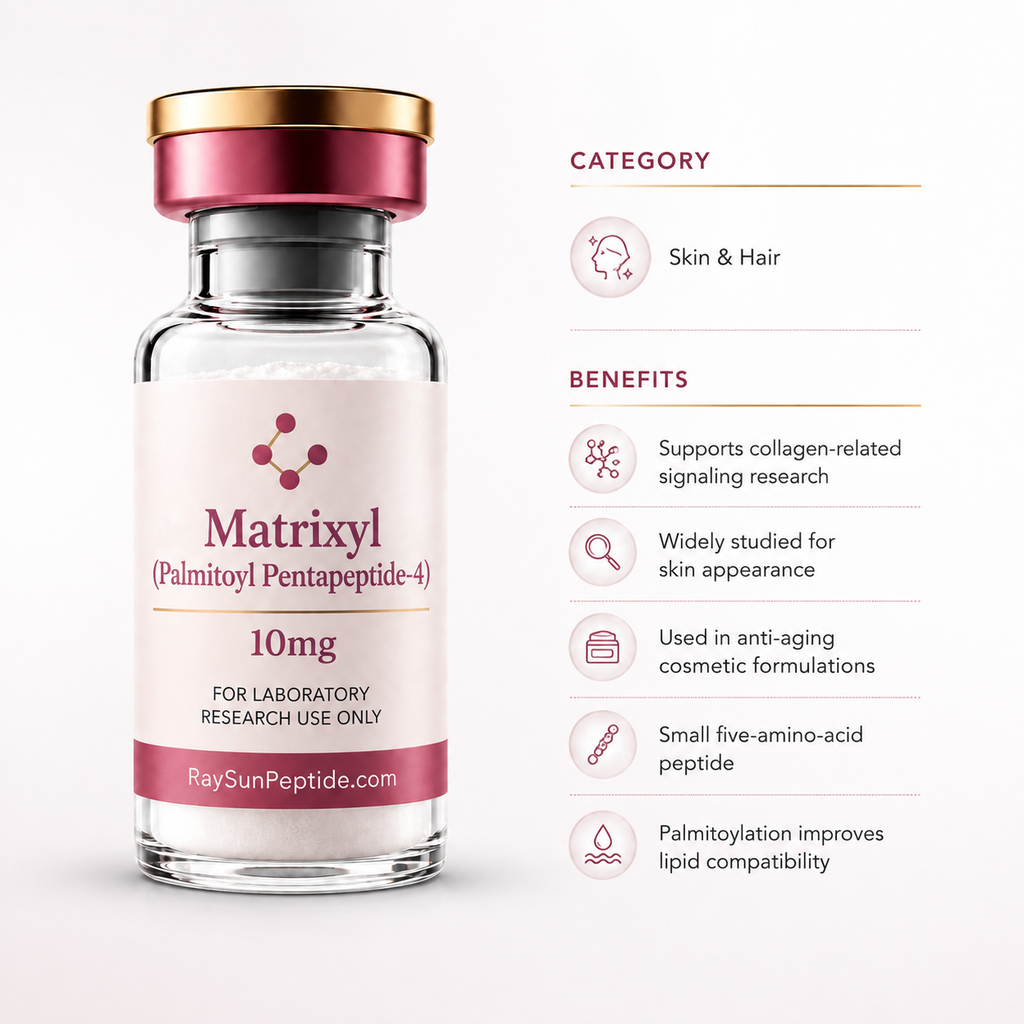
Matrixyl (Palmitoyl Pentapeptide-4) is a lipopeptide that has been studied in dermatology research for its effects on collagen I, III, and IV synthesis, fibronectin, and hyaluronic acid production. Published research has investigated its role in extracellular matrix remodeling and skin structure maintenance. RaysunPeptide supplies Matrixyl for qualified research and laboratory applications.
Mechanism of Action
The KTTKS peptide fragment is associated with extracellular-matrix signaling, while palmitoylation improves lipid affinity and supports incorporation into topical formulations.
Key Benefits
Molecular Data
Research Indications
Skin
Studied for potential improvement in the appearance of photoaged skin through collagen-related signaling.
Anti-Aging
Used in cosmetic research targeting the appearance of fine lines and wrinkles.
Extracellular Matrix
The KTTKS sequence is associated with signaling pathways involved in extracellular-matrix remodeling.
What to Expect
Side Effects & Safety
Common (Generally Mild)
- •Possible mild skin irritation
- •Redness
- •Contact sensitivity
Stop Signs (Seek Medical Attention)
- ⚠Severe irritation
- ⚠Persistent dermatitis
- ⚠Signs of allergic reaction
Contraindications
- ✕Known sensitivity to the ingredient or formulation components
FAQs
What is Matrixyl?
Matrixyl commonly refers to palmitoyl pentapeptide-4, a palmitoylated peptide based on the KTTKS sequence and used primarily in cosmetic formulations.
What is the Matrixyl sequence?
The peptide portion is KTTKS: Lys-Thr-Thr-Lys-Ser.