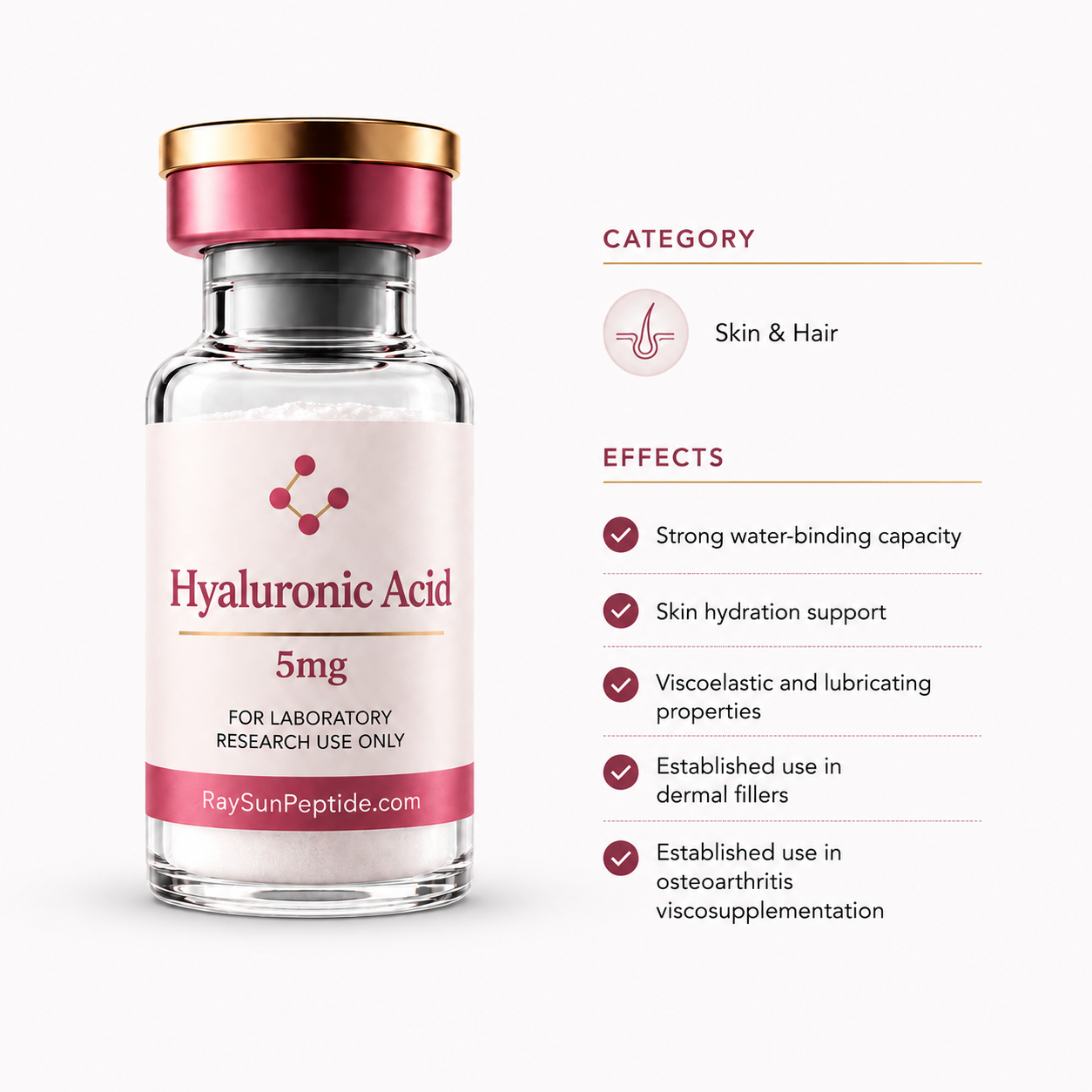
Hyaluronic Acid
Clinically EstablishedGlycosaminoglycan / polysaccharide
Hyaluronic acid (HA) is a naturally occurring glycosaminoglycan found in connective tissues. It has been studied in dermatology and biomaterials research for its effects on tissue hydration, cell migration, and extracellular matrix organization. Published research has examined its molecular weight-dependent properties and its interactions with cell surface receptors. RaysunPeptide supplies Hyaluronic Acid for qualified research and laboratory applications.
Mechanism of Action
Hyaluronic acid binds and retains water and interacts with extracellular-matrix receptors including CD44. Its physicochemical properties provide hydration, lubrication, viscoelasticity and tissue-support functions.
Key Benefits
Molecular Data
Research Indications
Dermatology
Hyaluronic acid contributes to tissue hydration through its high water-binding capacity.
Aesthetic Medicine
Crosslinked HA is widely used as a dermal filler because of its viscoelastic and volume-supporting properties.
Orthopedics
Intra-articular HA is used as viscosupplementation and may provide symptomatic relief in selected patients.
Tissue Engineering
HA is widely studied as a biomaterial and extracellular-matrix component.
What to Expect
Side Effects & Safety
Common (Generally Mild)
- •Temporary swelling
- •Redness
- •Injection-site discomfort
- •Bruising
Stop Signs (Seek Medical Attention)
- ⚠Severe pain
- ⚠Unexpected tissue discoloration
- ⚠Signs of infection
- ⚠Severe allergic or inflammatory reaction
Contraindications
- ✕Product-specific contraindications
- ✕Active infection at treatment site
- ✕Known hypersensitivity to formulation components
FAQs
Is hyaluronic acid a peptide?
No. Hyaluronic acid is a glycosaminoglycan polysaccharide rather than an amino-acid peptide.
Why does hyaluronic acid have different molecular weights?
HA is a polymer whose chain length varies considerably, so molecular weight depends on the specific material and manufacturing process.