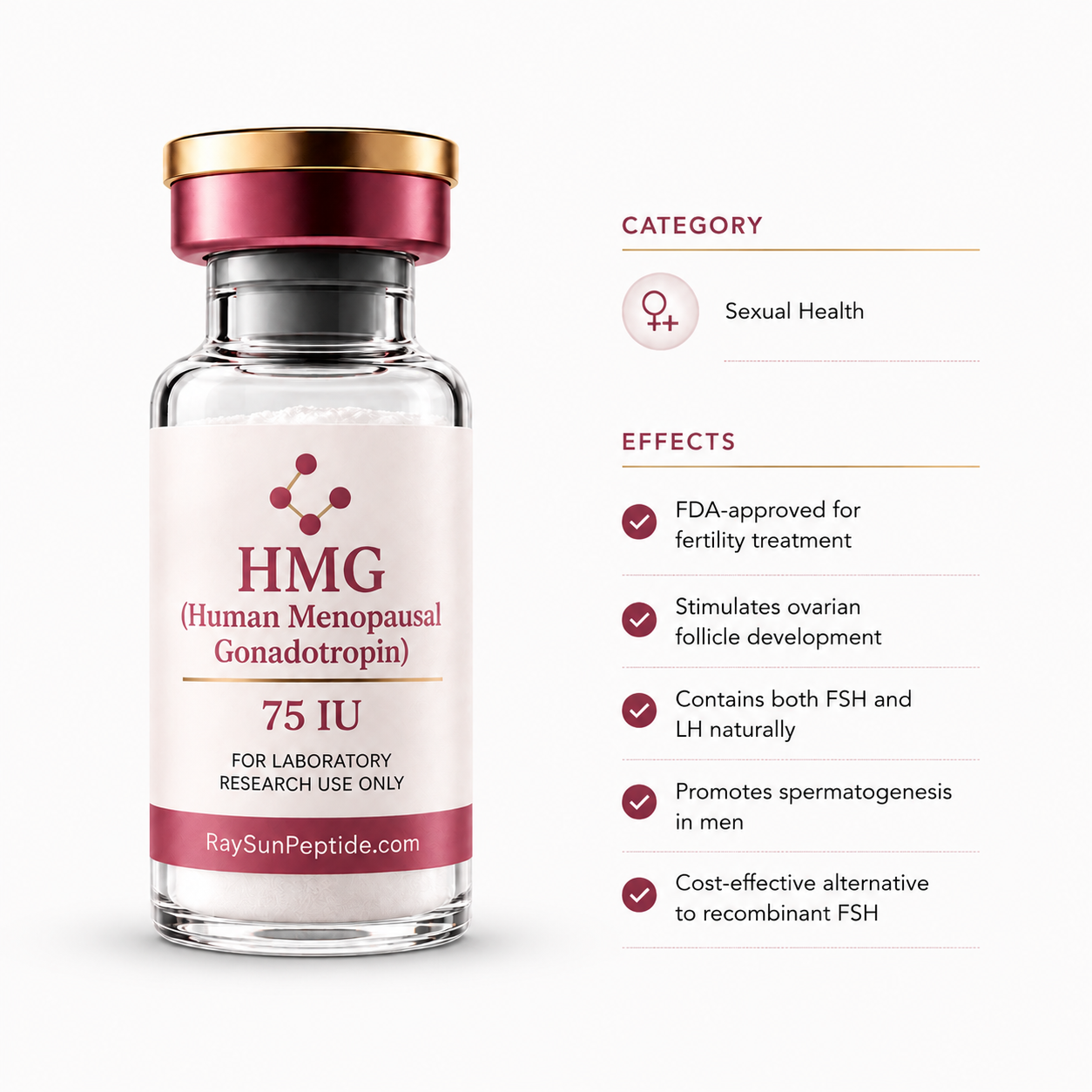
HMG (Human Menopausal Gonadotropin)
FDA ApprovedGonadotropin mixture
Human Menopausal Gonadotropin (HMG) is a gonadotropin preparation containing FSH and LH activity that has been studied in reproductive endocrinology research. It has been investigated for its effects on follicular development and ovarian function. Published research has examined its clinical applications in fertility research. RaysunPeptide supplies HMG for qualified research and laboratory applications.
Mechanism of Action
HMG acts on gonadal tissue through two mechanisms: FSH stimulates growth and maturation of ovarian follicles containing eggs in women, and promotes spermatogenesis in men. LH stimulates ovulation and corpus luteum formation in women, and Leydig cells in men to produce testosterone. Highly purified HMG (HP-hMG) has enhanced FSH receptor activity with reduced inactive proteins. The LH component modifies follicular development and decreases intermediate-sized follicles, potentially resulting in safer, more controlled stimulation.
Key Benefits
Molecular Data
Dosing Protocols
| Goal | Dose | Frequency | Route |
|---|---|---|---|
| Ovulation induction | 75-150 IU | Daily | IM or SubQ |
| IVF stimulation | 150-300 IU | Daily for 7-12 days | IM or SubQ |
| Male fertility | 75-150 IU | 2-3x weekly | IM or SubQ |
Research Indications
Female Fertility (FDA-Approved)
Stimulates follicular development in anovulatory women.
Used in IVF protocols to stimulate multiple follicle development.
Effective for inducing ovulation in polycystic ovary syndrome patients.
Male Fertility
FSH promotes sperm production; LH stimulates testosterone for sperm development.
Treats male infertility due to insufficient gonadotropin production.
Testosterone Support
LH component stimulates testicular testosterone production.
Peptide Interactions
hCG is typically used to trigger ovulation after HMG-induced follicular development.
Often used in combination protocols for IVF to prevent premature LH surge.
May be used in sequential protocols for ovulation induction.
Different mechanisms; may be used in different fertility protocols.
What to Expect
Side Effects & Safety
Common (Generally Mild)
- •Injection site reactions
- •Abdominal discomfort
- •Ovarian enlargement
- •Mood changes
- •Headache
Stop Signs (Seek Medical Attention)
- ⚠Severe abdominal pain or bloating
- ⚠Rapid weight gain
- ⚠Difficulty breathing
- ⚠Nausea and vomiting
- ⚠Decreased urination
Contraindications
- ✕Primary ovarian failure
- ✕Uncontrolled thyroid or adrenal dysfunction
- ✕Sex hormone-dependent tumors
- ✕Abnormal uterine bleeding of unknown cause
- ✕Ovarian cysts (not due to PCOS)
- ✕Pregnancy
Quality Checklist
Good Signs ✓
- White lyophilized powder
- Pharmaceutical grade product
- Proper cold chain maintained
- Clear solution after reconstitution
Warning Signs !
- Research-grade products lack quality assurance
Bad Signs ✕
- Discolored powder or solution
- Particulates visible
- Exposed to temperature extremes
References
HMG contains FSH and LH in 1:1 ratio extracted from postmenopausal urine.
No significant differences in pregnancy rates between FSH alone, rFSH+HMG, and rFSH+rLH groups.
Beneficial effects of HMG on fertilization rates and pre-embryo development compared to HP-FSH.
Generic hMG products do not adversely affect pregnancy rates and are appropriate cost-effective alternatives.
FAQs