Erythropoietin (EPO)
Extensively StudiedGlycoprotein hormone
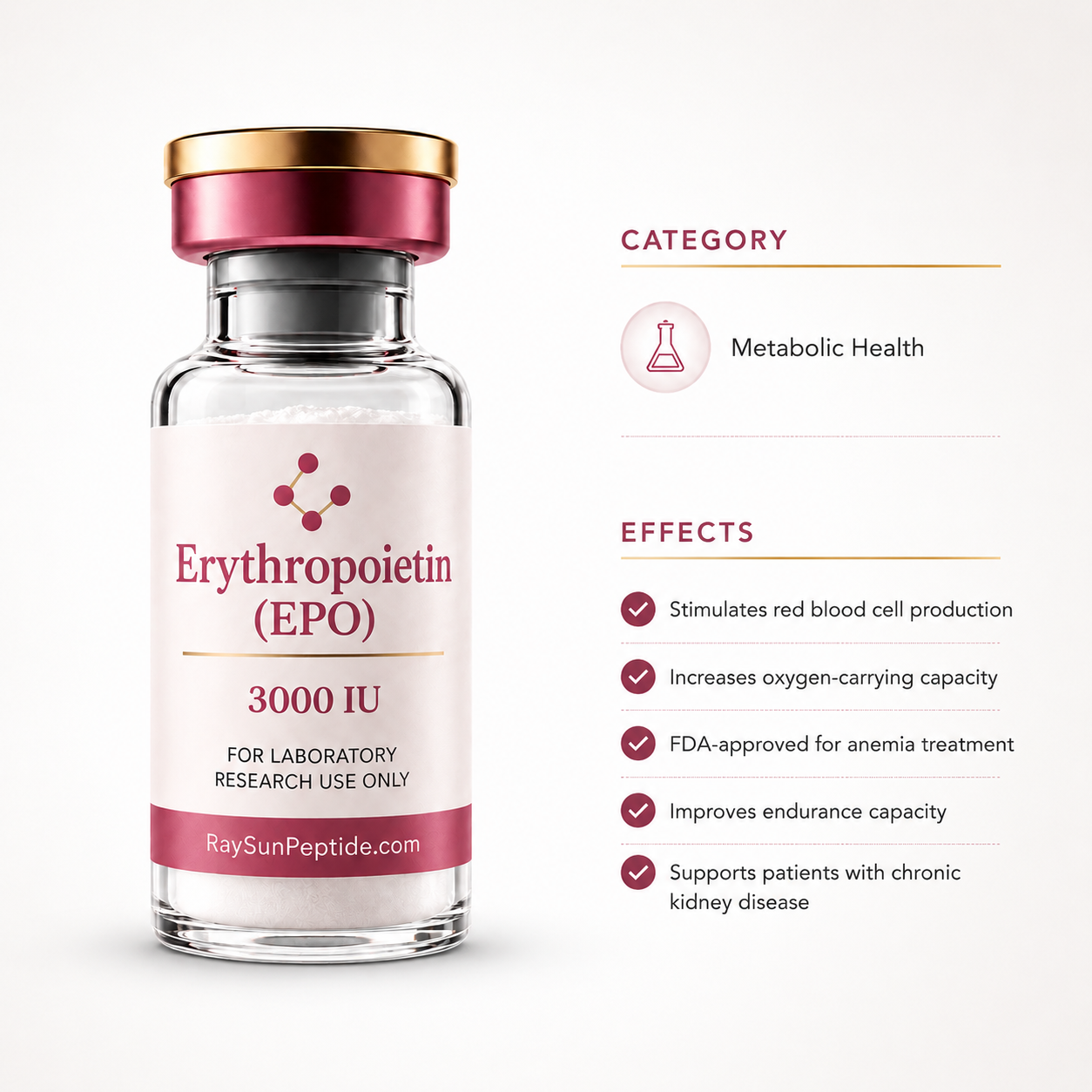
Erythropoietin (EPO) is a glycoprotein hormone that has been studied in hematology research for its effects on erythropoiesis through erythropoietin receptor signaling. Published research has investigated its role in red blood cell production and its effects on hematopoietic stem cell differentiation. RaysunPeptide supplies EPO for qualified research and laboratory applications.
Mechanism of Action
EPO binds to erythropoietin receptors (EPOR) on erythroid progenitor cells in bone marrow, activating three interconnected signaling pathways: JAK2/STAT5, PI3K/AKT, and RAS/MAPK. This promotes survival of red blood cell precursors by protecting them from apoptosis, accelerates proliferation and differentiation of erythroid cells, and increases hemoglobin production. Under hypoxic stress, endogenous EPO production can increase up to 1000-fold, demonstrating the body's powerful oxygen-sensing regulatory system.
Key Benefits
Molecular Data
Dosing Protocols
| Goal | Dose | Frequency | Route |
|---|---|---|---|
| CKD Anemia (medical) | 50-100 IU/kg | 3x weekly | SubQ or IV |
| Chemotherapy Anemia (medical) | 150-300 IU/kg | 3x weekly | SubQ |
| Maintenance (medical) | Individualized | 1-3x weekly | SubQ |
Research Indications
Medical Indications (FDA-Approved)
Primary FDA-approved indication for anemia secondary to chronic kidney disease.
FDA-approved for treating anemia in cancer patients receiving chemotherapy.
Used to reduce need for blood transfusions in certain surgical settings.
Performance (Banned in Sports)
Increases oxygen delivery to muscles, improving endurance capacity. Banned by WADA.
May accelerate adaptation to high altitude by increasing red blood cell mass.
Peptide Interactions
Iron is essential for hemoglobin production; often co-administered with EPO therapy.
Different mechanisms; no known interactions.
Different mechanisms; no known interactions.
What to Expect
Side Effects & Safety
Common (Generally Mild)
- •Injection site reactions
- •Headache
- •Hypertension
- •Joint pain
- •Flu-like symptoms
Stop Signs (Seek Medical Attention)
- ⚠Severe headache or vision changes
- ⚠Chest pain or shortness of breath
- ⚠Signs of blood clots (leg swelling, pain)
- ⚠Sudden loss of response to EPO
Contraindications
- ✕Uncontrolled hypertension
- ✕Pure red cell aplasia history
- ✕Hemoglobin >12 g/dL (increased cardiovascular risk)
- ✕Active malignancy (relative contraindication)
Quality Checklist
Good Signs ✓
- Clear, colorless solution
- Pharmaceutical grade product
- Proper cold chain maintained
- Intact packaging and seals
Warning Signs !
- Research-grade products lack quality assurance
- Temperature excursions may affect potency
Bad Signs ✕
- Cloudy or discolored solution
- Particulates visible
- Exposed to room temperature
References
Comprehensive review of EPO's oxygen-sensing mechanism and regulation of RBC production.
FDA-approved indications include CKD anemia and chemotherapy-induced anemia. Risks increase when hemoglobin exceeds 11-12 g/dL.
rHuEPO increases O2 supply to muscles and boosts performance in endurance sports.
EPO promotes survival of erythroid progenitors by protecting from apoptosis.
FAQs
Why is EPO banned in sports if it's FDA-approved as medicine?
EPO is FDA-approved specifically for anemia in kidney disease and chemotherapy patients—narrow medical indications. It's banned in sports because it boosts oxygen delivery far beyond medical therapeutic levels, providing unfair endurance advantages. The performance-enhancing effects at doses used by athletes vastly exceed what's used medically.
At what hemoglobin level does EPO become dangerous?
Medical guidelines recommend keeping hemoglobin below 11-12 g/dL during EPO therapy because higher levels significantly increase cardiovascular risks including blood clots, stroke, and heart attack. This ceiling exists because excessive oxygen-carrying capacity paradoxically becomes harmful, increasing blood viscosity dangerously.
Does EPO improve endurance without causing side effects?
EPO absolutely improves endurance capacity by increasing red blood cell production and oxygen delivery. However, it commonly causes water retention, joint pain, headaches, and hypertension. More concerning are thromboembolic events (blood clots) and theoretical tumor progression risk with higher doses used for performance enhancement.
How long after stopping EPO do benefits disappear?
EPO's effects begin diminishing once injections stop as red blood cells have a natural 120-day lifespan. Hemoglobin returns toward baseline within 2-3 weeks of discontinuation. Most performance benefits fade quickly, making continued use necessary for sustained effects, which is why athletes faced testing challenges in endurance sports.