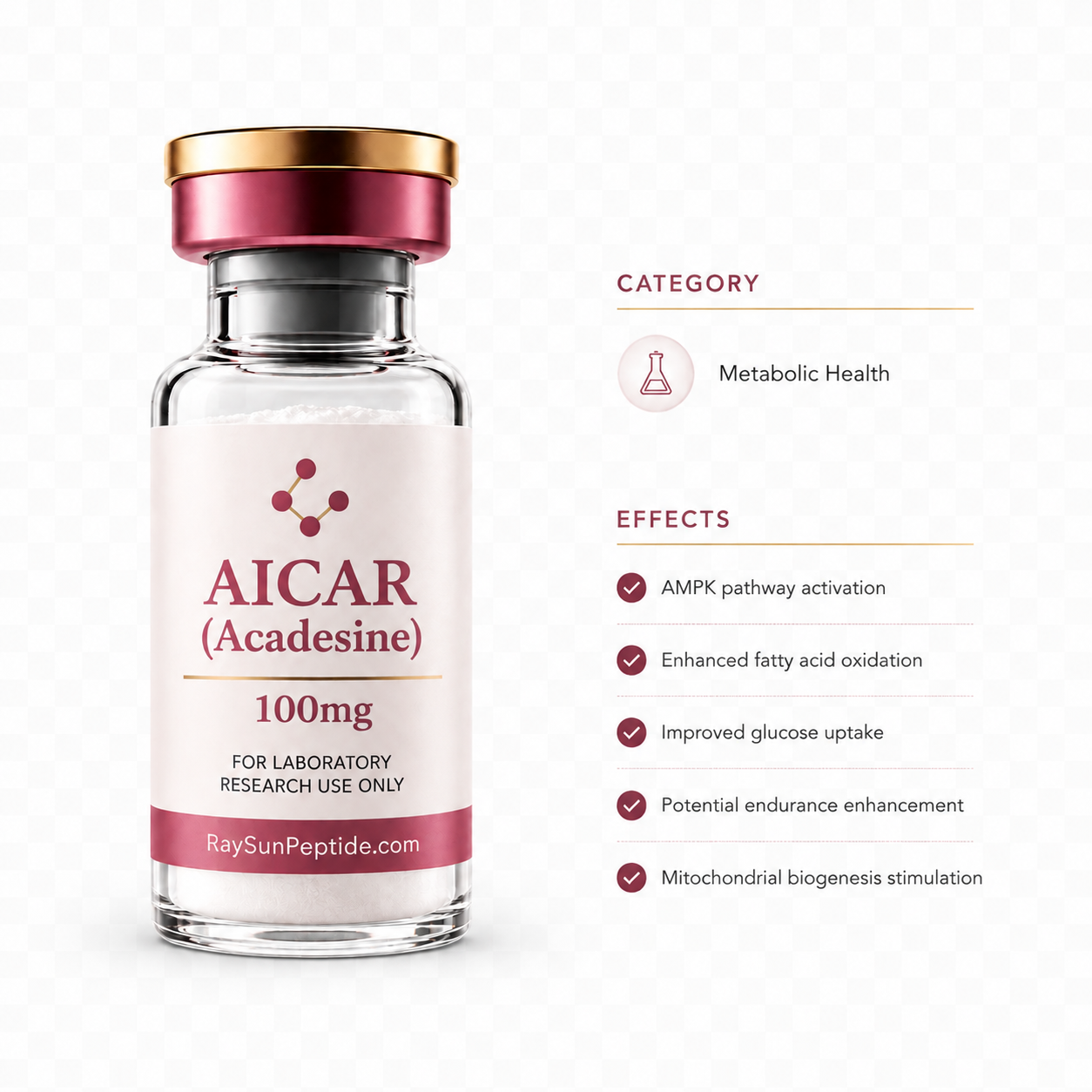
AICAR (Acadesine)
Limited ResearchNucleoside analog
AICAR (5-Aminoimidazole-4-carboxamide ribonucleotide) is a cell-permeable adenosine analog that has been studied in metabolic research for its effects on AMP-activated protein kinase (AMPK) signaling. Published research has investigated its role in glucose uptake, fatty acid oxidation, and mitochondrial biogenesis in various cell and animal models. RaysunPeptide supplies AICAR for qualified research and laboratory applications.
Mechanism of Action
Once inside cells, AICAR is phosphorylated to ZMP, which mimics AMP and activates AMPK. This triggers metabolic pathways typically activated during exercise: increased glucose uptake, fatty acid oxidation, and mitochondrial biogenesis.
Key Benefits
Molecular Data
Dosing Protocols
| Goal | Dose | Frequency | Route |
|---|---|---|---|
| Standard Protocol | 1-3mg | Daily | SubQ |
| Gradual Introduction | 1mg → 2mg → 3mg | Daily, titrating over 4 weeks | SubQ |
| Advanced Protocol | 3-5mg | Daily for 8-12 weeks | SubQ |
Research Indications
Metabolic
Directly activates the master metabolic regulator through ZMP accumulation.
Increases fat burning through AMPK-mediated pathways.
Enhances glucose uptake independent of insulin in some tissues.
Performance
Animal studies showed increased running endurance; human data limited.
AMPK activation promotes new mitochondria formation over time.
Cardioprotection
Original clinical interest; may protect heart tissue during reduced blood flow.
Peptide Interactions
Both activate AMPK through different mechanisms. Combined use may have additive effects on glucose metabolism.
Different pathways (AMPK vs PPARδ) that may complement metabolic effects. Popular research combination.
Rev-ErbA agonist with complementary metabolic effects.
What to Expect
Side Effects & Safety
Common (Generally Mild)
- •Injection site reactions
- •Mild fatigue during adaptation
- •Potential hypoglycemia
Stop Signs (Seek Medical Attention)
- ⚠Severe hypoglycemia symptoms
- ⚠Lactic acidosis symptoms (muscle pain, weakness, difficulty breathing)
- ⚠Unusual cardiac symptoms
- ⚠Severe fatigue or weakness
Contraindications
- ✕Diabetes (risk of hypoglycemia)
- ✕Cardiac conditions
- ✕Pregnancy or breastfeeding
- ✕Competitive athletes (WADA prohibited)
Quality Checklist
Good Signs ✓
- White to off-white lyophilized powder
- Clear solution after reconstitution
- Certificate of Analysis with purity testing
Warning Signs !
- Slight yellowing may occur but should dissolve clearly
Bad Signs ✕
- Discolored or clumped powder
- Cloudy solution after reconstitution
- Particulate matter visible
References
Review of AMPK role in exercise-induced metabolic adaptations and AICAR as pharmacological activator.
Mice treated with AICAR showed 44% increase in running endurance without training.
FAQs
Does AICAR actually work as an 'exercise mimetic' in humans?
Animal studies show AICAR increased running endurance by 44% without training. However, this was mice, not humans. Humans have never been adequately tested for AICAR's endurance effects, so calling it an exercise mimetic is speculative. The compound does activate AMPK and increase fat oxidation, but real-world performance gains in people are unproven.
Is AICAR banned in sports and why?
Yes, AICAR is WADA prohibited. While it's not anabolic per se, it provides competitive advantage through enhanced metabolic efficiency and endurance. Athletes competing under WADA rules must avoid it entirely due to testing likelihood and strict liability regulations.
What's the risk of hypoglycemia on AICAR if I'm not diabetic?
AICAR increases glucose uptake independent of insulin in some tissues, creating theoretical hypoglycemia risk especially in non-diabetics with normal insulin sensitivity. Diabetics face more serious risk, which is why AICAR is contraindicated in diabetes. Monitor blood glucose closely, particularly during initial doses.
How does AICAR differ from GW501516 for metabolic enhancement?
AICAR activates AMPK, the master metabolic regulator, increasing fatty acid oxidation and glucose uptake. GW501516 is a PPARδ agonist with different downstream effects. They're often stacked because they target complementary pathways—AMPK plus PPARδ activation produces synergistic metabolic effects.