Crystagen
Moderate ResearchTripeptide bioregulator
Crystagen is a peptide bioregulator that has been studied in ophthalmology research for its effects on lens tissue gene expression. Published research has investigated its role in ocular tissue regulation. RaysunPeptide supplies Crystagen for qualified research and laboratory applications.
Mechanism of Action
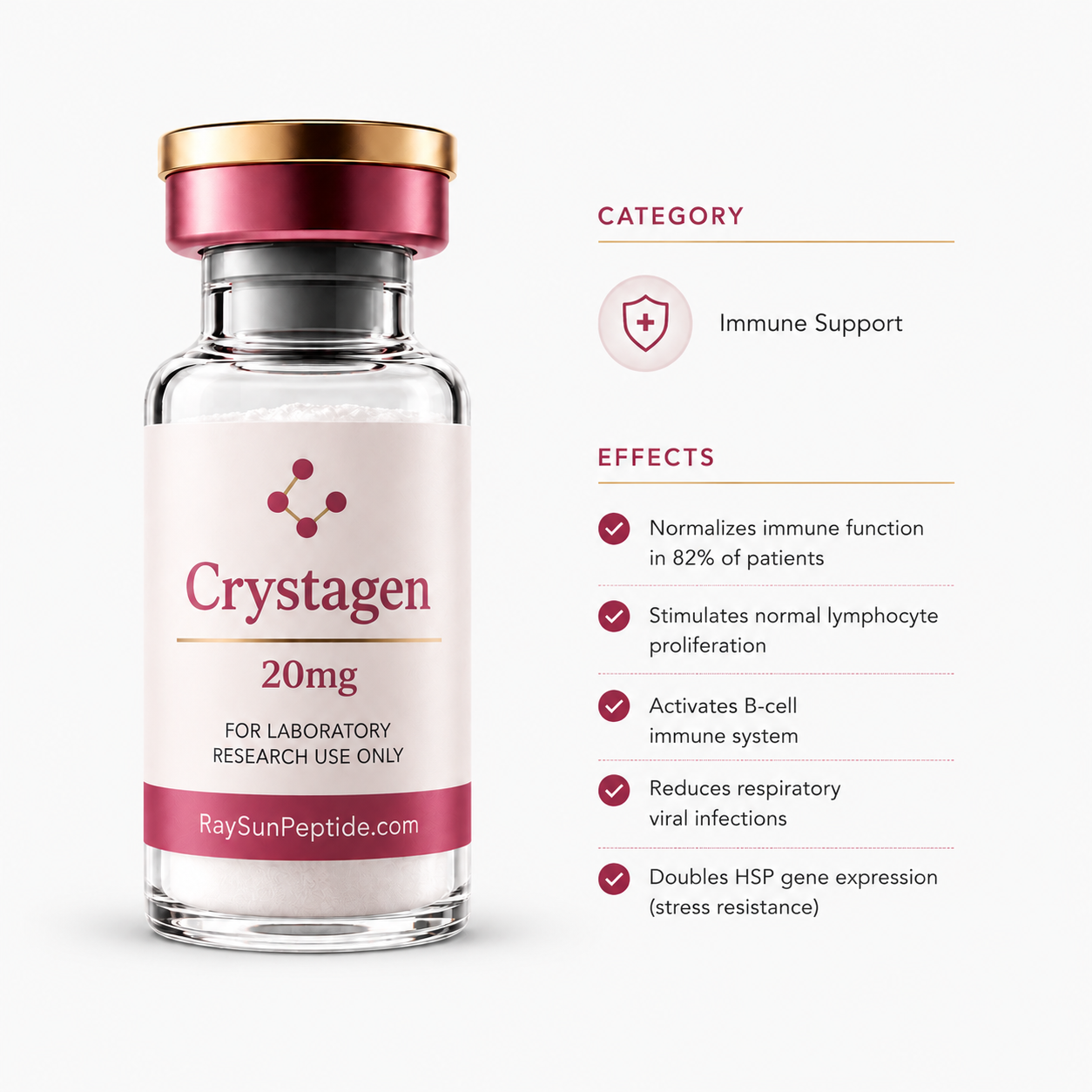
Crystagen works through epigenetic regulation by influencing gene expression and protein synthesis in immune cells. It regulates the synthesis of heat-shock proteins, cytokines, and affects cell differentiation, proliferation, and apoptosis. The EDP peptide enhances spontaneous proliferative activity of normal lymphocytes while inhibiting proliferation of tumor cells (K-562 erythromyelosis). It activates B-cell immune system and thymic epithelial cells (VTEC2.H/S).
Key Benefits
Molecular Data
Dosing Protocols
| Goal | Dose | Frequency | Route |
|---|---|---|---|
| Standard protocol | 10-20 mg | Daily for 10-20 days | Oral capsules |
| Maintenance | 10 mg | 2-3 cycles yearly | Oral capsules |
| Athletic support | 10-20 mg | Daily during training cycles | Oral capsules |
Research Indications
Immune Support
Normalizes immunogram in elderly patients with impaired immunity.
Restores immune function after infectious diseases.
Helps normalize immunity after radiation and chemotherapy exposure.
Stress Resistance
Increases stress resistance and reduces respiratory infections in athletes.
Doubles expression of heat-shock protein gene HSPA1A.
Anti-Tumor
Inhibits proliferation of K-562 human erythromyelosis tumor cells.
Peptide Interactions
Both have immunoprotecting properties; different mechanisms complement each other.
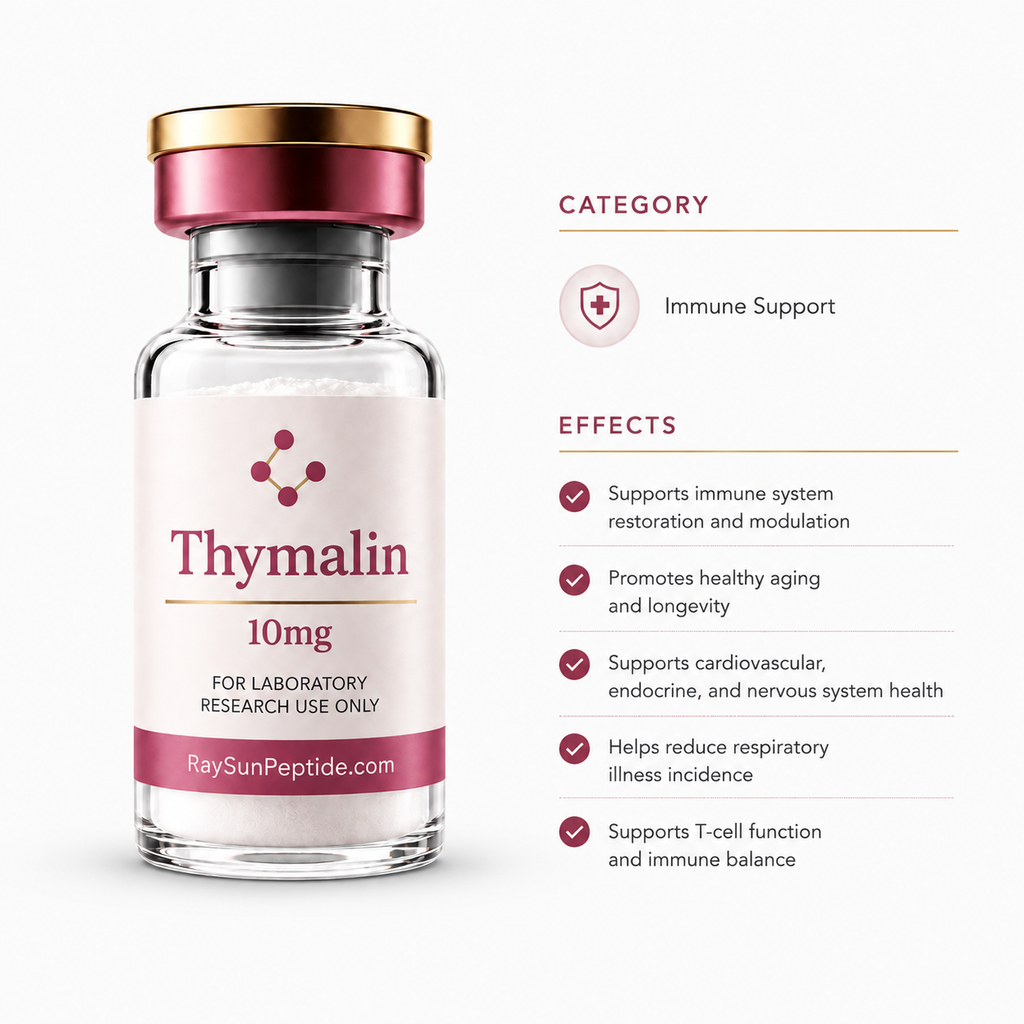
Crystagen (EDP) is derived from thymalin; complementary immune effects.
Often combined in comprehensive anti-aging Khavinson protocols.
Related immune peptides; can be used together.
What to Expect
Side Effects & Safety
Common (Generally Mild)
- •Generally well-tolerated
- •Minimal side effects reported
Stop Signs (Seek Medical Attention)
- ⚠Allergic reactions
- ⚠Unusual immune symptoms
Contraindications
- ✕Active autoimmune flares (consult physician)
- ✕Known hypersensitivity
- ✕Pregnancy or breastfeeding
Quality Checklist
Good Signs ✓
- White powder or capsules
- Clear solution if reconstituted
- Proper packaging and labeling
Warning Signs !
- Unknown source or purity
Bad Signs ✕
- Discoloration
- Unusual odor
- Damaged packaging
References
EDP (crystagen) identified in thymalin; regulates gene expression, HSP synthesis, cytokines, and cell differentiation.
Crystagen normalized immunogram in 82% of patients vs 56% in control group.
Crystagen doubled HSP gene expression, normalized IL-6, and reduced respiratory infections in athletes.
EDP enhances normal lymphocyte proliferation while inhibiting K-562 tumor cell proliferation.
FAQs
Does Crystagen actually help athletes reduce respiratory infections?
Yes, research shows Crystagen doubled HSP gene expression in athletes and reduced respiratory infections in a study population. By enhancing heat-shock protein production and normalizing IL-6 expression, it strengthens immune resilience during heavy training stress when illness risk is elevated.
What percentage of elderly patients experience immune improvements with Crystagen?
Clinical research found Crystagen normalized immune function (immunogram) in 82% of elderly patients versus only 56% in the control group. This significant difference suggests it effectively reverses age-related immune decline, though results vary individually.
Is Crystagen safe to use if I have an active autoimmune condition?
Crystagen is an immune-stimulating peptide that may exacerbate active autoimmune flares since it enhances lymphocyte proliferation and immune activation. Medical consultation is essential before using, especially during autoimmune disease flares. It's better suited for those with immunodeficiency than autoimmunity.
Can Crystagen help protect immune function after chemotherapy?
Yes, research shows Crystagen effectiveness for normalizing immunity after chemotherapy and radiation exposure. As a thymus-derived immune bioregulator, it supports recovery of lymphocyte populations and immune surveillance that are suppressed by cancer treatments.