Chonluten
Moderate ResearchTripeptide bioregulator
Chonluten is a tripeptide bioregulator that has been studied in immunology research for its effects on immune tissue gene expression. Published research has investigated its role in thymic and immune tissue regulation. RaysunPeptide supplies Chonluten for qualified research and laboratory applications.
Mechanism of Action
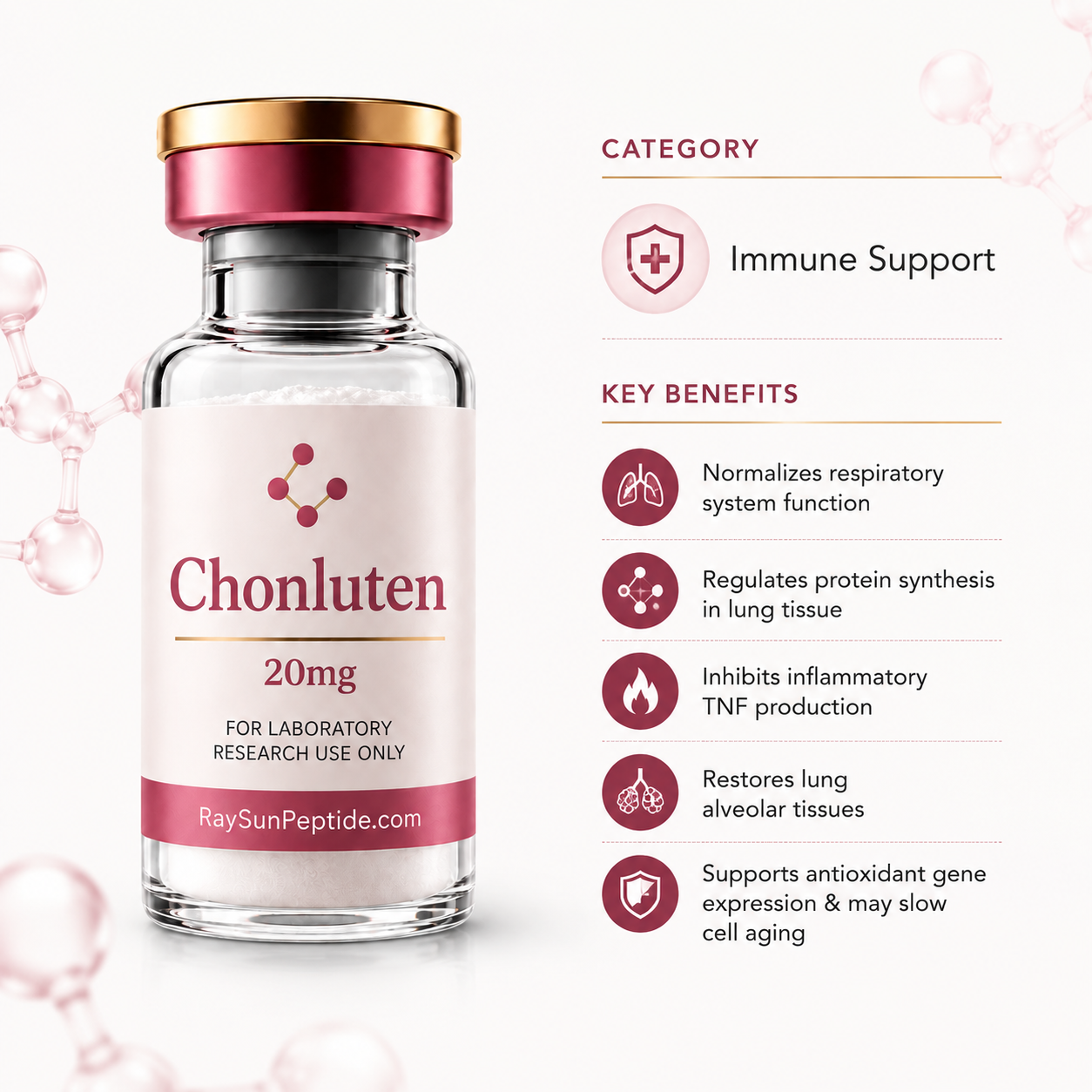
Chonluten works through epigenetic regulation, penetrating cell and nuclear membranes to bind promoter or suppressor regions of DNA and modulate transcriptional control. It regulates genes including c-Fos, HSP70 (heat-shock protein), SOD (superoxide dismutase), COX-2, and TNF-alpha related to oxidative stress and proliferative regulation. The peptide inhibits TNF production in monocytes exposed to pro-inflammatory LPS, promoting attenuation of inflammatory action through TNF tolerance mechanisms.
Key Benefits
Molecular Data
Dosing Protocols
| Goal | Dose | Frequency | Route |
|---|---|---|---|
| Standard protocol | 10-20 mg | Daily for 10-20 days | Oral capsules |
| Maintenance | 10 mg | 2-3 cycles yearly | Oral capsules |
Research Indications
Respiratory Support
Normalizes respiratory system function through gene expression regulation.
Restores and maintains lung alveolar tissues and bronchial mucous membranes.
May modulate mucosal function in chronic obstructive pulmonary disease.
Anti-Inflammatory
Inhibits TNF production in monocytes, reducing inflammatory responses.
Supports SOD and antioxidant gene expression.
Anti-Aging
Researched as potential agent that may slow cell aging.
Modulates c-Fos and proliferative gene activity.
Peptide Interactions
Related respiratory bioregulators; complementary mechanisms.
Often combined in comprehensive anti-aging Khavinson protocols.
Both have immune-modulating properties; different tissue targets.
Both support mucosal health through different mechanisms.
What to Expect
Side Effects & Safety
Common (Generally Mild)
- •Generally well-tolerated
- •Minimal side effects reported
Stop Signs (Seek Medical Attention)
- ⚠Allergic reactions
- ⚠Unusual respiratory symptoms
Contraindications
- ✕Active respiratory emergencies (seek medical care)
- ✕Known hypersensitivity
- ✕Pregnancy or breastfeeding
Quality Checklist
Good Signs ✓
- White powder or capsules
- Clear solution if reconstituted
- Proper packaging and labeling
Warning Signs !
- Unknown source or purity
Bad Signs ✕
- Discoloration
- Unusual odor
- Damaged packaging
References
Chonluten tripeptide inhibits TNF production in monocytes exposed to pro-inflammatory LPS.
Chonluten regulates c-Fos, HSP70, SOD, COX-2, and TNF-alpha gene expression.
Short peptides derived from bronchial tissue regulate protein synthesis in lung cells.
Comprehensive review of bioregulator peptides including Chonluten and their mechanisms.
FAQs
Can Chonluten be taken orally or must it be injected?
Chonluten is available in multiple forms including oral capsules, sublingual, and injectable routes. As a short tripeptide, it has favorable absorption when taken orally (10-20mg daily) or sublingually for enhanced absorption. Most commonly used as a 10-20 day oral cycle, though injectable forms bypass GI metabolism for direct delivery.
How often should Chonluten cycles be repeated?
Standard protocol involves 10-20 day cycles repeated 2-3 times per year with breaks in between. After completing a cycle, effects persist for weeks due to epigenetic changes in gene expression, so spacing cycles allows the body to maintain benefits while avoiding habituation.
Does Chonluten help with chronic respiratory issues like COPD?
Research shows Chonluten has moderate effectiveness for COPD support through TNF inhibition and restoration of lung alveolar tissues. It normalizes respiratory function through gene expression regulation, though it works best as a preventative and maintenance therapy rather than an acute treatment for active respiratory emergencies.
What makes Chonluten different from other immune-supporting peptides?
Chonluten is specifically derived from bronchial lung tissue and targets the respiratory system primarily, unlike broad immune peptides. It regulates genes like c-Fos, HSP70, SOD, and TNF-alpha to reduce inflammatory responses and support lung tissue health, making it unique for respiratory-specific immune modulation.