Cagrilintide
Extensively StudiedAmylin receptor agonist
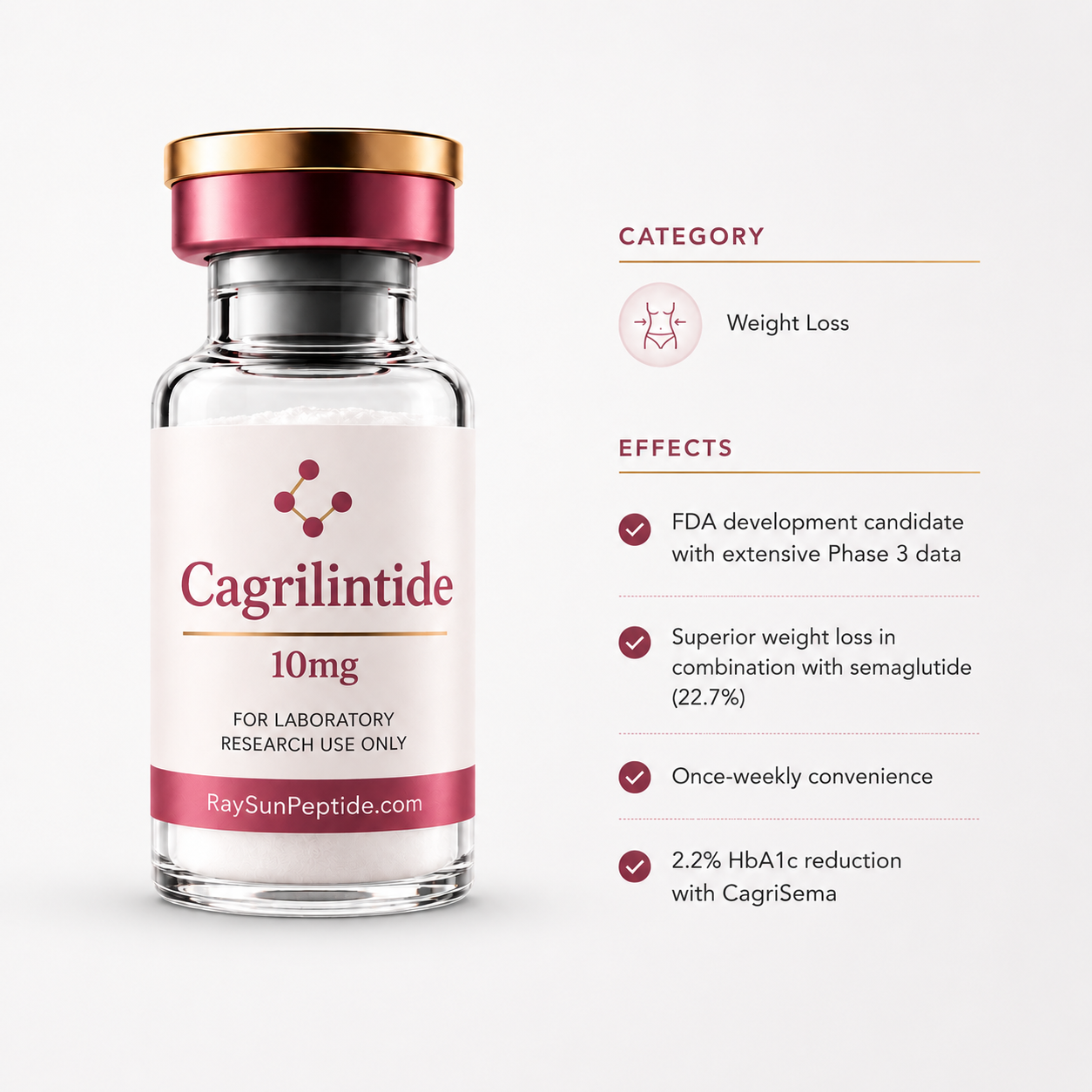
Cagrilintide is a long-acting amylin analog that has been studied in metabolic research for its effects on glycemic regulation and gastric emptying. It has been investigated for its interactions with amylin receptors and its role in appetite regulation pathways. Published research has examined its pharmacokinetics and effects on metabolic parameters. RaysunPeptide supplies Cagrilintide for qualified research and laboratory applications.
Mechanism of Action
Subcutaneous injection enables optimal bioavailability, targeting dual amylin and calcitonin receptors for satiety and metabolic regulation. Enhances insulin sensitivity and controls gastric emptying.
Key Benefits
Molecular Data
Dosing Protocols
| Goal | Dose | Frequency | Route |
|---|---|---|---|
| Weight Loss (Monotherapy) | 2.4mg | Once weekly | SubQ |
| Weight Loss (CagriSema) | 2.4mg + semaglutide 2.4mg | Once weekly | SubQ |
| Type 2 Diabetes Management | 2.4mg weekly | Once weekly | SubQ with metformin |
| Dose Escalation Protocol | 0.25mg → 0.5mg → 1.0mg → 1.7mg → 2.4mg | Weekly increases over 16 weeks | SubQ |
Research Indications
Weight Loss
Phase 3 trials demonstrate significant weight loss.
22.7% weight loss with CagriSema combination, surpassing existing therapies.
15.7% weight loss in diabetic patients with concurrent glycemic improvements.
Metabolic
2.2% HbA1c reduction with CagriSema versus semaglutide alone.
Amylin receptor activation enhances insulin sensitivity and glucose metabolism.
Appetite Control
Dual pathway satiety via amylin and calcitonin receptor activation.
Peptide Interactions
CagriSema combination achieves enhanced weight loss through complementary GLP-1 and amylin pathways.
No known direct interactions; different mechanisms allow concurrent use.
Compounded GI side effects create substantial risk without specialist supervision.
Well-tolerated in Phase 2/3 trials with no pharmacokinetic interactions.
Clinical trials demonstrated safe concurrent use with complementary mechanisms.
Both are amylin agonists; combination provides no additional benefit and increases GI risks.
Delayed gastric emptying may affect absorption; space administration by 1 hour.
What to Expect
Side Effects & Safety
Common (Generally Mild)
- •Gastrointestinal effects (nausea, vomiting, diarrhea) during initial weeks
- •Anti-cagrilintide antibodies develop in 46-73% but do not affect efficacy
- •Only 57.3% achieved maximum 2.4mg dose in REDEFINE 1 trial
Stop Signs (Seek Medical Attention)
- ⚠Severe persistent nausea/vomiting preventing hydration
- ⚠Pancreatitis signs (severe abdominal pain radiating to back)
- ⚠Severe allergic reactions or anaphylaxis
- ⚠Significant injection site reactions or abscess formation
Contraindications
- ✕Not recommended in pregnancy or breastfeeding
- ✕Not yet commercially available (FDA approval expected Q1 2026)
Quality Checklist
Good Signs ✓
- Pre-filled pen design when approved
- Pharmaceutical grade purity >98%
- Frozen storage stability at -20°C
- Extended stability over 7-day dosing interval
Warning Signs !
- Standard bacteriostatic water acceptable short-term but may degrade at neutral pH; optimal stability requires pH ~4.0
Bad Signs ✕
- Fibril formation at improper pH—solution must remain clear
- Aggregation or precipitation indicates degradation
References
Phase 3a REDEFINE 1 trial: 3,417 adults without diabetes. Estimated mean weight loss -20.4% with CagriSema vs -3.0% placebo at 68 weeks. GI adverse events in 79.6% of treatment group, mainly transient and mild-to-moderate.
View on PubMed →Phase 3a REDEFINE 2 trial: Adults with BMI ≥27, HbA1c 7-10%, and type 2 diabetes. Mean weight loss -13.7% with CagriSema vs -3.4% placebo at 68 weeks. Significant improvements in glycemic measures.
View on PubMed →32-week phase 2 trial at 17 US sites. CagriSema showed greater weight loss vs semaglutide or cagrilintide alone. HbA1c improvements significant. Well tolerated with predominantly GI adverse events.
View on PubMed →FAQs
How much weight loss can I expect from CagriSema combination therapy?
Phase 3 REDEFINE trials showed estimated mean weight loss of -20.4% at 68 weeks without diabetes vs -3% placebo. In diabetic patients, CagriSema achieved -13.7% weight loss vs -3.4% placebo. These are the most dramatic weight loss results seen with any approved or experimental therapy to date.
Why do 46-73% of people develop anti-cagrilintide antibodies, and does it matter?
Anti-cagrilintide antibodies develop in roughly half of users, likely due to the peptide being foreign. Remarkably, clinical trial data showed these antibodies do NOT reduce efficacy—weight loss continues despite antibody formation. This unusual finding suggests the antibodies don't significantly neutralize the therapeutic effect.
Why is pH so critical when reconstituting cagrilintide?
Cagrilintide's peptide structure is prone to fibril formation and aggregation at neutral pH. Maintaining pH 3.5-4.5 prevents this self-assembly into inactive clumps. Solution must remain clear; any cloudiness or particles indicate degradation, and the dose should be discarded to avoid injecting aggregated, potentially less potent or harmful material.
When will cagrilintide be available and can I get it now?
Cagrilintide is not yet commercially available. FDA approval is expected Q1 2026. Current access is limited to clinical trial participants. Anyone claiming to sell cagrilintide now is offering an unapproved, likely research-grade product of unknown quality and purity.