Bronchogen
Moderate ResearchTetrapeptide bioregulator
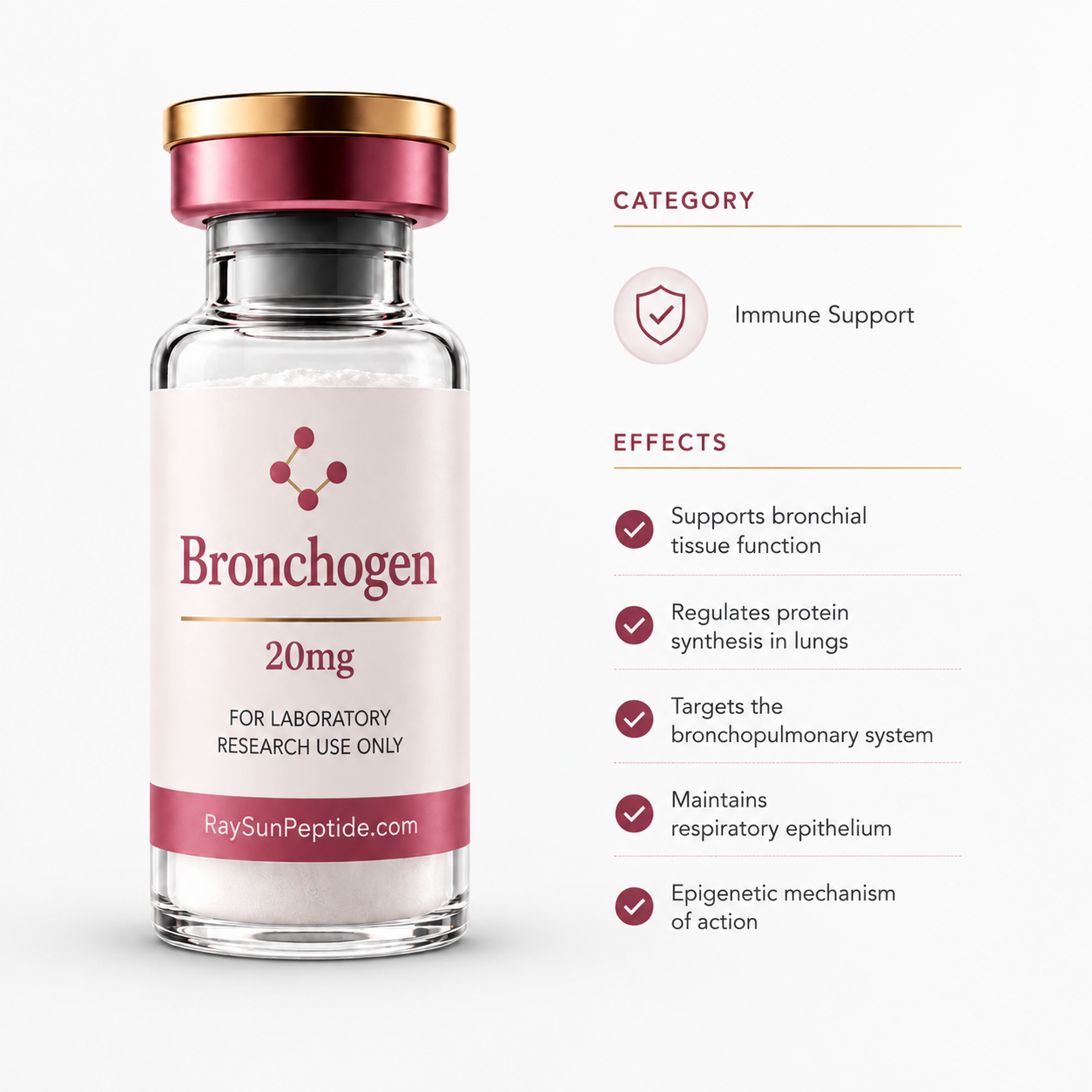
Bronchogen is a dipeptide bioregulator that has been studied in respiratory research for its effects on bronchial tissue gene expression and function. Published research has investigated its role in respiratory tissue regulation. RaysunPeptide supplies Bronchogen for qualified research and laboratory applications.
Mechanism of Action
Bronchogen works through epigenetic regulation by penetrating cell and nuclear membranes to interact with DNA and modulate gene expression in bronchial tissue. It regulates protein synthesis in bronchopulmonary cells, supporting maintenance and repair of respiratory epithelium. The tetrapeptide structure allows efficient cellular uptake and tissue-specific targeting to bronchial structures.
Key Benefits
Molecular Data
Dosing Protocols
| Goal | Dose | Frequency | Route |
|---|---|---|---|
| Standard protocol | 10-20 mg | Daily for 10-20 days | Oral capsules |
| Maintenance | 10 mg | 2-3 cycles yearly | Oral capsules |
Research Indications
Respiratory Support
Supports bronchial tissue through gene expression regulation.
Helps maintain respiratory epithelium health.
Regulates protein synthesis in lung tissue.
Anti-Aging
Addresses age-related changes in bronchial tissue.
Modulates gene expression in respiratory cells.
Peptide Interactions
Related respiratory bioregulators; complementary mechanisms.
Often combined in comprehensive anti-aging Khavinson protocols.
Both have immune-modulating properties; different tissue targets.
Part of Khavinson bioregulator family; targets different tissue.
What to Expect
Side Effects & Safety
Common (Generally Mild)
- •Generally well-tolerated
- •Minimal side effects reported
Stop Signs (Seek Medical Attention)
- ⚠Allergic reactions
- ⚠Unusual respiratory symptoms
Contraindications
- ✕Active respiratory emergencies (seek medical care)
- ✕Known hypersensitivity
- ✕Pregnancy or breastfeeding
Quality Checklist
Good Signs ✓
- White powder or capsules
- Clear solution if reconstituted
- Proper packaging and labeling
Warning Signs !
- Unknown source or purity
Bad Signs ✕
- Discoloration
- Unusual odor
- Damaged packaging
References
Comprehensive review of bioregulator peptides including respiratory bioregulators.
Tetrapeptides derived from bronchial tissue regulate protein synthesis in respiratory cells.
Short peptides support bronchopulmonary system through epigenetic mechanisms.
FAQs
How do Khavinson bioregulator peptides work if their half-life is just minutes?
Bronchogen's tetrapeptide structure allows it to penetrate cell nuclei directly and modulate gene expression epigenetically. Despite its short circulating half-life, it triggers lasting changes in DNA regulation and protein synthesis in bronchial tissue. These epigenetic changes persist long after the peptide itself clears circulation.
What respiratory benefits have been proven in human trials for Bronchogen?
Clinical evidence on Bronchogen specifically is limited. Most research comes from Russian sources showing improvements in respiratory function when combined with other Khavinson peptides. Clear human efficacy data from double-blind trials doesn't exist in English-language literature.
Can I combine Bronchogen with other respiratory support supplements?
Yes. Bronchogen's epigenetic mechanism complements other approaches. It pairs well with standard respiratory support compounds, though no specific clinical data on combinations exists. Other Khavinson peptides like Chonluten target related respiratory systems synergistically.
How long before I notice respiratory improvements on Bronchogen?
Bronchogen works through gene expression changes that occur during the 10-20 day cycle. Noticeable respiratory improvements typically emerge weeks to months after cycles complete as the epigenetic changes take effect. Results improve with repeated 2-3 cycles yearly for cumulative benefits.