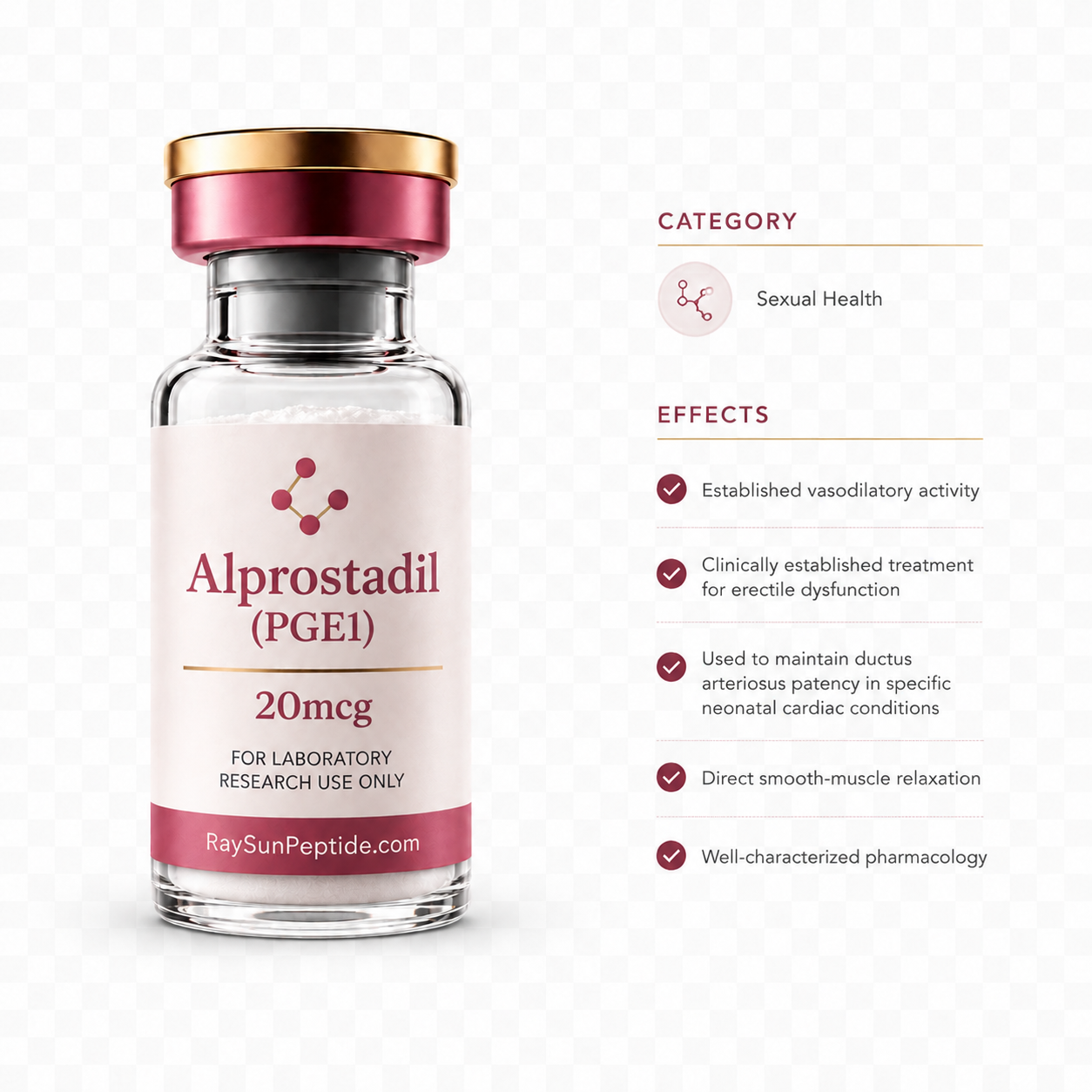
Alprostadil (PGE1)
FDA ApprovedProstaglandin E1 analog / vasodilator
Alprostadil (Prostaglandin E1) is a naturally occurring prostaglandin that has been studied in vascular biology research for its effects on vasodilation and platelet aggregation inhibition. Published research has investigated its mechanisms of action through prostaglandin EP receptor signaling and its effects on blood flow regulation. RaysunPeptide supplies Alprostadil for qualified research and laboratory applications.
Mechanism of Action
Activates prostaglandin receptors and increases intracellular cAMP, producing smooth-muscle relaxation and vasodilation. In erectile dysfunction, it increases cavernosal blood flow; in neonates, it maintains ductus arteriosus patency.
Key Benefits
Molecular Data
Research Indications
Urology
Produces local vasodilation and increased cavernosal blood flow and is an established pharmacologic treatment for erectile dysfunction.
Cardiology
Used in neonates with ductal-dependent congenital heart disease to maintain or restore ductus arteriosus patency.
Vascular
Activates prostaglandin signaling pathways that promote vascular smooth-muscle relaxation.
What to Expect
Side Effects & Safety
Common (Generally Mild)
- •Injection-site pain
- •Flushing
- •Headache
- •Dizziness
- •Hypotension
Stop Signs (Seek Medical Attention)
- ⚠Prolonged or painful erection
- ⚠Severe hypotension
- ⚠Severe allergic reaction
- ⚠Significant cardiovascular symptoms
Contraindications
- ✕Condition-specific contraindications
- ✕Situations in which vasodilation is medically inappropriate
- ✕Use must follow the specific product labeling
FAQs
Is alprostadil a peptide?
No. Alprostadil is a synthetic prostaglandin E1 analog and is a small lipid-derived molecule rather than a peptide.
How long does alprostadil remain in the bloodstream?
Its plasma half-life is very short, generally around 5-10 minutes after intravenous administration.