TB-500 (Thymosin Beta-4 Acetate)
Well StudiedThymosin fragment
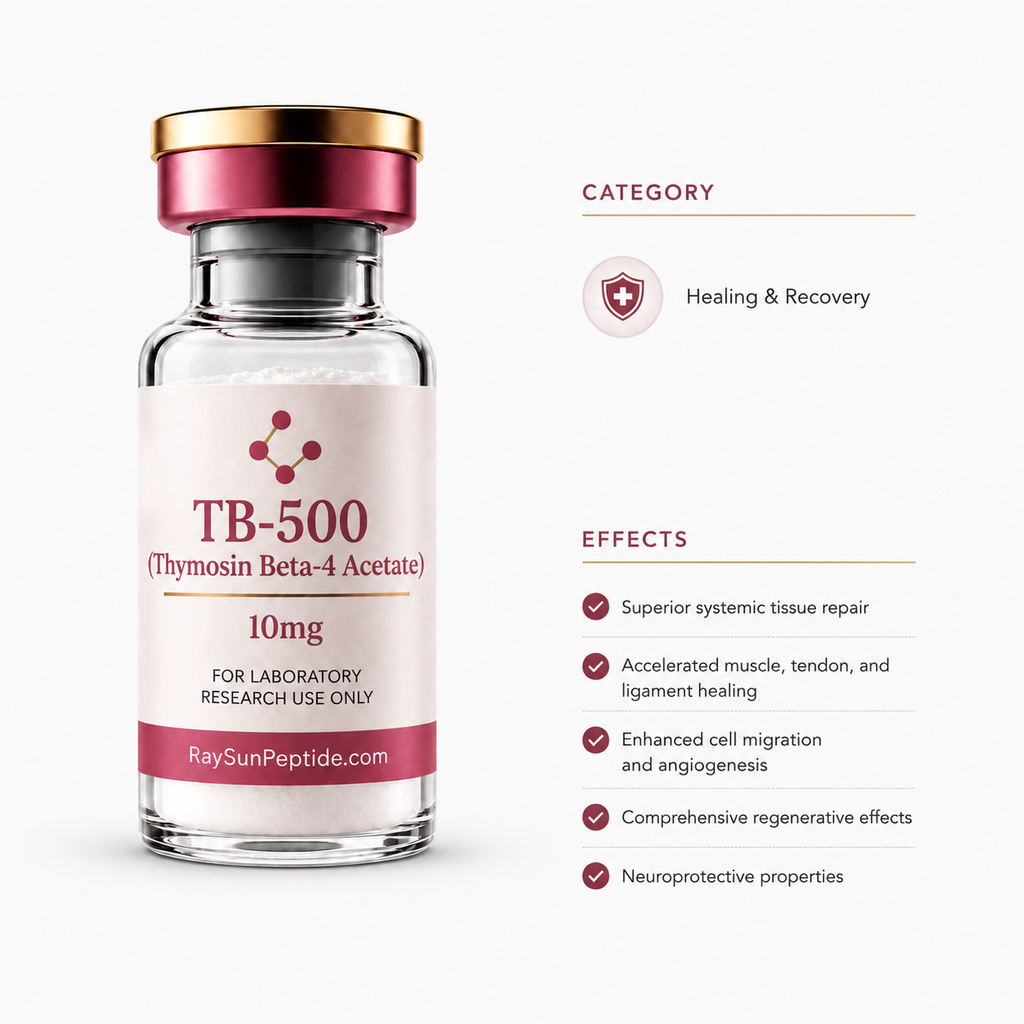
TB-500 is a synthetic peptide fragment corresponding to the active region (positions 17-23) of Thymosin Beta-4 (Tβ4). It has been studied in preclinical research for its effects on cell migration, angiogenesis, and wound healing pathways. Published research has investigated its role in actin polymerization regulation and its interactions with the SDF-1/CXCR4 axis. RaysunPeptide supplies TB-500 for qualified research and laboratory applications.
Mechanism of Action
Acts as principal actin-sequestering protein, regulating cell migration, promoting angiogenesis, reducing inflammation, and activating stem cell differentiation for comprehensive regenerative effects.
Key Benefits
Molecular Data
Dosing Protocols
| Goal | Dose | Frequency | Route |
|---|---|---|---|
| General tissue repair | 2-3mg | 2x weekly | SubQ or IM |
| Serious injury recovery | 4-5mg | 3x weekly | SubQ near injury site |
| Athletic enhancement | 2-3mg | 2x weekly | SubQ |
| Chronic conditions | 3-4mg | 2-3x weekly | SubQ or IM |
| Maintenance | 2mg | 1-2x weekly | SubQ |
| Post-surgical recovery | 3-5mg | 3x weekly | SubQ |
Research Indications
Tissue Repair
Accelerated healing of muscle fibers with reduced recovery time and enhanced repair via cell migration and differentiation.
Connective tissue repair with reduced scar formation and improved biomechanical properties of healing tissues.
Enhanced dermal closure, improved angiogenesis, and reduced inflammation in acute and chronic scenarios.
Athletic Recovery
Faster recovery from intense training with reduced muscle soreness and improved tissue repair.
Strengthened tissues through enhanced repair mechanisms may reduce injury risk.
Improved muscle quality through enhanced regeneration and repair pathways.
Neurological
Protective effects against neuronal damage in various models.
Preclinical evidence for improved outcomes in spinal injury models.
Potential neuroprotective and regenerative effects on brain tissue.
Peptide Interactions
Complementary healing mechanisms with enhanced tissue repair when combined (Wolverine Stack).
May enhance tissue sensitivity to growth hormone effects.
Combined tissue repair with GH-releasing effects for comprehensive recovery.
Enhanced muscle and tissue regeneration through complementary growth pathways.
No negative interactions; potential enhanced recovery.
Different receptor families with no pathway overlap.
What to Expect
Side Effects & Safety
Common (Generally Mild)
- •Generally minimal side effects
- •Possible mild injection site reactions
- •Temporary fatigue in some users
Stop Signs (Seek Medical Attention)
- ⚠Persistent or worsening injection site infections
- ⚠Unusual swelling or prolonged redness
- ⚠Severe allergic reactions
- ⚠Unexpected systemic symptoms
- ⚠Concerning health changes
Contraindications
- ✕Active cancer treatment (due to angiogenic effects)
- ✕Pregnancy or breastfeeding
- ✕Immunosuppressive medications (consult provider)
- ✕WADA prohibited for competitive athletes
Quality Checklist
Good Signs ✓
- White lyophilized powder - fine, evenly distributed with light fluffy texture
- Clear, colorless solution after reconstitution with no particles
- Proper vacuum seal intact with secure rubber stopper
Warning Signs !
- Slight powder clumping acceptable if completely dissolves with gentle swirling
Bad Signs ✕
- Colored or crystalline powder (yellow/brown indicates degradation)
- Persistent cloudiness, floating particles, or precipitation
- Damaged vial seal or contamination signs
References
In two Phase 2 clinical trials, thymosin beta-4 accelerated healing of chronic pressure ulcers and venous stasis ulcers by almost a month compared to placebo, with confirmed safety and tolerability.
View on PubMed →Synthetic thymosin beta-4 given intravenously was well tolerated with no dose-limiting toxicity; promotes cardiomyocyte migration and survival, and stimulates coronary vasculogenesis for cardiac ischemia treatment.
View on PubMed →Chronic thymosin beta-4 administration increased the number of regenerating skeletal muscle fibers in exercised dystrophin-deficient (mdx) mice, showing potential for Duchenne muscular dystrophy treatment.
View on PubMed →Phase 2 randomized trial in 9 severe dry eye patients showed RGN-259 (0.1% thymosin beta-4) eye drops achieved statistically significant improvements in both signs and symptoms, with effects lasting 28 days post-treatment.
View on PubMed →Phase I study in 54 healthy subjects with ascending doses (0.05-25.0 mcg/kg) demonstrated mild to moderate adverse events with no dose-limiting toxicities or serious adverse events.
View on PubMed →Phase III trial demonstrated thymosin beta-4 ophthalmic solution promotes corneal healing and improves comfort in neurotrophic keratopathy, advancing toward FDA approval.
View on PubMed →FAQs
Can TB-500 be injected directly at the injury site or must it be systemic?
TB-500 can be injected directly near injury sites or systemically. Local injection near tendon/ligament injuries may accelerate healing by concentrating effects, but systemic SubQ or IM administration provides comprehensive tissue repair through systemic circulation and is more commonly used.
How long do TB-500 benefits persist after stopping the protocol?
TB-500's healing benefits persist for weeks to months after completing a 6-8 week cycle due to sustained improvements in tissue quality, angiogenesis, and stem cell mobilization. However, maintenance doses every 1-2 weeks may be needed for chronic conditions requiring ongoing support.
Is TB-500 banned in sports and why?
Yes, TB-500 is prohibited by WADA in competitive sports because it enhances cellular regeneration and muscle repair, providing unfair athletic advantage. Athletes should avoid use if subject to anti-doping testing.
What's the difference between TB-500 and the TB-500 fragment (Ac-LKKTETQ)?
Full TB-500 is the complete 43-amino-acid thymosin beta-4, while the fragment is just the bioactive 7-amino-acid core (LKKTETQ). Both work similarly, but the fragment is smaller, more stable, and potentially more economical while retaining core wound-healing and regenerative properties.