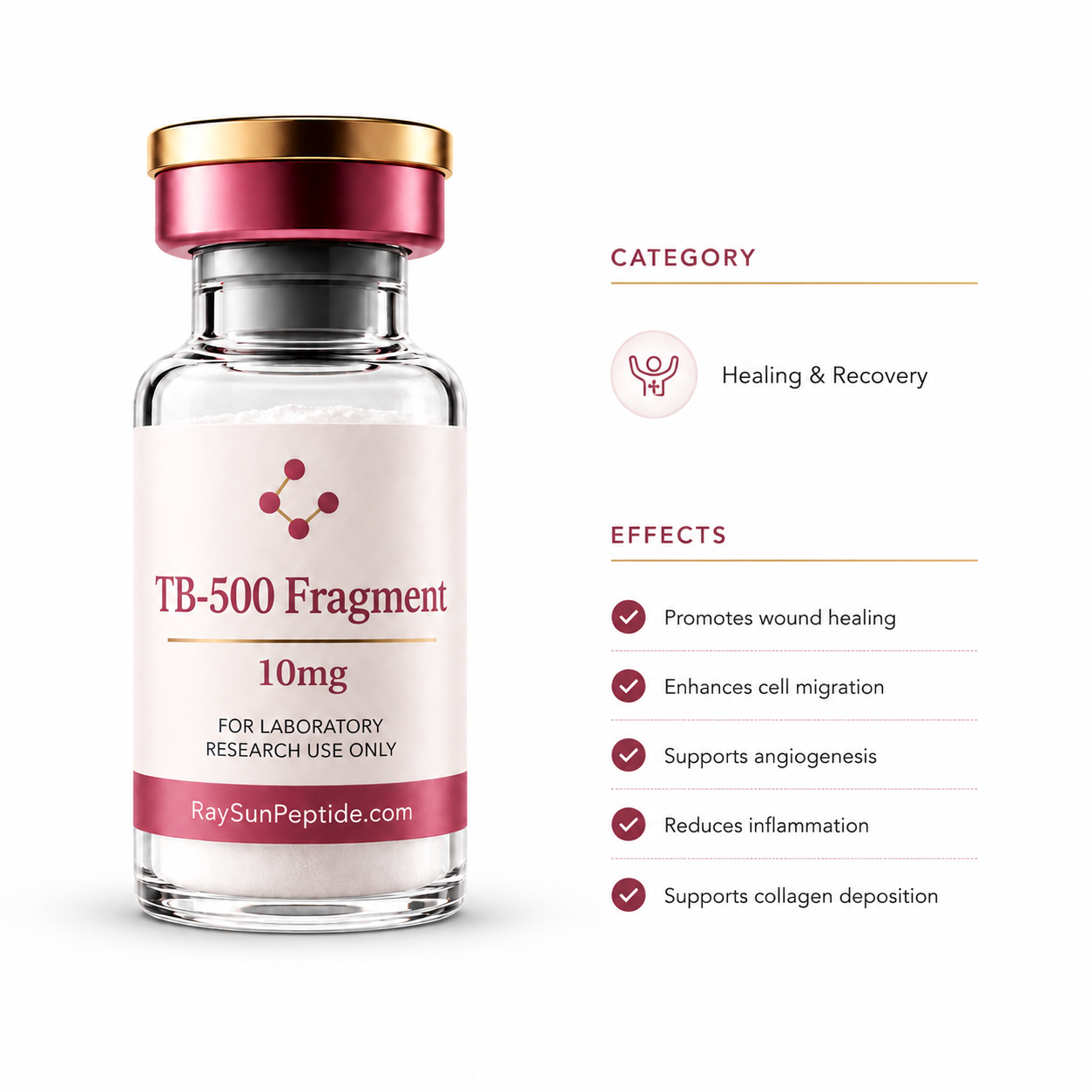
TB-500 Fragment
Moderate ResearchAcetylated heptapeptide
TB-500 Fragment is a synthetic peptide derived from the active domain of Thymosin Beta-4. It has been studied in research contexts for its effects on cell migration and cytoskeletal remodeling. Published research has examined its interactions with actin and its role in cellular motility mechanisms. RaysunPeptide supplies TB-500 Fragment for qualified research and laboratory applications.
Mechanism of Action
TB-500 contains the LKKTETQ sequence which is the actin-binding motif of full-length thymosin beta-4. This fragment shares many properties of the parent protein regarding cell proliferation, differentiation, and migration. It promotes angiogenesis by upregulating VEGF expression and enhancing endothelial cell sprouting.
Key Benefits
Molecular Data
Dosing Protocols
| Goal | Dose | Frequency | Route |
|---|---|---|---|
| Loading phase | 2-2.5 mg | 2x weekly for 4-6 weeks | SubQ |
| Maintenance | 2 mg | Weekly or bi-weekly | SubQ |
Research Indications
Tissue Repair
Promotes dermal wound healing through the active LKKTETQ sequence.
Supports tissue repair comparable to full thymosin beta-4 in research.
Promotes keratinocyte migration and collagen deposition.
Vascular Support
Promotes endothelial cell differentiation and new blood vessel formation.
Anti-Inflammatory
Decreases inflammatory responses in damaged tissues.
Peptide Interactions
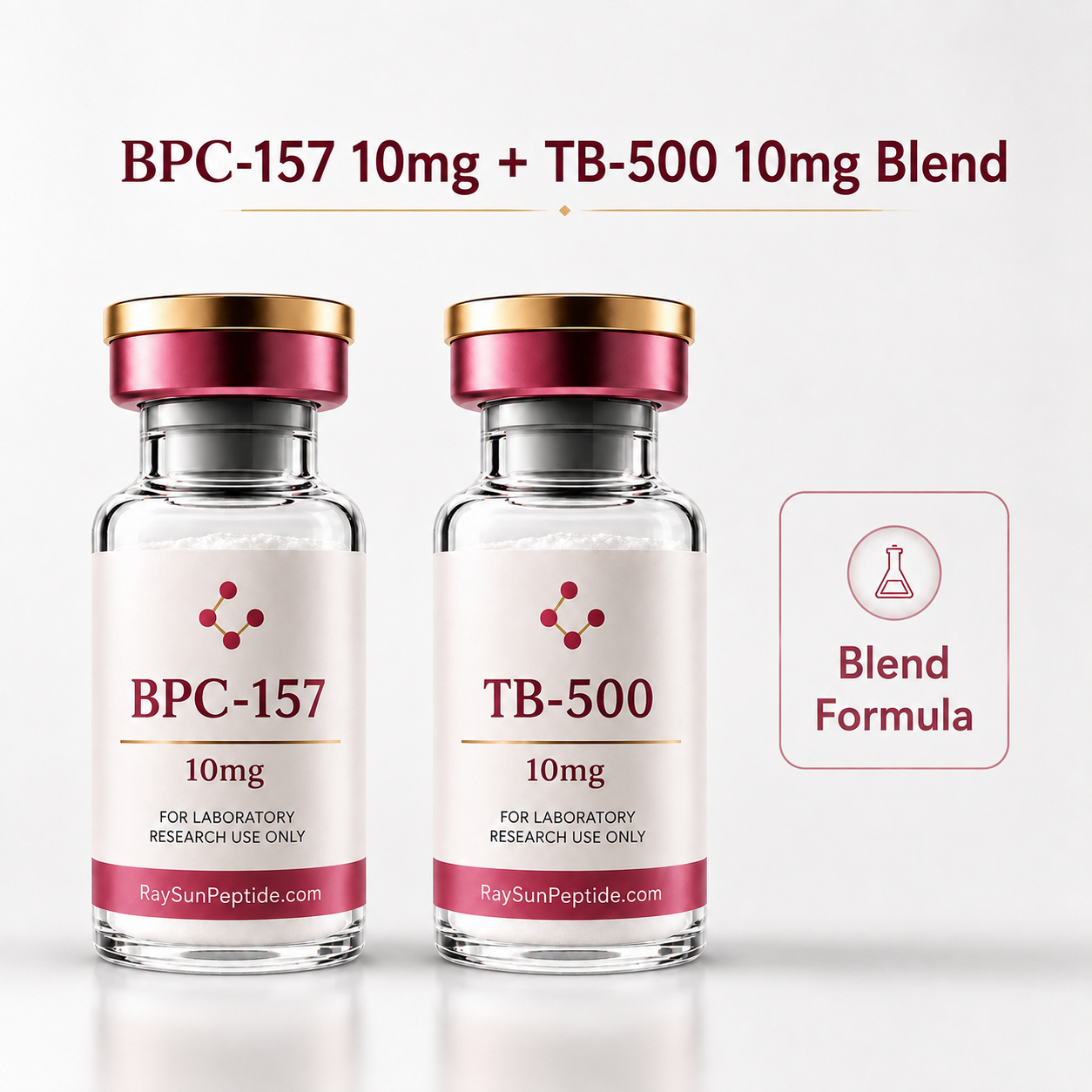
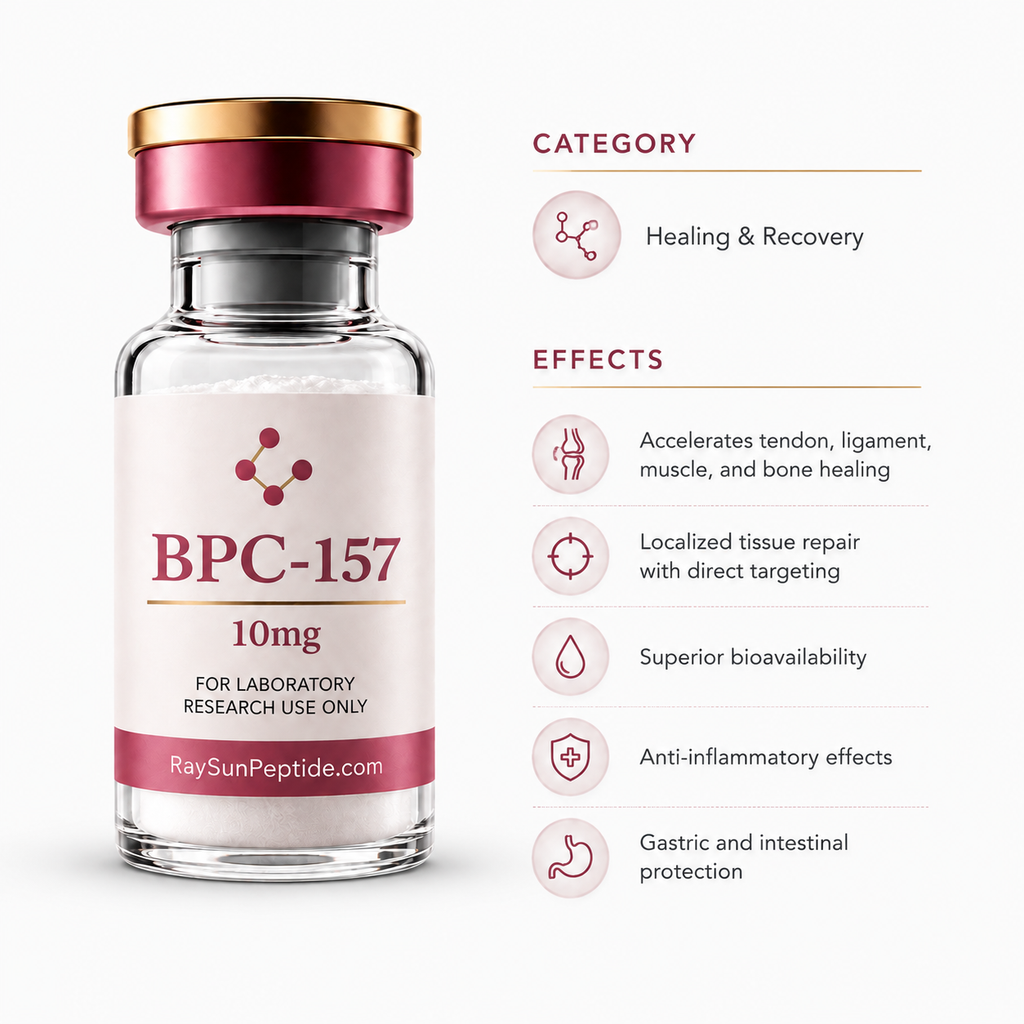
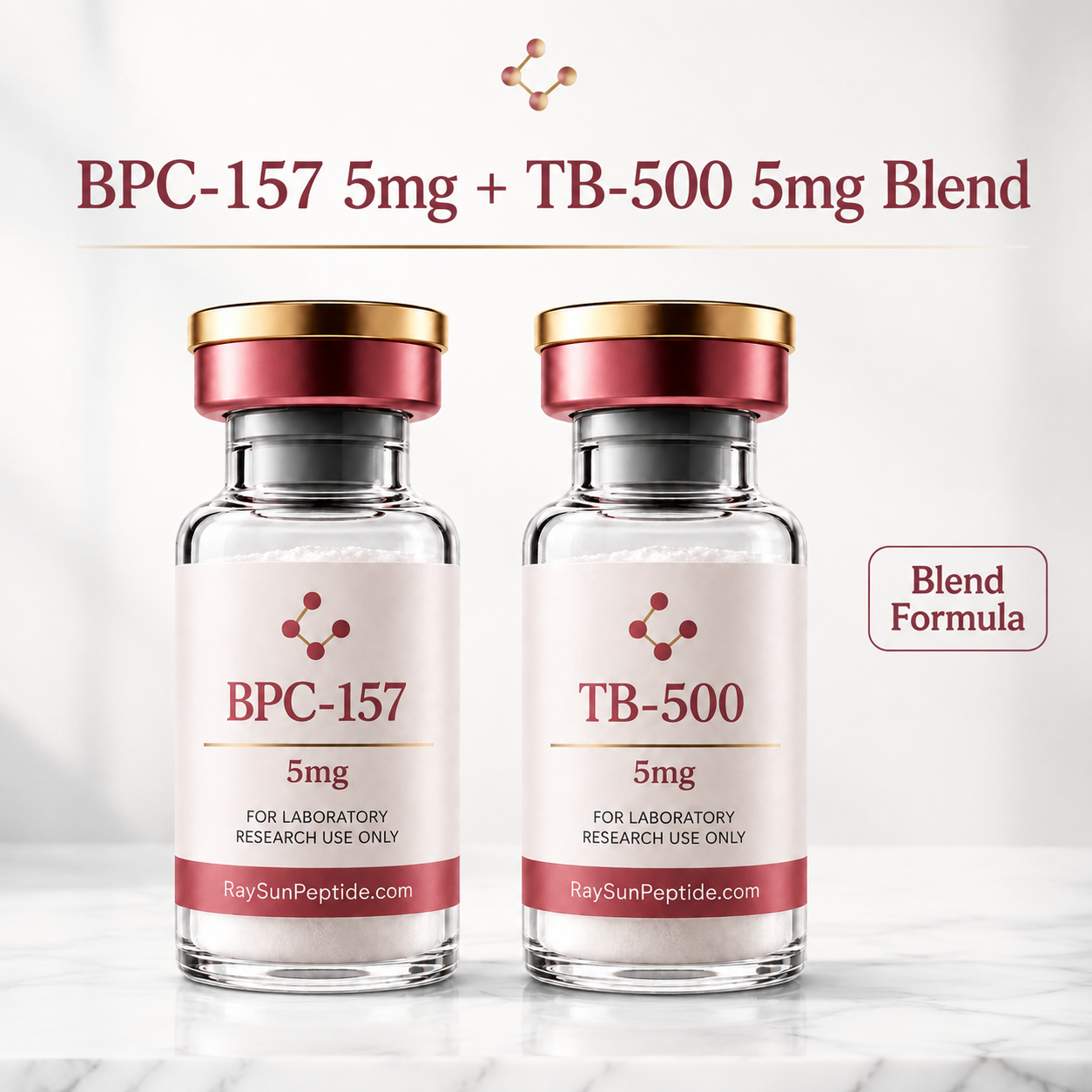
Commonly combined for enhanced healing effects through different mechanisms.
TB-500 is the active fragment; combining may be redundant.
Both support wound healing and tissue repair through different pathways.
Different mechanisms; may complement for tissue growth.
What to Expect
Side Effects & Safety
Common (Generally Mild)
- •Injection site reactions
- •Mild fatigue
- •Head rush (reported)
Stop Signs (Seek Medical Attention)
- ⚠Allergic reactions
- ⚠Unusual swelling or inflammation
Contraindications
- ✕Not authorized for medicinal use
- ✕Active cancer (theoretical concern)
- ✕Pregnancy or breastfeeding
- ✕Prohibited by WADA in sports
Quality Checklist
Good Signs ✓
- White lyophilized powder
- Clear solution after reconstitution
- High purity (>98%)
- Intact vacuum seal
Warning Signs !
- Not authorized for human use
- Research chemical only
Bad Signs ✕
- Discoloration
- Cloudy solution
- Particulates visible
References
TB-500 contains Ac-LKKTETQ, the active site responsible for actin binding and wound healing.
TB-500 is a synthetic version of the active region of thymosin beta-4.
TB-500 undergoes serial cleavage at C-terminus; acetylation protects N-terminus.
Characterized human metabolism of TB-500 using liver microsomes and S9 fraction.
FAQs
Is TB-500 fragment (Ac-LKKTETQ) the same as full TB-500?
TB-500 fragment is the active 7-amino-acid sequence (LKKTETQ) of the larger 43-amino-acid thymosin beta-4. Both promote wound healing and cell migration, but the fragment is more stable due to N-terminal acetylation and may be more cost-effective while retaining core regenerative properties.
How quickly does TB-500 fragment accelerate wound healing?
Initial wound healing acceleration appears within 1-7 days, with enhanced cell migration and angiogenesis noticeable by week 1-2. Visible tissue repair improvements typically develop over 2-4 weeks during the loading phase of 2x weekly injections.
Should TB-500 fragment be used with BPC-157 for better healing?
Yes, TB-500 fragment and BPC-157 are commonly combined for synergistic healing. TB-500 promotes cell migration and angiogenesis while BPC-157 upregulates growth factors - together they address multiple healing pathways better than either peptide alone.
Is the N-terminal acetylation in TB-500 fragment necessary for effectiveness?
Yes, the acetylation protects the peptide from degradation at the N-terminus during metabolism while maintaining the active LKKTETQ sequence responsible for wound healing. This modification extends the functional lifespan and improves stability versus non-acetylated versions.