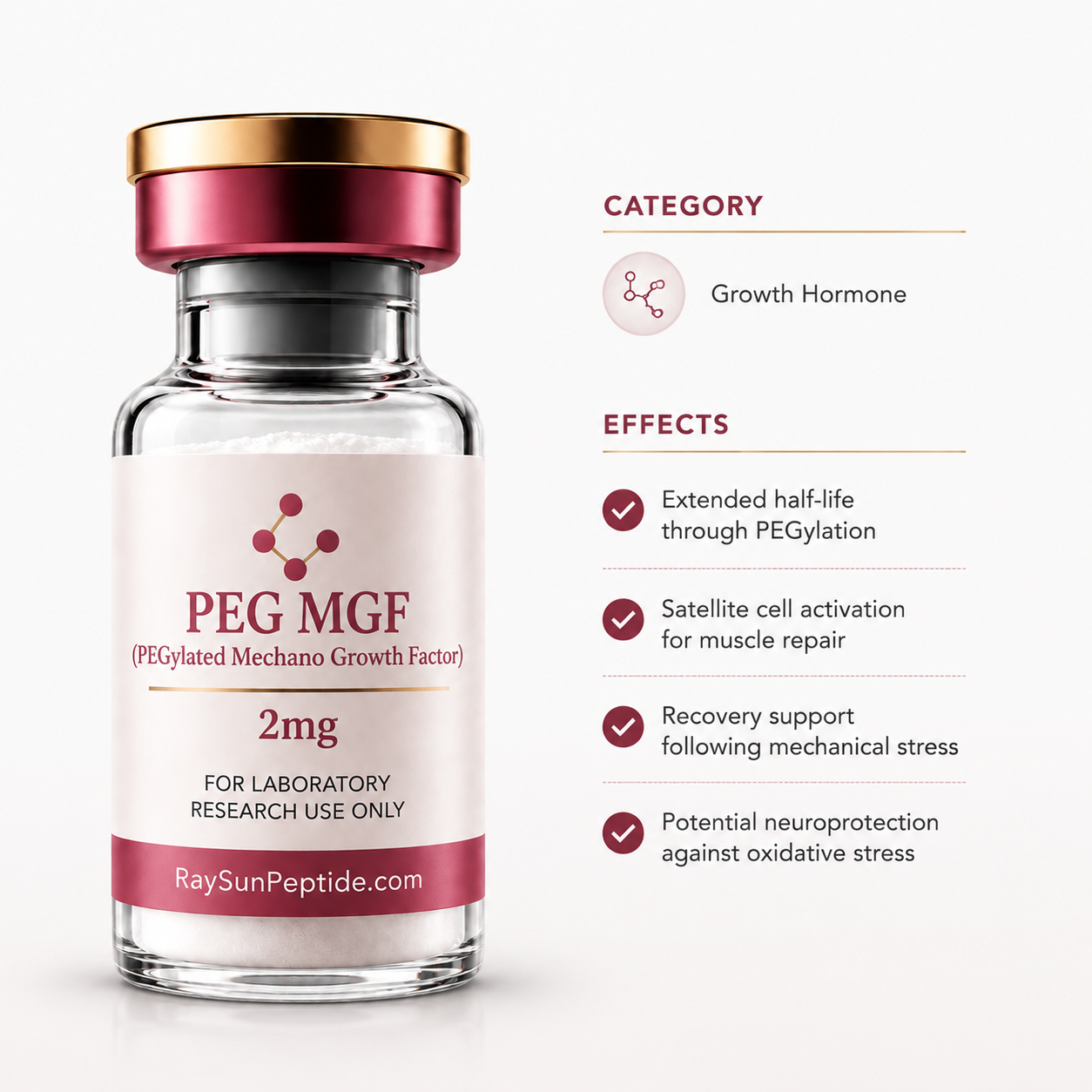
PEG MGF (PEGylated Mechano Growth Factor)
limitedIGF-1Ec splice variant C-terminal peptide
PEGylated MGF is a polyethylene glycol-conjugated form of Mechano Growth Factor designed to extend its plasma half-life. It has been studied in muscle physiology research for its sustained effects on satellite cell activation and muscle tissue maintenance. Published research has compared its pharmacokinetics to unmodified MGF. RaysunPeptide supplies PEG MGF for qualified research and laboratory applications.
Mechanism of Action
Activates muscle satellite stem cells via receptor binding, stimulating MAPK/ERK signaling. Enhances protein synthesis and promotes muscle fiber repair. E-peptide domain exhibits distinct activity from mature IGF-1.
Key Benefits
Molecular Data
Dosing Protocols
| Goal | Dose | Frequency | Route |
|---|---|---|---|
| General Recovery | 200mcg | 2-3x weekly | SubQ or IM |
| Targeted Muscle Recovery | 200-400mcg | Post-workout, 2-3x weekly | IM bilateral near target muscle |
| Injury Recovery | 200-400mcg | 2-3x weekly | IM near injury site |
| Conservative Protocol | 100-200mcg | 2x weekly | SubQ |
Research Indications
Muscle Repair
Primary mechanism activating dormant muscle satellite cells which fuse to damaged fibers.
Increases proliferative lifespan in younger muscle progenitor cells.
Increases activated satellite cell fusion capacity supporting repair and hypertrophy.
Tissue Regeneration
Animal studies suggest improved Achilles tendon injury outcomes.
Rabbit models demonstrated faster healing via osteoblast regulation.
Research indicates potential for articular cartilage injury models.
Recovery
Naturally upregulated after mechanical stress; supplementation may enhance processes.
Localized injection near injury sites supports targeted tissue repair.
Peptide Interactions
Both target IGF-1 pathways; combining risks receptor overstimulation. Reduce doses significantly if combined.
HGH increases endogenous IGF-1/MGF. Combined use amplifies effects but monitor for excessive water retention and joint pain.
Complementary mechanisms. BPC-157 promotes angiogenesis; PEG-MGF activates satellite cells. Popular recovery stack.
TB-500 reduces inflammation and promotes cell migration; PEG-MGF activates muscle stem cells.
Both affect glucose metabolism. Monitor blood sugar carefully if combined.
Different regenerative pathways may enhance tissue repair through multiple mechanisms.
What to Expect
Side Effects & Safety
Common (Generally Mild)
- •Injection site soreness
- •Mild fatigue
Stop Signs (Seek Medical Attention)
- ⚠Any unusual growths, lumps, or rapid tissue changes
- ⚠Severe injection site reactions beyond normal soreness
- ⚠Persistent headaches or vision changes
- ⚠Signs of hypoglycemia
- ⚠Unexpected swelling or edema
Contraindications
- ✕Any history of cancer or neoplastic disease
- ✕Pregnancy or breastfeeding
- ✕Uncontrolled diabetes or severe hyperglycemia
Quality Checklist
Good Signs ✓
- White or off-white fluffy cake appearance indicates proper freeze-drying
- Crystal clear solution after reconstitution with no particles
- Certificate of Analysis with HPLC purity testing (>98%)
Warning Signs !
- Minor clumping that dissolves with gentle swirling is normal
Bad Signs ✕
- Collapsed or discolored powder suggests heat degradation
- Persistent cloudiness or visible particles indicate contamination
References
Landmark study demonstrating MGF significantly increased satellite cell proliferation at 3ng/ml (P<0.001) with age-dependent effects.
MGF overexpression modulated inflammatory cytokines and enhanced macrophage resolution during skeletal muscle injury recovery.
Overview of MGF as IGF-I gene product involved in tissue repair, highlighting upregulation following exercise and injury.
FAQs
What makes PEG-MGF better than regular MGF for muscle recovery?
PEGylation extends the half-life from minutes to 48-72 hours, meaning you don't need to inject as frequently and the peptide stays active longer in your system.
Should I inject PEG-MGF into the muscle I just trained?
Yes, localized injection near or into the damaged muscle is optimal. Post-workout timing (within 1-2 hours) aligns with when your body naturally upregulates MGF.
Can I stack PEG-MGF with testosterone for better muscle growth?
There's no direct contraindication, but be cautious. Monitor for excessive water retention and joint pain.
Does PEG-MGF work for non-athletes wanting muscle maintenance?
Possibly, but PEG-MGF is most effective when there's mechanical stress or injury to trigger satellite cell activation.