ACE-031
EmergingSoluble activin receptor type IIB-Fc fusion protein
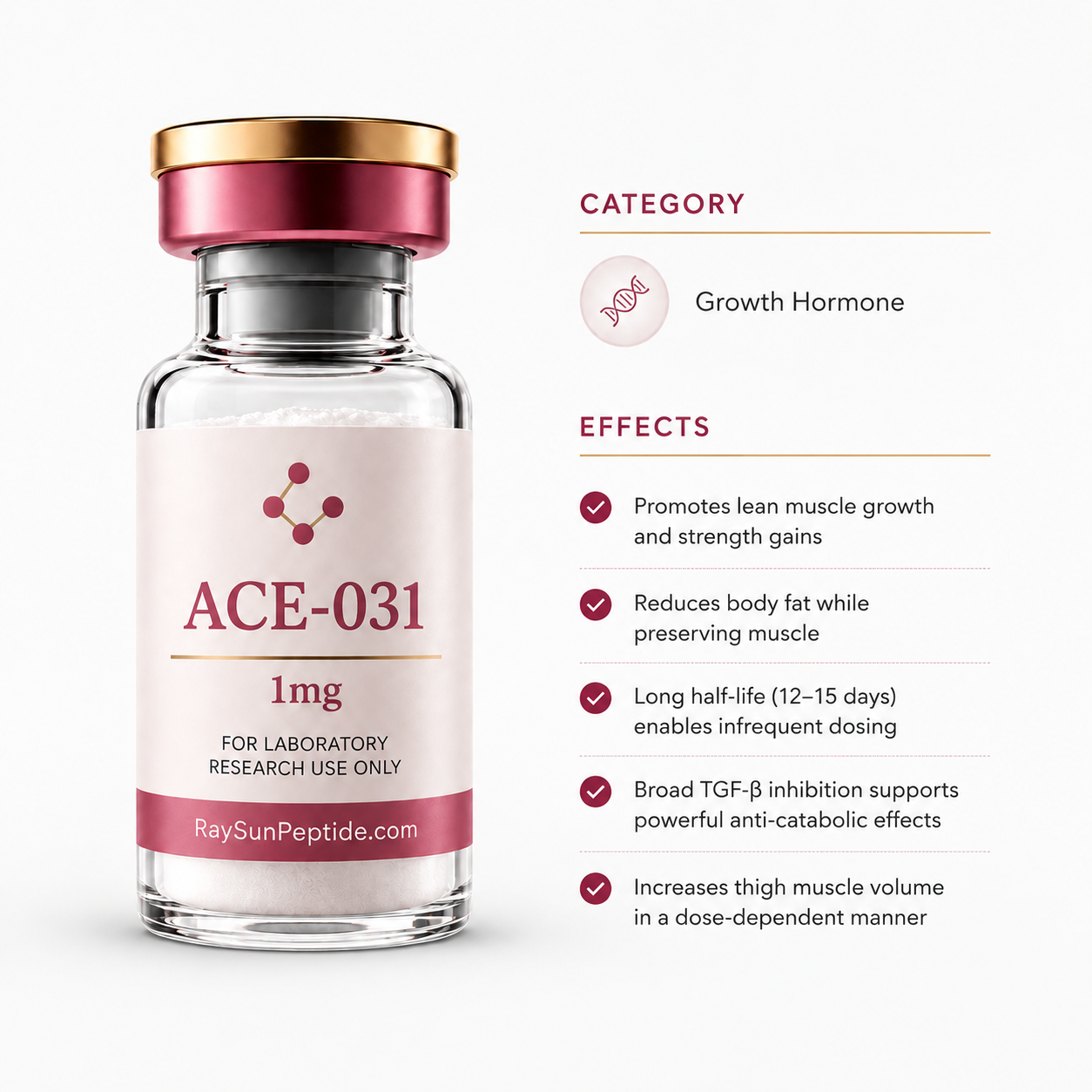
ACE-031 is a fusion protein consisting of the extracellular domain of activin receptor type IIB (ActRIIB) linked to an Fc domain. It has been studied in preclinical research for its effects on the activin/myostatin signaling pathway and its role in muscle mass regulation. Published research has examined its interactions with TGF-β family ligands. RaysunPeptide supplies ACE-031 for qualified research and laboratory applications.
Mechanism of Action
ACE-031 acts as a ligand trap for members of the TGF-beta superfamily. By mimicking the extracellular domain of the ActRIIB receptor, it intercepts myostatin (GDF-8), activin A, activin B, and GDF-11 before they can bind cell-surface receptors and activate Smad2/3 signaling. Blocking this pathway removes the natural brake on muscle protein synthesis and satellite cell proliferation, resulting in rapid skeletal muscle hypertrophy. The Fc fusion domain extends circulating half-life through FcRn-mediated recycling and provides bivalent ligand binding.
Key Benefits
Molecular Data
Dosing Protocols
| Goal | Dose | Frequency | Route |
|---|---|---|---|
| Phase 1 Research Protocol (Healthy Volunteers) | 0.1-3 mg/kg | Single IV dose | IV infusion |
| Phase 2 Research Protocol (DMD) | 0.5-2.5 mg/kg | Every 2 weeks | IV or SubQ |
Research Indications
Muscle Growth
Phase 1 data showed statistically significant lean mass increases (average +1.7%) after a single IV dose in healthy postmenopausal women.
Phase 2 trial in DMD patients showed improvements in lean body mass and bone mineral density, but trial was halted due to vascular adverse events.
Preclinical models demonstrate robust prevention of muscle loss in disease states through myostatin pathway inhibition.
Body Composition
Phase 1 trial subjects showed concurrent fat mass reductions alongside lean mass gains, suggesting favorable nutrient partitioning.
DMD trial data showed increases in bone mineral density, consistent with known effects of ActRIIB pathway modulation on bone metabolism.
Peptide Interactions
Both inhibit myostatin through different mechanisms (ligand trapping vs. direct binding). Conceptually synergistic, but no clinical data on combination use.
Both target the myostatin pathway. YK-11 acts as a myostatin inhibitor through a different mechanism. Combined use could produce excessive pathway suppression with unpredictable effects.
What to Expect
Side Effects & Safety
Common (Generally Mild)
- •Nosebleeds (epistaxis) - most frequently reported adverse event
- •Gum bleeding
- •Telangiectasia (dilated small blood vessels visible on skin)
- •Skin erythema (redness)
- •Minor injection site reactions
Stop Signs (Seek Medical Attention)
- ⚠Recurrent or severe nosebleeds
- ⚠Development of new or worsening telangiectasia
- ⚠Unexplained bleeding from any site
- ⚠Signs of hereditary hemorrhagic telangiectasia-like syndrome
- ⚠Severe skin reactions or widespread erythema
Contraindications
- ✕NEVER approved for human use - clinical development discontinued
- ✕History of bleeding disorders or vascular malformations
- ✕Concurrent anticoagulant or antiplatelet therapy
- ✕Known hypersensitivity to Fc fusion proteins
- ✕Pregnancy or breastfeeding
Quality Checklist
Good Signs ✓
- Manufactured under GMP conditions for clinical trials
- Characterized by SDS-PAGE and mass spectrometry
- Endotoxin-tested and sterility-verified
- Stored at 2-8°C with documented cold chain
Warning Signs !
- Clinical development halted - not commercially manufactured
- No legitimate commercial source exists
- Any product sold as ACE-031 is of unknown origin and quality
- Fusion protein structure is sensitive to degradation
Bad Signs ✕
- Vascular side effects led to trial discontinuation - nosebleeds and telangiectasia were dose-limiting
- Broad ligand trapping may cause unintended effects beyond myostatin inhibition
- Long-term safety profile completely unknown
References
Single ascending-dose Phase 1 trial in 48 postmenopausal women. ACE-031 produced statistically significant increases in total body lean mass (+1.7%) and thigh muscle volume (+5.1%) by day 29, with concurrent decreases in fat mass and leptin.
View on PubMed →Phase 2 study in 12 DMD boys showed increases in lean body mass and bone mineral density. Trial was halted due to safety concerns including epistaxis, telangiectasia, and erythema. Preliminary efficacy signals were observed but could not be fully evaluated.
View on PubMed →ACE-031 demonstrated a half-life of approximately 12 days with dose-proportional pharmacokinetics. The compound suppressed circulating FSH levels, consistent with activin A neutralization, and showed a dose-dependent increase in lean mass biomarkers.
View on PubMed →Comprehensive review establishing myostatin as a key negative regulator of skeletal muscle mass. Demonstrated that myostatin-null mice exhibit dramatic increases in muscle mass, providing the biological rationale for therapeutic myostatin inhibition strategies including soluble receptor approaches.
View on PubMed →FAQs
Why did ACE-031 development stop if it showed such impressive muscle gains?
ACE-031 was halted during Phase 2 clinical trials due to serious vascular side effects including recurrent nosebleeds, gum bleeding, and telangiectasia (dilated small blood vessels visible on skin). These dose-limiting adverse events suggested off-target effects on vascular homeostasis that outweighed the muscle-building benefits, making further development unsafe.
How much muscle can ACE-031 actually build in humans?
Phase 1 data in healthy postmenopausal women showed statistically significant lean mass increases (+1.7%) and thigh muscle volume increases (+5.1%) after a single IV dose within 29 days. However, development never progressed to Phase 3, so real-world efficacy at therapeutic doses and long-term safety remain unproven in larger populations.
Can I use ACE-031 as a research chemical if I can find it?
ACE-031 has never been approved for human use and clinical development was discontinued. Any product sold as ACE-031 is of unknown origin and quality. The compound is a complex fusion protein sensitive to degradation, making DIY sourcing extremely risky with high contamination likelihood.
Does ACE-031 work through a different mechanism than myostatin inhibitors like follistatin?
No. ACE-031 is a soluble activin receptor that acts as a ligand trap, while follistatin directly binds myostatin. Both ultimately inhibit myostatin signaling, but through different mechanisms. Theoretically combined use might be synergistic, but clinical data on combinations doesn't exist.