MGF (Mechano Growth Factor)
limitedIGF-1Ec splice variant C-terminal peptide
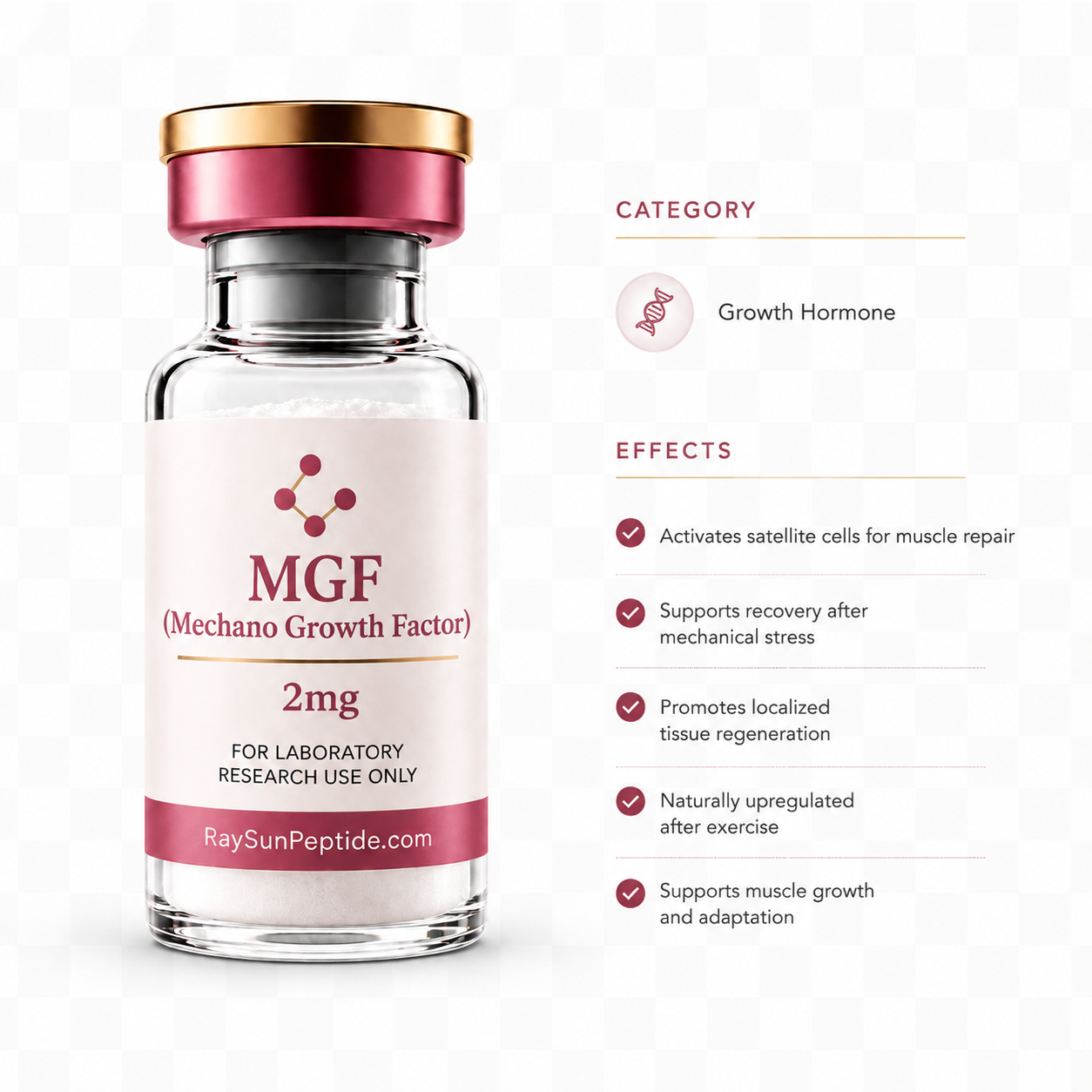
Mechano Growth Factor (MGF) is a splice variant of insulin-like growth factor 1 (IGF-1) that has been studied in muscle physiology research. It has been investigated for its effects on satellite cell activation and muscle progenitor cell proliferation. Published research has examined its role in muscle tissue response to mechanical loading. RaysunPeptide supplies MGF for qualified research and laboratory applications.
Mechanism of Action
Activates muscle satellite stem cells via receptor binding, stimulating MAPK/ERK signaling. Enhances protein synthesis and promotes muscle fiber repair. The E-peptide domain exhibits distinct activity from mature IGF-1.
Key Benefits
Molecular Data
Dosing Protocols
| Goal | Dose | Frequency | Route |
|---|---|---|---|
| Standard Protocol | 100-300mcg | Daily, post-workout | IM into target muscle |
| Progressive Titration | 100mcg → 300mcg | Daily, increasing weekly | IM bilateral |
| Localized Recovery | 200-300mcg | Immediately post-workout | IM into worked muscle groups |
Research Indications
Muscle Repair
Primary mechanism activating dormant muscle satellite cells which fuse to damaged fibers.
Short half-life means effects are concentrated at injection site.
Naturally upregulated after mechanical stress; supplementation enhances repair processes.
Tissue Regeneration
Animal studies suggest improved tendon injury outcomes when applied locally.
Research indicates potential for bone healing via osteoblast regulation.
Peptide Interactions
Same active peptide with different half-lives. Combining is redundant; choose one based on protocol preference.
Both target IGF-1 pathways; combining risks receptor overstimulation.
Complementary mechanisms. BPC-157 promotes angiogenesis; MGF activates satellite cells.
TB-500 reduces inflammation and promotes cell migration; MGF activates muscle stem cells.
What to Expect
Side Effects & Safety
Common (Generally Mild)
- •Injection site soreness
- •Mild fatigue
Stop Signs (Seek Medical Attention)
- ⚠Any unusual growths, lumps, or rapid tissue changes
- ⚠Severe injection site reactions
- ⚠Persistent headaches or vision changes
- ⚠Signs of hypoglycemia
Contraindications
- ✕Any history of cancer or neoplastic disease
- ✕Pregnancy or breastfeeding
- ✕Uncontrolled diabetes
Quality Checklist
Good Signs ✓
- White or off-white fluffy cake appearance
- Crystal clear solution after reconstitution
- Certificate of Analysis with HPLC purity >98%
Warning Signs !
- Minor clumping that dissolves with gentle swirling
Bad Signs ✕
- Collapsed or discolored powder
- Persistent cloudiness or visible particles
References
MGF significantly increased satellite cell proliferation at 3ng/ml with age-dependent effects.
Overview of MGF as IGF-I gene product involved in tissue repair, upregulated following exercise and injury.
FAQs
Why is MGF injected directly into muscles post-workout?
MGF has a 5-7 minute half-life and activates satellite stem cells locally at the injection site. Post-workout timing is critical because muscles are primed for growth and recovery. Direct intramuscular injection confines effects to the trained muscle group you want to develop.
How is MGF different from PEG-MGF?
Standard MGF has a 5-7 minute half-life requiring daily injections. PEG-MGF (pegylated) lasts much longer (hours). Choose based on protocol preference: frequent localized doses (MGF) or fewer higher-dose injections (PEG-MGF). Effects are similar; administration differs.
Can MGF cause hypoglycemia?
Possibly, though less likely than IGF-1 LR3 due to MGF's very short half-life and localized action. However, the post-workout window and direct muscle injection make hypoglycemia unlikely. Still monitor early use and consume carbs post-injection as a precaution.
How long do I need to use MGF to see muscle growth?
Week 1-2 shows reduced soreness in targeted muscles. Week 4-8 shows noticeable improvements in trained muscle size and recovery capacity. Most users run 8-12 week cycles with equal off-time. Structural gains from satellite cell activation may persist after discontinuation.