Cardiogen
Moderate ResearchTetrapeptide bioregulator
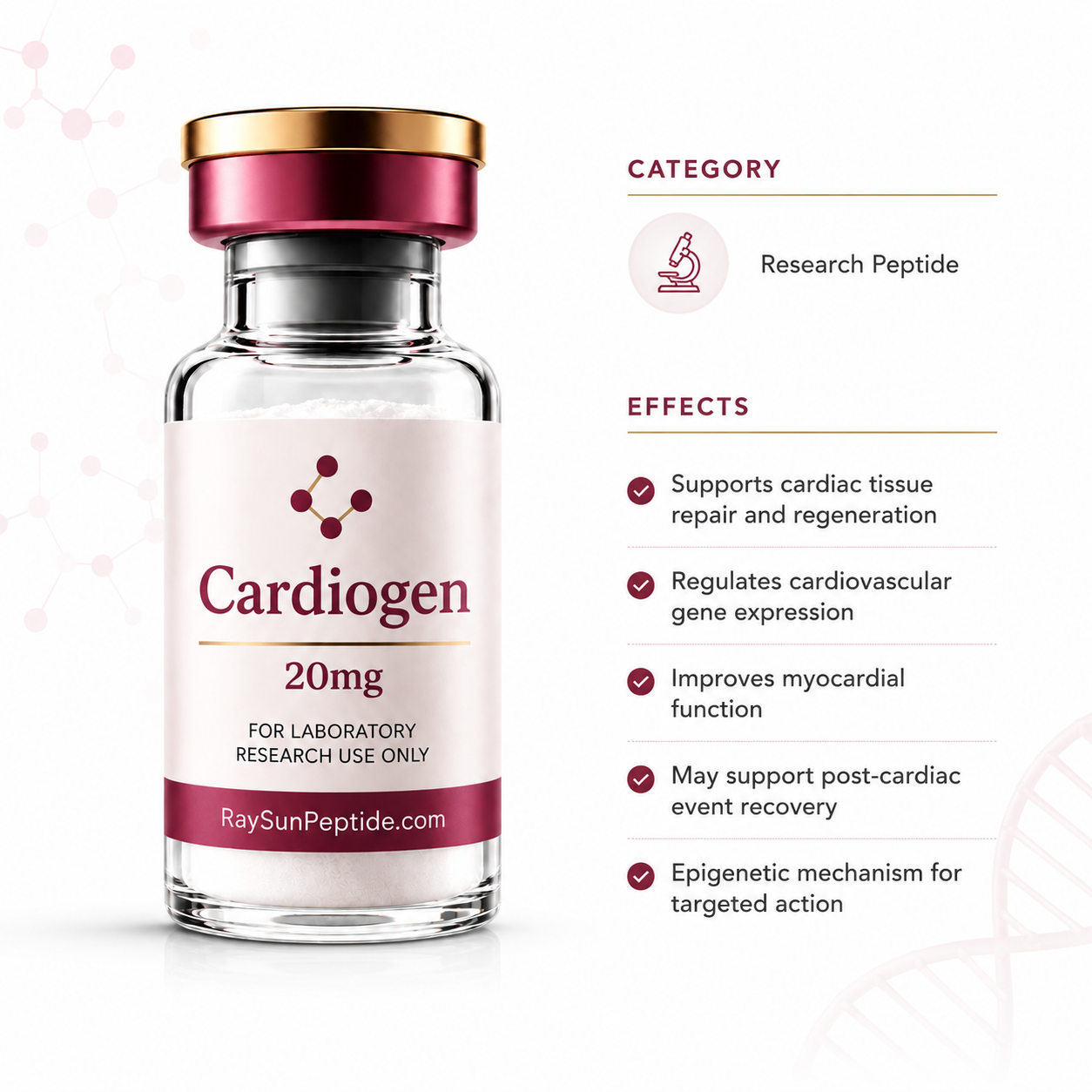
Cardiogen is a peptide bioregulator that has been studied in cardiovascular research for its effects on cardiac tissue gene expression and cardiomyocyte function. Published research has investigated its role in heart tissue regulation. RaysunPeptide supplies Cardiogen for qualified research and laboratory applications.
Mechanism of Action
Cardiogen works through epigenetic regulation by penetrating cell nuclei and interacting with specific DNA regions, histones, and nucleosomes. It regulates which genes are activated or suppressed without changing DNA sequence. This mechanism supports cardiac tissue repair, enhances myocardial function, and improves cardiovascular tissue regeneration by influencing gene expression in heart cells.
Key Benefits
Molecular Data
Dosing Protocols
| Goal | Dose | Frequency | Route |
|---|---|---|---|
| Standard protocol | 10-20 mg | Daily for 10-20 days | Oral capsules |
| Maintenance | 10 mg | 2-3 cycles yearly | Oral capsules |
Research Indications
Cardiovascular Support
Supports heart tissue repair through gene expression regulation at the nuclear level.
May improve overall myocardial function and cardiac performance.
Addresses age-related cardiovascular decline through bioregulation.
Anti-Aging
Influences gene expression to support tissue repair without altering DNA sequence.
Promotes cardiac tissue regeneration at the cellular level.
Peptide Interactions
Complementary cardiovascular bioregulators - Cardiogen for heart, Vesugen for vessels.
Often combined in comprehensive anti-aging Khavinson protocols.
Different organ targets; can be used in comprehensive bioregulator protocols.
Part of Khavinson bioregulator family; targets different tissue.
What to Expect
Side Effects & Safety
Common (Generally Mild)
- •Generally well-tolerated
- •Minimal side effects reported
Stop Signs (Seek Medical Attention)
- ⚠Allergic reactions
- ⚠Unusual cardiac symptoms
Contraindications
- ✕Active cardiac emergencies (seek medical care)
- ✕Known hypersensitivity
- ✕Pregnancy or breastfeeding
Quality Checklist
Good Signs ✓
- White powder or capsules
- Clear solution if reconstituted
- Proper packaging and labeling
Warning Signs !
- Unknown source or purity
Bad Signs ✕
- Discoloration
- Unusual odor
- Damaged packaging
References
Short peptides can penetrate nuclei, interact with DNA and histones to regulate gene expression.
Demonstrated effects on cardiac tissue through gene expression modulation.
Comprehensive review of bioregulator peptides and their epigenetic mechanisms.
FAQs
How does Cardiogen improve cardiac function if it's just 4 amino acids?
Cardiogen's short tetrapeptide (AEDR) penetrates directly into cell nuclei where it regulates cardiac gene expression epigenetically. Despite being only 4 amino acids, this structure is sufficient for DNA binding and histone modulation, allowing it to influence which genes are activated in heart tissue without altering DNA sequence itself.
Can Cardiogen help after a heart attack or cardiac event?
Cardiogen's mechanism supports post-cardiac event recovery by promoting cardiac tissue repair and myocardial function improvement through gene expression modulation. However, no clinical human data exists on cardiac event recovery. This remains theoretical based on mechanisms and traditional use in Russian medicine.
Is Cardiogen safe for people with existing heart conditions?
Cardiogen is well-tolerated with minimal side effects reported. People with cardiac conditions should consult healthcare providers before use. Active cardiac emergencies require immediate medical care, not peptide therapy. For chronic cardiovascular support, medical supervision is prudent.
How often should I cycle Cardiogen for heart health maintenance?
Standard protocol is 10-20 day cycles repeated 2-3 times yearly for cumulative cardiovascular benefits. Effects persist between cycles due to epigenetic changes. Some users perform cycles seasonally, while others maintain 2-3 yearly cycles consistently for long-term cardiac tissue support and age-related decline prevention.