Adipotide
EmergingChimeric peptidomimetic
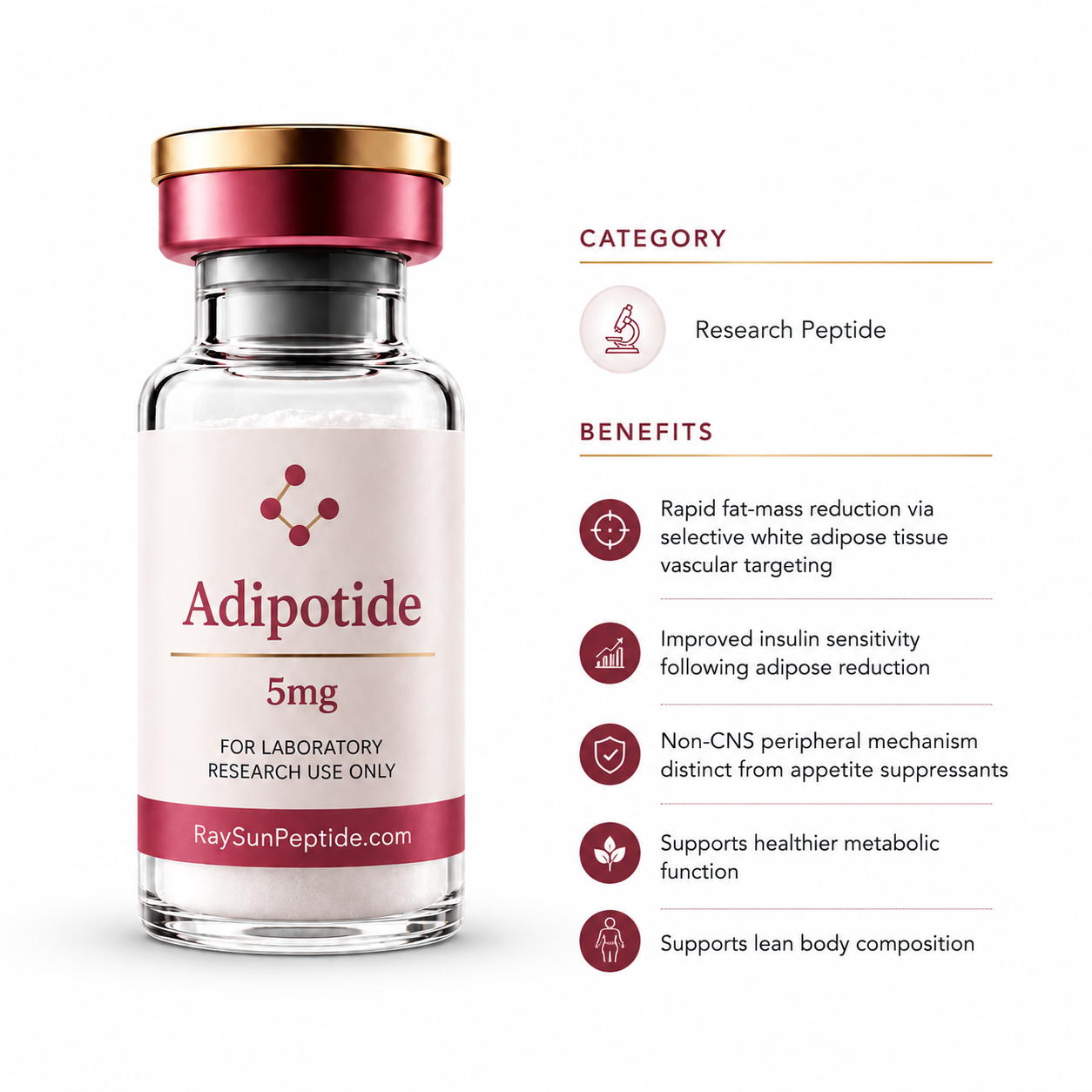
Adipotide is a targeting pro-apoptotic peptide that has been studied in preclinical obesity research for its effects on white adipose tissue. It has been investigated for its ability to selectively target and induce apoptosis in adipose tissue vasculature through integrin receptor binding. Published research has examined its effects on body weight and metabolic parameters in animal models. RaysunPeptide supplies Adipotide for qualified research and laboratory applications.
Mechanism of Action
CKGGRAKDC ligand homes to prohibitin/annexin A2 on white-fat endothelium; linked D-(KLAKLAK)2 disrupts mitochondrial membranes post-internalization, triggering localized endothelial apoptosis and adipocyte loss.
Key Benefits
Molecular Data
Dosing Protocols
| Goal | Dose | Frequency | Route |
|---|---|---|---|
| Primate Research Replication | 0.43 mg/kg | Once daily | SubQ |
| Dose-Finding (Research) | 0.10-0.75 mg/kg | Once daily (escalating tiers) | SubQ |
Research Indications
Weight Loss
Selective white adipose tissue vascular targeting produced 7-15% body-weight loss over 4 weeks in obese macaques.
Metabolic
Improved insulin response (reduced insulin AUC) following fat-mass reduction in primates.
Appetite Control
Weight loss without primary appetite suppression; peripheral vascular approach.
Peptide Interactions
Potential additive dehydration/GI effects; monitor renal function.
Overlapping weight-loss effects; monitor kidney function, volume status, electrolytes.
No clinical data on co-administration; mechanisms differ.
No published data on combined use or pharmacodynamic interaction.
No known direct interaction; distinct mechanisms and targets.
Metabolic effects may confound body-composition endpoints.
Theoretical vascular/pressor effects; stagger dosing, monitor BP and hydration.
Adipotide shows dose-dependent proximal tubule injury; avoid additional renal insults.
What to Expect
Side Effects & Safety
Common (Generally Mild)
- •Mild creatinine elevation
- •Electrolyte shifts
- •Dose-dependent proximal tubule changes (reversible in primates)
Stop Signs (Seek Medical Attention)
- ⚠Sustained creatinine elevation or oliguria
- ⚠Progressive electrolyte abnormalities
- ⚠Severe injection-site reactions or systemic symptoms
- ⚠Unexpected toxicity
Contraindications
- ✕Pregnancy/lactation (not studied)
- ✕Dehydration
- ✕Concurrent nephrotoxic medications
Quality Checklist
Good Signs ✓
- Intact lyophilized cake - white, uniform indicates proper lyophilization
- Clear solution - fully dissolved, particle-free after reconstitution
Warning Signs !
- Minor clumping may form from shipping; should dissolve with gentle swirl
Bad Signs ✕
- Collapsed/moist cake suggests temperature excursion; do not use without QC
- Cloudiness/precipitate indicates degradation or contamination—discard
References
Rhesus macaques at 0.43 mg/kg SC daily for 28 days showed 7.4-14.7% weight loss; insulin resistance improved; mild, dose-dependent, reversible proximal tubule changes.
Mice with diet-induced obesity showed ~30% weight reduction; adipose vascular apoptosis; metabolic normalization.
Mechanistic validation of prohibitin/ANXA2 axis in adipose tissue, core to TP01 targeting.
Next-generation prohibitin constructs improve serum stability and efficacy vs. first-generation TP01.
FAQs
How does Adipotide's weight loss mechanism differ from semaglutide?
Adipotide targets adipose tissue vascular endothelium directly, causing localized endothelial apoptosis and adipocyte loss via a peripheral vascular mechanism. Semaglutide suppresses appetite centrally via GLP-1 receptors. Adipotide achieves weight loss without appetite suppression, making it mechanistically distinct from appetite suppressants.
What kidney safety concerns halted Adipotide's Phase 1 development?
Phase 1 trials showed dose-dependent mild creatinine elevation and reversible proximal tubule changes in kidney tissue. Although these effects reversed in primates, the kidney safety signals were considered significant enough to halt further clinical development. This remains a major concern for any consideration of Adipotide use.
How much weight can Adipotide actually produce?
In obese rhesus macaques, 0.43mg/kg SC daily for 28 days produced 7.4-14.7% body weight loss with improved insulin sensitivity. However, primate studies don't guarantee equivalent human efficacy, and the kidney safety signals prevented human Phase 2 trials from determining real-world dose-response in people.
Can I combine Adipotide with semaglutide for enhanced weight loss?
No combination data exists, and stacking has theoretical risks. Both would drive rapid weight loss and dehydration. Adipotide shows dose-dependent kidney effects, and semaglutide users already face dehydration/GI issues. Combined use requires careful monitoring of renal function, electrolytes, and hydration status, best avoided without specialist supervision.