B7-33
EmergingSingle-chain peptide
B7-33 is a peptide derived from the cytoplasmic tail of protease-activated receptor 2 (PAR2) that has been studied in inflammation research. It has been investigated for its effects on PAR2 signaling and its role in inflammatory response modulation. Published research has examined its anti-inflammatory properties. RaysunPeptide supplies B7-33 for qualified research and laboratory applications.
Mechanism of Action
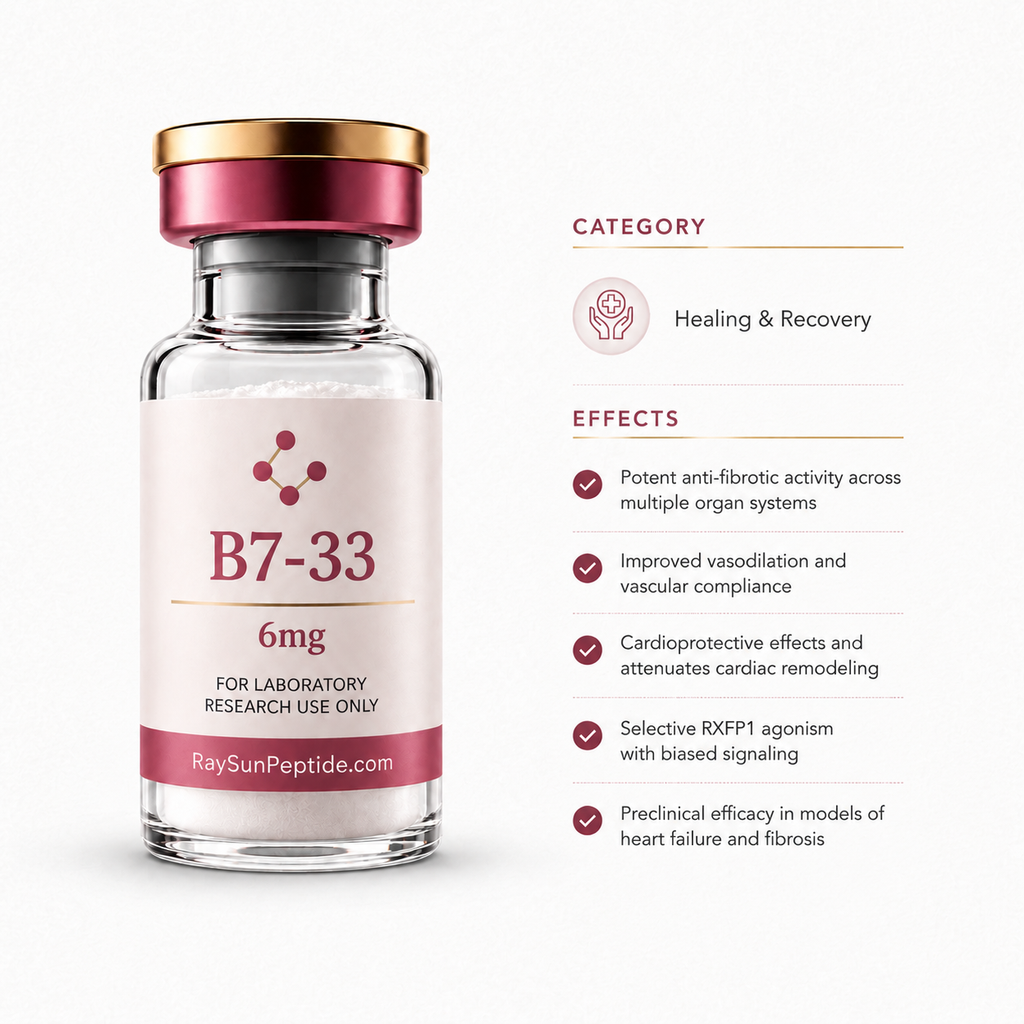
Selectively activates RXFP1, the primary receptor for relaxin-2, triggering downstream signaling cascades that inhibit fibroblast activation and collagen deposition, promote extracellular matrix remodeling via increased matrix metalloproteinase (MMP) activity, enhance nitric oxide-mediated vasodilation, and reduce inflammatory cytokine expression. B7-33 appears to preferentially engage pERK1/2 signaling pathways while showing reduced cAMP activation compared to native relaxin-2, suggesting biased agonism at RXFP1.
Key Benefits
Molecular Data
Dosing Protocols
| Goal | Dose | Frequency | Route |
|---|---|---|---|
| Anti-fibrotic / Cardiovascular support | 100-250 mcg | 1x daily | SubQ |
Research Indications
Cardiovascular
Reduces myocardial fibrosis and collagen deposition, attenuating adverse cardiac remodeling in preclinical heart failure models.
Enhances nitric oxide-mediated vasodilation, reducing vascular resistance and improving blood flow in preclinical studies.
Demonstrates cardioprotective effects in animal models of heart failure, improving cardiac function and reducing fibrotic burden.
Anti-Fibrotic
Inhibits fibroblast differentiation into myofibroblasts and reduces extracellular matrix deposition in multiple organ systems.
Shows protective effects against kidney fibrosis progression in preclinical disease models.
Peptide Interactions
Potential synergistic effects for cardiac protection; both target complementary pathways involved in cardiac remodeling and fibrosis.
No known negative interactions; different mechanisms of action with complementary tissue-repair and anti-fibrotic properties.
What to Expect
Side Effects & Safety
Common (Generally Mild)
- •Injection site reactions (redness, mild irritation)
- •Potential transient hypotension due to vasodilatory effects
Stop Signs (Seek Medical Attention)
- ⚠Persistent or symptomatic hypotension (dizziness, lightheadedness, fainting)
- ⚠Severe injection site reactions or signs of infection
- ⚠Allergic reactions (rash, swelling, difficulty breathing)
Contraindications
- ✕Pre-existing hypotension or conditions exacerbated by vasodilation
- ✕Pregnancy or breastfeeding (no safety data available)
- ✕Concurrent use of potent antihypertensive agents without medical supervision
- ✕No human safety data exists -- all protocols are extrapolated from preclinical research
Quality Checklist
Good Signs ✓
- White to off-white lyophilized powder
- Clear solution after reconstitution with no particles
- Intact vacuum seal on vial
Warning Signs !
- Slight clumping that dissolves with gentle swirling (may occur from shipping)
Bad Signs ✕
- Discolored or wet powder indicating degradation
- Cloudy solution, visible particles, or precipitates after reconstitution
- Broken or missing vacuum seal
References
Identified B7-33 as a single-chain relaxin analog that selectively activates RXFP1, demonstrating that a simplified single-chain peptide can replicate key signaling functions of native two-chain relaxin-2.
View on PubMed →B7-33 reduced fibrosis markers in both liver and kidney fibrosis models, demonstrating organ-protective anti-fibrotic effects comparable to native relaxin-2 despite its simplified structure.
View on PubMed →Comprehensive review of RXFP1 as a drug target, discussing relaxin-2 and analogs including B7-33 for cardiovascular, fibrotic, and reproductive indications.
View on PubMed →B7-33 replicated the vasoprotective and anti-fibrotic effects of native relaxin in mouse models, reducing vascular stiffness and improving cardiovascular outcomes.
View on PubMed →Reviews the anti-fibrotic mechanisms of relaxin/RXFP1 signaling, including inhibition of TGF-beta-driven fibroblast activation and collagen synthesis, with implications for simplified analogs like B7-33.
View on PubMed →FAQs
Why is B7-33 easier to synthesize than native relaxin-2?
B7-33 is a single-chain peptide analog that retains RXFP1 activation while avoiding native relaxin-2's complex two-chain A/B structure connected by disulfide bonds. This simplified single-chain design is significantly easier and more cost-effective to synthesize while achieving equivalent biological activity.
What are the cardiovascular benefits of B7-33 compared to other compounds?
B7-33 reduces myocardial fibrosis, enhances vasodilation through nitric oxide pathway, and demonstrates cardioprotective effects in heart failure models. These anti-fibrotic and vasoprotective properties position it for potential use in cardiac remodeling, though all current data is preclinical.
Can B7-33 cause dangerous drops in blood pressure like other vasodilators?
Preclinical research suggests transient hypotension due to vasodilatory effects is possible. Users may experience symptomatic hypotension including dizziness or lightheadedness. Those with pre-existing hypotension or on antihypertensive medications must be cautious. No human data exists on hypotension incidence or management.
Is B7-33 safe in pregnancy given its anti-fibrotic effects?
No. B7-33 is teratogenic and contraindicated in pregnancy or potential pregnancy. The mechanisms affecting tissue remodeling and fibroblast function create theoretical teratogenic risk. No safety data exists for pregnant or breastfeeding women.