Ara-290
Extensively StudiedEngineered peptide
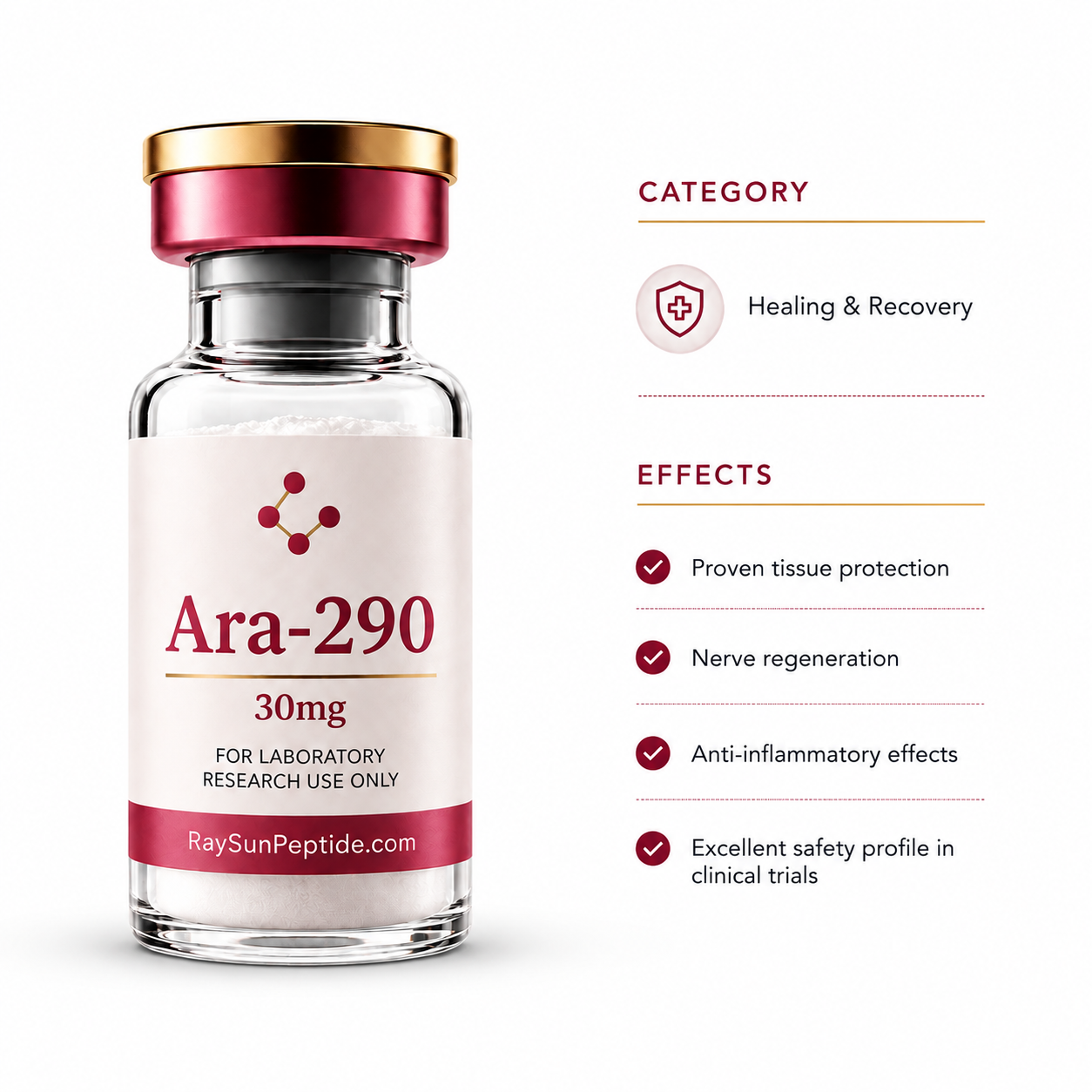
Ara-290 is an 11-amino acid peptide derived from the structure of erythropoietin, lacking hematopoietic activity. It has been studied in tissue protection research for its effects on the innate inflammatory response and nerve cell protection. Published research has investigated its interactions with the innate repair receptor. RaysunPeptide supplies Ara-290 for qualified research and laboratory applications.
Mechanism of Action
Activates IRR through EPOR/β-common receptor complex, triggering tissue-protective signaling without erythropoietic effects.
Key Benefits
Molecular Data
Dosing Protocols
| Goal | Dose | Frequency | Route |
|---|---|---|---|
| Neuropathy Treatment | 4 mg daily | Once daily | SubQ |
| Tissue Protection | 1-8 mg daily | Once daily | SubQ |
| Acute Intervention | 2 mg | 3x weekly | IV |
Research Indications
Neuroprotection
23% increase in corneal nerve fiber area with sustained pain improvement.
Nerve regeneration and metabolic improvements in Type 2 diabetes patients.
Crosses blood-brain barrier for stroke and TBI neuroprotection.
Tissue Repair
Improves epithelialization and angiogenesis via VEGF upregulation.
Reduces infarct size in myocardial infarction models.
Maintains cardiac function in aging models.
Anti-Inflammatory
Reduces TNF-α, IL-6, and IL-12 production.
Reduces colitis severity in animal models.
Improves graft survival and reduces rejection.
Peptide Interactions
Complementary tissue repair pathways may enhance wound healing.
Combined mechanisms enhance recovery from injury.
No known interactions; different mechanisms for tissue protection.
Clinical trials exclude EPO use within 2 months due to receptor interference.
Both affect cellular metabolism; monitor for additive effects.
No adverse interactions in clinical trials with GLP-1 agonists.
Both affect tissue repair; requires monitoring for excessive growth factor activity.
6-month washout required before Ara 290 to avoid immune interactions.
What to Expect
Side Effects & Safety
Common (Generally Mild)
- •Excellent safety profile in clinical trials with no serious drug-related adverse events
Stop Signs (Seek Medical Attention)
- ⚠Severe injection site reactions
- ⚠Unexpected blood count changes
- ⚠Allergic reaction signs
- ⚠Worsening of underlying condition
- ⚠New neurological symptoms
- ⚠Any serious adverse events
Contraindications
- ✕Recent anti-TNF therapy (within 6 months)
- ✕EPO use (within 2 months)
- ✕Pregnancy
- ✕BMI > 34 kg/m²
Quality Checklist
Good Signs ✓
- Pharmaceutical grade manufacturing with GMP conditions
- Proper peptide sequence verification - correct 11-amino acid sequence with N-terminal pyroglutamate
- Sterile lyophilized powder with proper freeze-drying
- Clinical batch documentation - Purity >95%, endotoxin <1 EU/mg, sterility verified
Warning Signs !
- Light-sensitive formulation - requires protection during storage and use
Bad Signs ✕
- Cloudy or discolored solution indicates degradation; should be clear to slightly cloudy
References
Phase 2b trial, 64 subjects with sarcoid neuropathy, 1-8mg SC daily for 28 days. Cibinetide significantly increased corneal and skin small nerve fiber abundance, consistent with disease-modifying effect. 23% increase in corneal nerve fiber area at 4mg dose.
View on PubMed →Phase 2 trial, 4mg SC daily for 28 days in T2DM patients. Improvement in HbA1c and lipid profiles sustained 4 weeks post-dosing. Neuropathic symptoms significantly improved. Corneal nerve fiber density increased.
View on PubMed →9 patients, 4mg SC daily for 12 weeks. No serious adverse events. Improvement in NEI VFQ-25 composite quality of life scores. Some participants showed improvements in CRT, tear production, diabetic control, and albuminuria.
View on PubMed →Engineered helix B surface peptide (pHBSP/ARA-290) from EPO structure. Increased reactive oxygen species threshold for mitochondrial permeability transition by 40%. Reduced ischemic myocardial infarct size equivalent to EPO without erythropoietic effects.
View on PubMed →pHBSP reduced contusion volume from 20.8mm3 (control) to 5.9mm3. Improved cerebral blood flow recovery and beam-walking performance. Neuroprotective effects similar to EPO without thrombotic risk.
View on PubMed →FAQs
How does Ara-290 differ from erythropoietin (EPO) for neuroprotection?
Ara-290 is an engineered 11-amino acid peptide derived from EPO structure that activates the Innate Repair Receptor (IRR) without triggering erythropoiesis. It provides tissue protection and nerve regeneration like EPO but without red blood cell stimulation, polycythemia risk, or thrombotic complications.
What's the timeline for nerve regeneration with Ara-290 in diabetic neuropathy?
Phase 2 trials showed 23% increase in corneal nerve fiber area at 4mg daily for 28 days, with sustained pain improvements. Nerve fiber regeneration markers appeared within weeks 2-4, with peak therapeutic effects and maximum improvements by week 4-6. Benefits persist via molecular switch effects through month 2-6.
Can I combine Ara-290 with other neuroprotective peptides like BPC-157?
Yes. BPC-157 and Ara-290 target complementary tissue repair pathways with no known direct interactions. TB-500 is also synergistic. These combinations likely enhance recovery from injury, though clinical data on simultaneous use doesn't exist.
Why must I avoid anti-TNF biologics or recent EPO use before starting Ara-290?
Anti-TNF therapy requires 6-month washout before Ara-290 due to immune interaction risks. EPO use requires 2-month washout because both target related receptor pathways. These washout periods prevent unpredictable receptor interference and potential adverse immune effects from concurrent use.