Pinealon
Well StudiedTripeptide
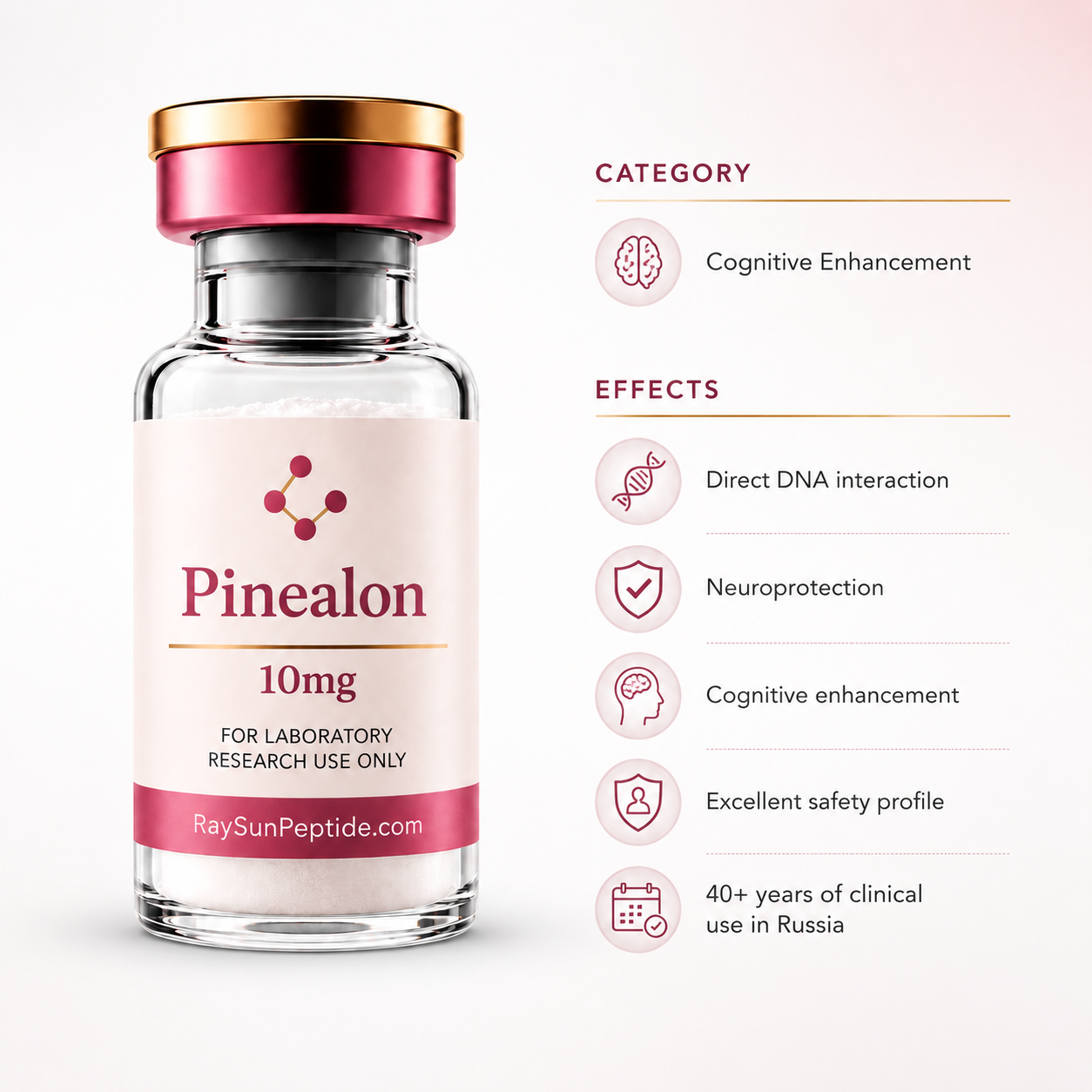
Pinealon (Glu-Asp-Arg) is a tripeptide bioregulator that has been studied in neuroscience research for its effects on central nervous system function and gene expression in brain tissue. Published research has investigated its effects on neuronal activity and its role in brain tissue regulation. RaysunPeptide supplies Pinealon for qualified research and laboratory applications.
Mechanism of Action
Penetrates nuclear membranes to directly interact with DNA, modulates gene expression via histone H1.3 binding and MAPK/ERK pathway activation.
Key Benefits
Molecular Data
Dosing Protocols
| Goal | Dose | Frequency | Route |
|---|---|---|---|
| Neuroprotection | 5mg daily | Once daily | SubQ |
| Cognitive Enhancement | 100-300mcg | Daily or every other day | SubQ |
| Anti-aging | 5mg | 20 days, 2-3x yearly | SubQ |
Research Indications
Neuroprotection
Clinical protocol of 5mg daily showed significant cognitive improvements in 72-patient study.
Subcutaneous administration allows systemic circulation to brain tissue for neuroprotective effects.
Caspase-3 suppression, ROS reduction, and excitotoxicity protection.
Cognitive
Enhanced neurotransmitter function with 1.9x serotonin increase in cell cultures.
100 ng/kg optimal dose improved spatial learning in hippocampus.
Anti-Aging
Irisin expression increases linked to telomere protection and mitochondrial enhancement.
32-patient study showed significant improvements in aging indicators over 20-30 days.
Peptide Interactions
Enhanced neuroprotection through complementary telomerase activation pathways.
Synergistic cognitive recovery in stroke patients through brain region targeting.
Safe combination supporting neural-immune axis optimization.
Monitor sleep patterns; Pinealon stimulates endogenous serotonin production.
Different mechanisms with no known interactions.
Complementary anti-aging mechanisms.
What to Expect
Side Effects & Safety
Common (Generally Mild)
- •Minimal injection site reactions
- •Mild gastrointestinal adjustment
- •Occasional headache
- •Fatigue
Stop Signs (Seek Medical Attention)
- ⚠Severe headaches or mood changes
- ⚠Persistent injection site reactions
- ⚠Signs of infection at injection site
- ⚠Unusual neurological symptoms
- ⚠Allergic reactions
Contraindications
- ✕Pregnancy
- ✕Lactation
Quality Checklist
Good Signs ✓
- White crystalline powder; proper freeze-drying indicated
- Clear reconstituted solution; no particles or cloudiness
- Pharmaceutical packaging with batch numbers from reputable sources
Warning Signs !
- Ensure distinction between research (lab only) and pharmaceutical (human use) grade
Bad Signs ✕
- Discolored powder (yellow or brown) indicates degradation from heat or moisture
- Cloudy solution indicates contamination
References
72 patients aged 30-74; 0.2mg twice daily; 20-30 days. Improved memory, reduced headache severity, and enhanced emotional stability compared to controls.
32 patients aged 41-83; variable dosing; 30 days. Significant improvements in biological aging biomarkers with anabolic effects.
100 ng/kg optimal dose; 14 days. Enhanced NMDA receptor expression in hippocampus with neuroplasticity improvements.
400 μg/kg IP daily; 28 days. Prevention of dendritic spine loss through MAPK/ERK pathway modulation.
FAQs
Does Pinealon really interact directly with DNA, or is that marketing?
It's verified science, not marketing. Pinealon penetrates nuclear membranes and directly binds to histone H1.3 and DNA structures to modulate gene expression. Multiple peer-reviewed studies document this mechanism.
Can I take Pinealon orally, or does it need injection?
Both work. Oral forms (0.2mg twice daily) use the 3-amino acid structure that survives stomach acid. Injection (5mg daily SubQ) offers higher bioavailability.
Why is 40+ years of Russian clinical use relevant if it's not FDA-approved?
Russian clinical use demonstrates long-term safety data in thousands of patients—much more than most research peptides have.
How does Pinealon compare to P21 for brain protection?
Both target neuroprotection but work differently. Pinealon modulates MAPK/ERK pathways and increases serotonin (more mood support), while P21 increases BDNF and promotes neurogenesis (more cognitive/learning focus).