Adamax
EmergingModified heptapeptide derivative
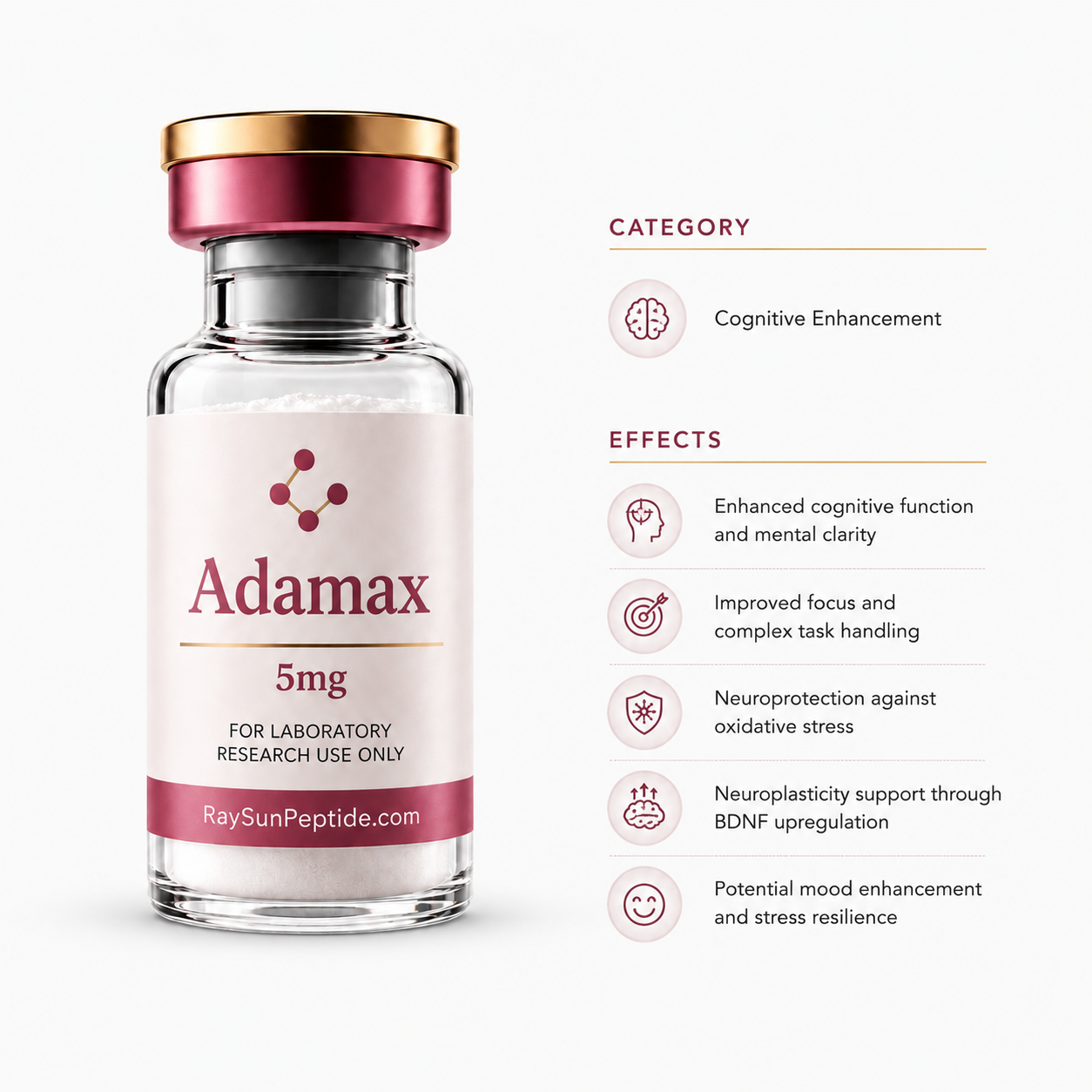
Adamax is a peptide modified with an adamantane group to enhance blood-brain barrier penetration. It has been studied in neuroscience research for its effects on peptide delivery to the central nervous system. Published research has examined its modified pharmacokinetics and enhanced CNS bioavailability. RaysunPeptide supplies Adamax for qualified research and laboratory applications.
Mechanism of Action
Crosses BBB via enhanced lipophilicity from adamantane; upregulates BDNF and TrkB receptor sensitivity; modulates dopamine, norepinephrine, and serotonin; stabilizes microtubules via ADNP-derived mechanisms; provides antioxidant and anti-inflammatory neuroprotection.
Key Benefits
Molecular Data
Dosing Protocols
| Goal | Dose | Frequency | Route |
|---|---|---|---|
| Cognitive Enhancement | 200-300mcg | 1x daily | SubQ |
| Neuroprotection | 300mcg | 1-2x daily | SubQ |
| Mood Support | 200mcg | 1x daily (morning) | SubQ |
| Initial Trial | 100-200mcg | 1x daily | SubQ |
Research Indications
Cognitive
Preliminary research suggests improvements in focus, mental clarity, memory consolidation, and complex task handling.
BDNF upregulation and TrkB enhancement promote new neural connections and synaptic plasticity for long-term improvements.
May enhance memory formation, information retention, and learning efficiency through hippocampal BDNF-TrkB pathway activation.
Neuroprotective
Preliminary observations indicate improved neurological outcomes through oxidative stress reduction and neuronal repair.
Demonstrates antioxidant properties protecting against oxidative damage and inflammation-induced neuronal injury.
Supports neuronal survival and growth through BDNF enhancement and microtubule stabilization.
Mood
Influences serotonin and dopamine to elevate mood and reduce depressive symptoms through neurotransmitter modulation.
Anecdotal reports indicate reduced overwhelm and anxiety through balanced neurotransmitter activity.
HPA axis modulation may improve stress response and emotional well-being.
Peptide Interactions
Adamax is an enhanced derivative with improved stability and bioavailability.
Adamax incorporates adamantyl portion from P21; may complement cognitive benefits.
Different mechanisms—Adamax targets neurological function; BPC-157 focuses on tissue repair.
Both enhance cognition through different mechanisms but share BDNF upregulation; start lower doses and monitor for overstimulation.
What to Expect
Side Effects & Safety
Common (Generally Mild)
- •Headaches (particularly at higher doses)
- •Insomnia or sleep disruption
- •Anxiety or overstimulation
- •Cardiovascular effects (elevated blood pressure, palpitations)
Stop Signs (Seek Medical Attention)
- ⚠Persistent or severe headaches
- ⚠Chest pain, heart palpitations, or significant blood pressure increases
- ⚠Severe anxiety, insomnia, or mood disturbances
- ⚠Unusual neurological symptoms or mental status changes
- ⚠Persistent injection site reactions or infection signs
- ⚠Gastrointestinal distress (nausea, vomiting, diarrhea)
Contraindications
- ✕Pregnancy and breastfeeding
- ✕Cardiovascular conditions (without medical supervision)
- ✕Severe anxiety disorders
- ✕Uncontrolled hypertension
Quality Checklist
Good Signs ✓
- White, fluffy powder indicating proper freeze-drying
- Clear solution after reconstitution with no particles or cloudiness
- Proper labeling with peptide name, batch number, manufacturing date
Warning Signs !
- Slight compaction from shipping acceptable if powder dissolves completely
Bad Signs ✕
- Discoloration or yellowing indicates oxidation or degradation
- Persistent cloudiness or particles indicate degradation or contamination
References
Foundational Semax review: intranasal doses stimulate operative memory and attention for 20-24 hours. Adamax builds on the Semax core sequence with adamantane modification for enhanced stability and BBB penetration.
View on PubMed →Single application at 50 mcg/kg produced 1.4-fold increase in BDNF protein and 1.6-fold increase in trkB tyrosine phosphorylation in rat hippocampus, supporting Adamax's BDNF-TrkB mechanism.
View on PubMed →110 ischemic stroke patients; Semax (6000 mcg/day intranasal) increased BDNF plasma levels and accelerated functional recovery, providing the clinical basis for Adamax neuroprotective applications.
View on PubMed →Genome-wide analysis: Semax modulated 24 vascular genes at 3h and enhanced immune-response gene expression at 24h post-ischemia, demonstrating multi-pathway neuroprotection.
View on PubMed →FAQs
How does Adamax improve cognition differently than Semax?
Adamax is a next-generation Semax derivative with C-terminal adamantane modification for enhanced lipophilicity and blood-brain barrier penetration. While parent Semax shows cognitive benefits, Adamax's superior stability and BBB crossing potentially enable stronger cognitive effects at lower doses and with more sustained action.
Can Adamax cause overstimulation if combined with other nootropics?
Yes. Adamax shares BDNF upregulation with compounds like Noopept, so combining them risks excessive neurotropic effects. Start with lower doses and monitor for overstimulation, anxiety, or sleep disruption. Safe stacking requires careful dose titration and might be better avoided for most users.
What causes the headaches some people report on Adamax?
Headaches are most common at higher doses (particularly above 300mcg). This likely relates to the potent dopamine, norepinephrine, and serotonin modulation combined with BDNF upregulation creating temporary neurochemical shifts. Starting at 100-200mcg and titrating slowly minimizes this risk.
How long do Adamax's cognitive effects last after stopping?
Due to BDNF-mediated neuroplasticity improvements, cognitive benefits persist weeks or months beyond discontinuation. Peak neuroprotective and structural brain benefits appear by week 4+ with continuous use, but the neuronal changes induced by BDNF upregulation have lasting effects independent of the compound remaining in circulation.